Bunker Holding - parent group of a number of businesses specializing in marine fuels, lubricants and hedging, including BMS United, Bunker One, Dan-Bunkering, Glander International Bunkering, Global Risk Management, KPI OceanConnect, LQM, Unicore Fuel, UniMarine and Unioil Supply - has posted the third-highest results in its history for the fiscal year 2020-21.
During a challenging year for the shipping industry, earnings before tax fell $84.8m, or
54.7 percent, to
$70.3m for the year to April 30, down from the previous year's record figure of $155.2m.
Despite diminished global bunker demand, Bunker Holding reports that it managed to increase sales volume (figure not revealed) and gain market share; however, this was offset by the impact of the pandemic and lower oil prices as revenue decreased overall by $1,177m, or
10.8 percent, to
$9,769m.
Key Performance Indicators: 2016-21
| Year |
Profit Before Tax ($m) |
Profit After Tax ($m) |
Revenue ($m) |
| 2016-17 |
34.6 |
27.3 |
6,459 |
| 2017-18 |
40.2 |
30.6 |
8,153 |
| 2018-19 |
77.3 |
60.8 |
10,644 |
| 2019-20 |
155.2 |
126.2 |
10,946 |
| 2020-21 |
70.3 |
56.6 |
9,769 |
In terms of the balance sheet, Bunker Holding's equity base of
$334m was $23m, or
6.4 percent, lower than the previous year.
Total assets, meanwhile, increased by $323.8m, or
24.8 percent, to
$1,631m, whilst current assets rose by $332.3m, or
27.5 percent, to
$1,539m.
Total liabilities were up $346.6m, or
36.5 percent, to
$1,297m.
As regards financial ratios, the equity (or solvency) ratio - i.e. equity as a percentage of total assets - declined to
20.5 percent, from 27.3 percent the year before.
The current ratio (current assets divided by current liabilities) fell to 2018-19 levels of
1.33, whilst the gross margin (the difference between revenue and cost of goods sold (COGS), divided by revenue) dropped to
3 percent, from 4 percent in 2019-20.
Balance Sheet: 2016-21
| Year |
Equity ($m) |
Liabilities ($m) |
Assets ($m) |
| 2016-17 |
253.0 |
793.8 |
1,047 |
| 2017-18 |
253.8 |
1,029 |
1,282 |
| 2018-19 |
318.1 |
1,238 |
1,556 |
| 2019-20 |
357.0 |
950.4 |
1,307 |
| 2020-21 |
334.4 |
1,297 |
1,631 |
Ratios and Margins: 2016-21
| Year |
Equity Ratio (%) |
Current Ratio (%) |
Gross Margin (%) |
| 2016-17 |
24.2 |
1.26 |
3.2 |
| 2017-18 |
19.8 |
1.19 |
2.7 |
| 2018-19 |
20.4 |
1.33 |
2.8 |
| 2019-20 |
27.3 |
1.46 |
4.0 |
| 2020-21 |
20.5 |
1.33 |
3.0 |
Commenting on the results,
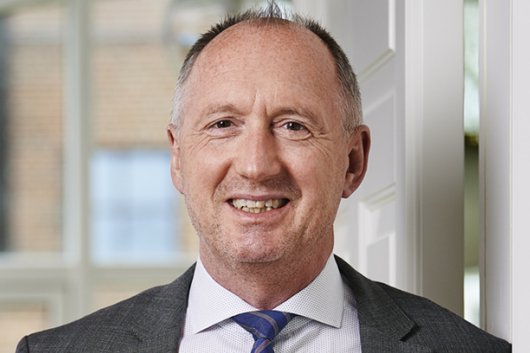
Keld R Demant, CEO of Bunker Holding, said: "This has been a very challenging year for everyone in the industry. Nevertheless, our company has never been stronger.
"Following our record year of 2019/20, we maintained momentum in the midst of a pandemic that impacted most of our employees and disrupted markets globally."
During the year, Bunker Holding acquired
OceanConnect Marine, merged it with KPI Bridge Oil to create one of the world's biggest bunker companies, with 170 employees in 15 locations around the globe. The merger was accomplished in just four months, and the entire process, including due diligence, was handled in-house.
"I think our ability to seamlessly integrate two such large companies at such a challenging time speaks volumes about our strengths," remarked Demant. "In many ways, this past year has been our finest hour."
Bunker One, Bunker Holding's independent physical supplier, also managed to make steady headway by expanding market share and bolstering its physical operations. The company strengthened its foothold in the
Caribbean and
Brazil, and assumed operation of the Port of
Skaw oil terminal at the northern tip of Denmark in June last year.
Furthermore, the group says it has been actively preparing for the next steps in the industry's transition to sustainable fuels and advising clients on the way forward.
In regard to the workforce, Bunker Holding managed to increase the number of full-time employees to
1,606, which was 98 more than in 2019-20 and 87 percent higher than in 2016-17, when the figure was 857.