Fri 6 Jan 2017, 09:20 GMT

ABS issues LNG bunkering guide


Guide outlines requirements for the design, construction, and survey of LNG carriers and bunker supply vessels.


The American Bureau of Shipping (ABS) has launched a guide for the bunkering of liquefied natural gas (LNG).

The new 25-page document has been developed to outline the requirements for the design, construction, and survey of liquefied gas carriers and barges fitted with dedicated LNG transfer arrangements and intended to operate in regular LNG bunkering service.

The guide focuses on the requirements for bunkering of LNG, the remainder of the vessel is to comply with the applicable edition of the ABS Rules.

Users of the guide are advised that the process of bunkering LNG involves a number of interested parties, including a vessel's flag administration, national regulatory bodies and port authorities. Therefore proposals are subject to review and approval by the applicable authorities with respect to installed safety equipment, operational practices, crew training, bunkering safety distances and simultaneous operations. Accordingly ship designers, shipyards, ship owners/operators and other interested stakeholders are encouraged to determine the full applicable requirements and obtain the necessary approvals as early as possible in any LNG bunkering new construction or conversion project.

The objective of the ABS guide is to provide criteria for the design, construction, installation, survey and operation of LNG transfer arrangements, associated machinery, equipment and systems in order to minimize risks to the vessel, crew and the environment. Requirements are provided to achieve this objective in accordance with the following key principles and requirements:

- Vessel construction is in accordance with the ABS Rules for Building and Classing Steel Vessels (Steel Vessel Rules), ABS Rules for Building and Classing Steel Vessels Under 90 Meters (295 feet) in Length (Under 90m Rules), ABS Rules for Building and Classing Steel Barges (Barge Rules) or the ABS Rules for Building and Classing Steel Vessels for Service on Rivers and Intracoastal Waterways (River Rules), as applicable.

- LNG containment systems are designed in accordance with Chapter 4 of the IGC Code, as incorporated by Section 5C-8-4 of the Steel Vessel Rules.

- LNG tank pressure, temperature and loading/filling limits are maintained within the design limits of the tank at all times.

- Means are provided to evacuate, purge and gas-free the LNG tanks. - LNG tanks are in a protected location.

- LNG containment spaces, bunkering stations and machinery spaces containing LNG or gas processing equipment are located and arranged such that the risk of any release of liquid or vapor will be minimized. Arrangements are provided for safe access during operations and inspections.

- LNG piping, systems and arrangements provide safe handling of liquid and vapor under all operating conditions. Means are provided to inert and gas free piping and systems.

- Bunker stations are arranged to provide compatible LNG transfer.

- Automation, instrumentation, monitoring and control systems are provided to minimize the risks with carriage, distibution and bunkering of LNG.

- Operation and maintenance manuals are provided for all LNG containment and transfer equipment and systems covering operation, maintenance and repair procedures.


Global Ethanol Association (GEA) and Vale logo side by side. Vale joins Global Ethanol Association as founding member  

Brazilian mining company becomes founding member of association focused on ethanol use in maritime sector.

KPI OceanConnect Logo. KPI OceanConnect seeks marine fuel trading intern in Singapore  

Bunker supplier advertises role offering exposure to commercial and operational aspects of marine fuel business.

Frank Dahan, CSL Group. CSL Group's Frank Dahan appointed chair of IBIA's Americas regional board  

Dahan brings 29 years of marine transportation and energy experience to the role.

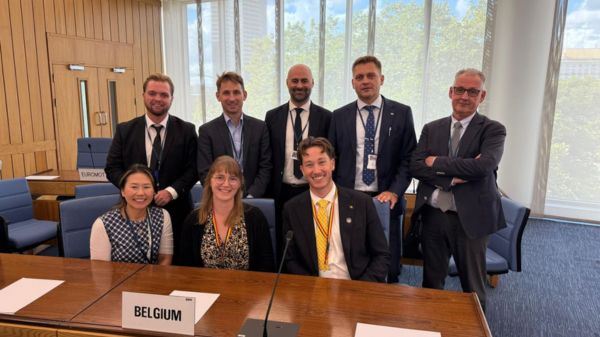
IMO Member States, Belgium delegation. Lloyd's Register, EXMAR, and Belgium’s Federal Public Service develop interim guidelines for ammonia cargo as fuel  

Guidelines expected to receive formal IMO approval in May 2026, enabling ammonia use on gas carriers.

Knut Ørbeck-Nilssen, DNV. DNV to lead Nordic roadmap Phase 2 for zero-carbon shipping transition  

Programme will identify green corridors and tackle cost barriers through new financing approaches.

Monjasa logo. Monjasa seeks trader for Dubai operations  

Marine fuel supplier recruiting for trading role covering sales, purchasing, and logistics in UAE.

IBIA Board Elections 2026 – Call for Nominations announcement. IBIA calls for board election nominations ahead of Friday deadline  

Association seeks candidates for 2026 board positions with submissions closing 12 December.

Fraua vessel. BMT Bunker adds tanker MT Fraua to fleet  

BMT Bunker und Mineralöltransport has expanded its fleet with a new vessel.

Ruby bunkering vessel. Island Oil expands Cyprus bunkering fleet with vessel Ruby  

Island Oil adds second bunkering vessel to strengthen marine fuel supply operations in Cyprus.

Wärtsilä and Aalto University partnership signing. Wärtsilä and Aalto University extend R&D partnership to accelerate marine decarbonisation  

Five-year agreement expands international collaboration on alternative fuels and clean energy technologies.