Mon 12 Sep 2016, 08:17 GMT

Dual-fuel-capable COGES system for new LNG carrier


Dual-fuel gas turbine system can operate either on the carrier's cargo of boil-off gas or on marine gas oil (MGO).


Hudong-Zhonghua Shipbuilding (Group) Co., Ltd. (HZ) and GE's Marine Solutions have received approval in principle (AIP) from the America Bureau of Shipping (ABS) for a jointly developed liquefied natural gas (LNG) carrier design to be powered by GE's Combined Gas Turbine Electric and Steam (COGES) system.

"We are delighted to work with Hudong-Zhonghua Shipbuilding on this 178,000 cubic-metre LNG carrier design that will use our efficient, reliable and dual-fuel marine gas turbine," said GE's Brien Bolsinger, Vice President, Marine Operations. "With AIP in hand from ABS, customers can now procure this LNG carrier that is capable of meeting Tier III International Maritime Organization and Tier 4 United States Environmental Protection Agency emissions requirements today," Bolsinger added.

"Thanks to the compact and lightweight attributes of GE's COGES arrangement, customers can realize an additional 4,000 cubic metres of LNG cargo space versus a traditional 174,000-cubic-metre LNG carrier powered by dual-fuel diesel engines," said HZ President Chen Jun. "Also, since the GE gas turbine is dual-fuel capable, it can operate either on the carrier's cargo of boil-off gas or on marine gas oil (MGO) to provide for all power and propulsion."

"New technologies and innovations are essential ingredients for sustainable growth of the marine industry and protection of our natural environment," said Bill Shi, ABS Vice President of Engineering, Greater China Division. "By evaluating this new design concept jointly developed by Hudong-Zhonghua and GE and granting this milestone AIP, we have acknowledged that the eco-friendly propulsion system is in compliance in principle with the requirements of the ABS standards and international regulations. We are pleased to be an integral part of this joint development project with a great potential to reduce exhaust emissions."

The COGES system will feature one GE LM2500-family gas turbine generator, one heat recovery steam generator (HRSG) and one steam turbine generator. Additional specifications for the HZ LNG carrier are in Table 1.

The LM2500-family gas turbine used in GE's COGES system is derived from GE's CF6 aircraft engines. In fact, the marine gas turbine maintains a high degree of commonality with its flight-tested forerunner, boasting the same field reliability of 99.9%.

Hudong-Zhonghua Shipbuilding COGES-powered LNG carrier specifications

- Cargo tank capacity (100%) -- 178,000 m3
- Length overall -- ~ 290.00m
- Length between perpendiculars -- 284.00
- Breadth (MLD) -- 46.95m
- Depth at side at main deck (MLD) -- 26.25m
- Depth at side at trunk deck (MLD) -- 33.40m
- Design Draught (MLD) -- 11.5m
- Scantling draught (MLD) -- 12.5m
- Deadweight (at design draught) -- ~ 83,500t

Gas turbine benefits

The compact COGES arrangement - fully 80 percent lighter and 30 percent smaller than comparable two-stroke diesels - will allow for increased container carrying capability. The COGES system also offers customers lower life cycle costs, negligible lubricating oil consumption, no methane slip and no pilot fuel or exhaust treatment required, according to GE.

Maintenance is said to be "easy" since little is required with COGES, only about 300 man-hours per year while the ship is underway. When more extensive maintenance is required, the entire turbine can be removed and replaced within 24 hours, reducing downtime and enabling maintenance to be carried out with minimal interruption to ship operations.


Global Ethanol Association (GEA) and Vale logo side by side. Vale joins Global Ethanol Association as founding member  

Brazilian mining company becomes founding member of association focused on ethanol use in maritime sector.

KPI OceanConnect Logo. KPI OceanConnect seeks marine fuel trading intern in Singapore  

Bunker supplier advertises role offering exposure to commercial and operational aspects of marine fuel business.

Frank Dahan, CSL Group. CSL Group's Frank Dahan appointed chair of IBIA's Americas regional board  

Dahan brings 29 years of marine transportation and energy experience to the role.

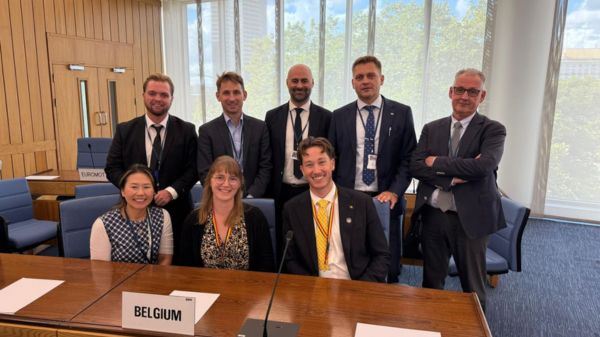
IMO Member States, Belgium delegation. Lloyd's Register, EXMAR, and Belgium’s Federal Public Service develop interim guidelines for ammonia cargo as fuel  

Guidelines expected to receive formal IMO approval in May 2026, enabling ammonia use on gas carriers.

Knut Ørbeck-Nilssen, DNV. DNV to lead Nordic roadmap Phase 2 for zero-carbon shipping transition  

Programme will identify green corridors and tackle cost barriers through new financing approaches.

Monjasa logo. Monjasa seeks trader for Dubai operations  

Marine fuel supplier recruiting for trading role covering sales, purchasing, and logistics in UAE.

IBIA Board Elections 2026 – Call for Nominations announcement. IBIA calls for board election nominations ahead of Friday deadline  

Association seeks candidates for 2026 board positions with submissions closing 12 December.

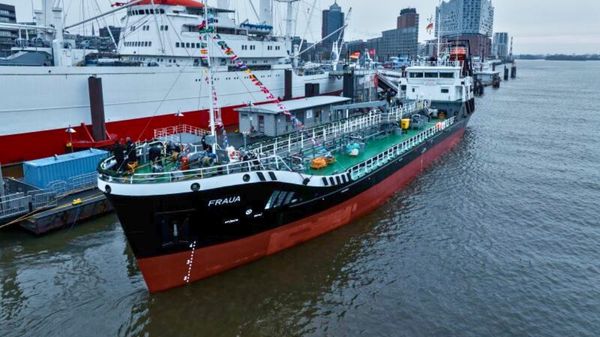
Fraua vessel. BMT Bunker adds tanker MT Fraua to fleet  

BMT Bunker und Mineralöltransport has expanded its fleet with a new vessel.

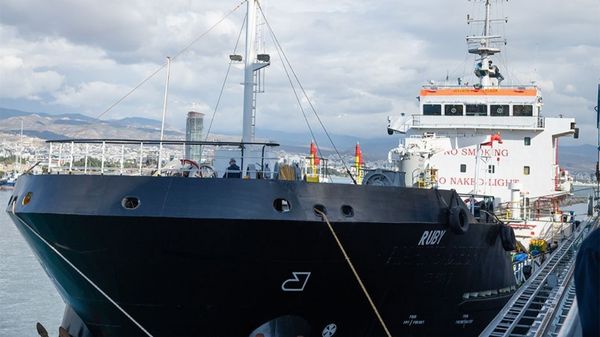
Ruby bunkering vessel. Island Oil expands Cyprus bunkering fleet with vessel Ruby  

Island Oil adds second bunkering vessel to strengthen marine fuel supply operations in Cyprus.

Wärtsilä and Aalto University partnership signing. Wärtsilä and Aalto University extend R&D partnership to accelerate marine decarbonisation  

Five-year agreement expands international collaboration on alternative fuels and clean energy technologies.