Wed 15 Jun 2016, 10:37 GMT

Stena expects the future to be a 'fuel mosaic'


Group's fleet is likely to be mainly powered by HFO cleaned by scrubbers, but with other fuels playing a growing role, says technical director.


Speaking at the CIMAC Congress in Helsinki last week, Harry Robertsson, Technical Director at Stena Teknik, said: "In the future there will be a 'fuel mosaic'."

Robertsson, who has been with Stena Teknik since 1999, was outlining Stena's vision for future ship design. He advised delegates that in fifteen years' time Stena Group's fleets are likely to be driven by heavy fuel oil cleaned by scrubbers but with other fuels playing a growing role.

"Our approach to fuels is driven by the 0.1% sulphur limit in the North European ECA, as our activities for Stena Line and Stena RoRo are very much in this area," said Robertsson. "I agree that we will have a fuel 'mosaic' in the future: different ships on different routes in different parts of the world will be running on different fuels."

Currently, the company has four scrubbers installed and a further three units are planned, but it is potentially complicated work - and expensive at a cost of US$5-10 million per installation.

Other than for the group's LNG carriers, retrofitting for LNG has also been discounted for the time being. The expense of conversion - around US$30 million for a ro-pax vessel - and the loss of power, which Stena estimates could be up to 20%, making it difficult for the ships to keep to schedule, have precluded it.

Commenting on the results of in-depth research Stena has carried out, Robertsson said that LNG could be an option for newbuild vessels, particularly in regions where the infrastructure is in place and the price makes it feasible.

The company's research produced interesting results, Robertsson told delegates in his wide-ranging speech. "What surprised us in this study was that batteries could be an attractive option for short sea shipping (under 100 nautical miles).

"And in the longer term, biofuels and fuel cells will enter the market. But today, marine batteries are three times as expensive as car batteries, and so far the capacity and lifespan of fuel cells are too small."

The company is keen to explore the potential of battery power, initially by looking at battery-powered bow thrusters which may eliminate the need to start the two generator sets when ships enter port - one that powers the thrusters and one for redundancy.

Going forward, the company will also explore options to replace two of the four engines on its ferries with electrical motors. Utilising shore-charged batteries, this will allow emission-free sailing in ports and within the Stockholm archipelago.

Methanol is also firmly in the group's sights following conversion work on the Stena Germanica, which is in the process of having the third of its four medium-speed Wartsila engines converted to run on methanol. The group has also designed a concept vessel - the ro-pax Stena Elektra - which features methanol propulsion and energy storage and which Robertsson suggested could be a reality by 2030.

The future of ship design was a key component of Robertsson speech along with highlights of the company's approach in three core areas - safety, cost efficiency and environmental performance.


Global Ethanol Association (GEA) and Vale logo side by side. Vale joins Global Ethanol Association as founding member  

Brazilian mining company becomes founding member of association focused on ethanol use in maritime sector.

KPI OceanConnect Logo. KPI OceanConnect seeks marine fuel trading intern in Singapore  

Bunker supplier advertises role offering exposure to commercial and operational aspects of marine fuel business.

Frank Dahan, CSL Group. CSL Group's Frank Dahan appointed chair of IBIA's Americas regional board  

Dahan brings 29 years of marine transportation and energy experience to the role.

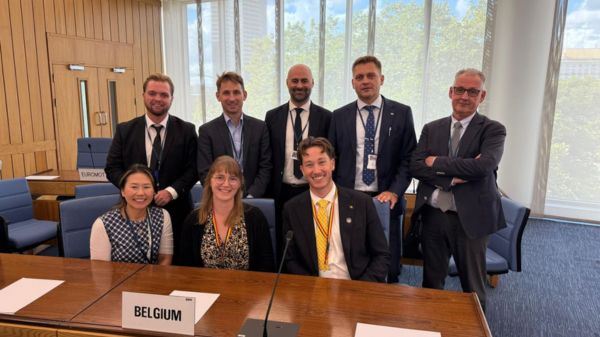
IMO Member States, Belgium delegation. Lloyd's Register, EXMAR, and Belgium’s Federal Public Service develop interim guidelines for ammonia cargo as fuel  

Guidelines expected to receive formal IMO approval in May 2026, enabling ammonia use on gas carriers.

Knut Ørbeck-Nilssen, DNV. DNV to lead Nordic roadmap Phase 2 for zero-carbon shipping transition  

Programme will identify green corridors and tackle cost barriers through new financing approaches.

Monjasa logo. Monjasa seeks trader for Dubai operations  

Marine fuel supplier recruiting for trading role covering sales, purchasing, and logistics in UAE.

IBIA Board Elections 2026 – Call for Nominations announcement. IBIA calls for board election nominations ahead of Friday deadline  

Association seeks candidates for 2026 board positions with submissions closing 12 December.

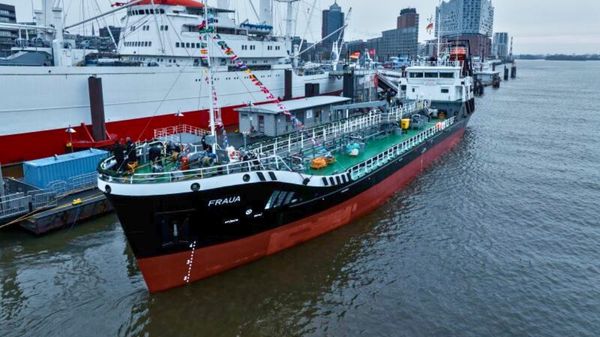
Fraua vessel. BMT Bunker adds tanker MT Fraua to fleet  

BMT Bunker und Mineralöltransport has expanded its fleet with a new vessel.

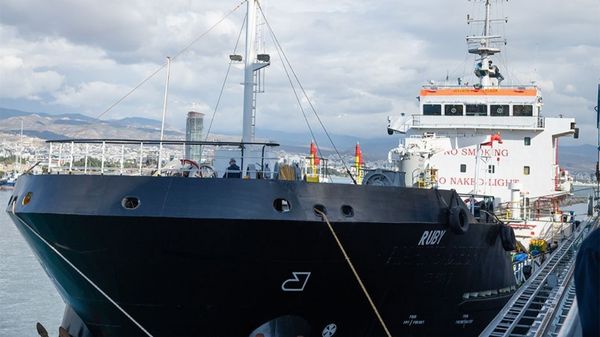
Ruby bunkering vessel. Island Oil expands Cyprus bunkering fleet with vessel Ruby  

Island Oil adds second bunkering vessel to strengthen marine fuel supply operations in Cyprus.

Wärtsilä and Aalto University partnership signing. Wärtsilä and Aalto University extend R&D partnership to accelerate marine decarbonisation  

Five-year agreement expands international collaboration on alternative fuels and clean energy technologies.