Stena has signed a contract, subject to board approval by the end of April, for an order of four new ro-pax ferries with planned delivery during 2019 and 2020, with an option for another four vessels.
The vessels will be optimized for efficiency and flexibility and will be built by AVIC Shipyard in China. The intention is that the four initial vessels will be used within Stena Lines route network in Northern Europe.
In a statement,
Carl-Johan Hagman, CEO and managing director of Stena Line, said: "We are very pleased that Stena have signed a contract for four vessels with an option for another four. During the course of the past 24 months our engineering staff has managed to develop a design that is not only 50 percent larger than today's standard ro-pax vessels, but more importantly, incorporates the emission reduction and efficiency initiatives that have been developed throughout the Stena Group during the past years. These ships will be the most fuel-efficient ferries in the world and will set a new industry standard when it comes to operational performance, emissions and cost competitiveness, positioning Stena Line to support its customers in the next decades."
Methanol and LNG
The vessels will have a capacity of more than 3,000 lane metres in a drive-through configuration and will accommodate about 1,000 passengers and offer a full range of passenger services. The main engines will be 'gas ready' - prepared to be fuelled by either methanol or liquefied natural gas (LNG).
Last year,
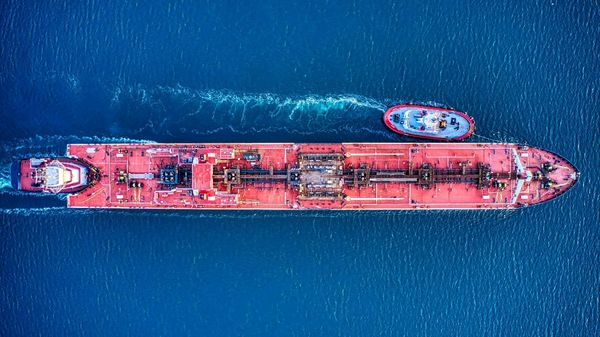
Stena Line converted the ro-pax vessel Stena Germanica (pictured) to a dual-fuel methanol propulsion system at Poland's Remontowa shipyard. It is the world's first ever methanol-powered sea vessel, combining methanol as its primary fuel with marine gas fuel (MGO) as a back-up power source.
Speaking at the time, Stena Line's CEO remarked: "The emissions from methanol are comparable to LNG, but the requirements for handling and infrastructure are much lower. The construction team are looking at and will use several different exhaust gas treatment technologies and if the methanol project is a success we will convert more vessels."
Commenting on the company's latest deal,
Dan Sten Olsson, Chairman at Stena Line, said: "We foresee a continued demand growth for short sea services in Northern Europe and in many other parts of the world. Ferry transportation will play an essential part in shaping tomorrow's logistics infrastructure if we are to have sustainable societies. Not only is transportation on sea the most environmentally efficient way of moving goods, it is also infrastructure that provides reliable and speedy logistics with very limited public cost. Through this investment we prepare Stena Line for further growth."
"With this investment we are building on our successful ro-pax concept mixing freight and passengers. Through standardization we secure a reliable operation and through flexibility we can provide an even better support to our customers and help them to grow," remarked Hagman.
Image: The ro-pax vessel Stena Germanica is the world's first ever methanol-powered sea vessel.