Fri 25 Jul 2008, 10:55 GMT

Singapore 380cst drops $41 in a week


Despite firmer market today, 380cst has now fallen by $83 since July 15th.


Bunker prices in Singapore, the world's leading port for the sale of marine fuels, ended the week substantially lower than on Monday following significant drops on Wednesday and Thursday.

The price of 380-centistoke (cst) - the port's largest-selling product - was pegged at $677 per tonne today according to Bunker Index price data, $11 higher than yesterday and $41 lower than at the start of the week when the product was being traded at $718 per tonne.

In the space of only nine working days, the price of 380-cst has now fallen by $83 since July 15th, when Singapore reached a record price of $760 per tonne.

Singapore's third best selling product, 180-cst, ended the week at $699 per tonne, $44 lower than at the start of business on Monday and $8 higher than yesterday's price of $691 per tonne. The product recorded significant decreases in price during the week, dropping by $32 and $20 on Wednesday and Thursday respectively.

Meanwhile, the price of marine gasoil (MGO) on Friday was pegged at $1168 per tonne today, up $1 on yesterday's price and $76 less than at the beginning of the week. In the space of seven days, the price of MGO has now dropped by 5 percent compared to last Friday when suppliers were quoting $1230 per tonne according to Bunker Index price data.

At the beginning of the week a number of suppliers said that buying interest had been relatively quiet, with demand picking up later in the week as bunker prices began to drop as a consequence of the bearish outlook in the crude oil markets.

Availability of 180-cst continued to be tight in Singapore this week with a number of market sources stating that they were not able to offer a quote to customers for this product.

Meanwhile, on the New York Mercantile Exchange (NYMEX), WTI crude oil for delivery in September was being traded at $125.96 per barrel at 09:17 GMT, $0.47 higher than Thursday's settlement price. London Brent Crude on the Intercontinental Exchange (ICE) was priced at $126.9 per barrel, up $0.46 on the close of business yesterday.


Global Ethanol Association (GEA) and Vale logo side by side. Vale joins Global Ethanol Association as founding member  

Brazilian mining company becomes founding member of association focused on ethanol use in maritime sector.

KPI OceanConnect Logo. KPI OceanConnect seeks marine fuel trading intern in Singapore  

Bunker supplier advertises role offering exposure to commercial and operational aspects of marine fuel business.

Frank Dahan, CSL Group. CSL Group's Frank Dahan appointed chair of IBIA's Americas regional board  

Dahan brings 29 years of marine transportation and energy experience to the role.

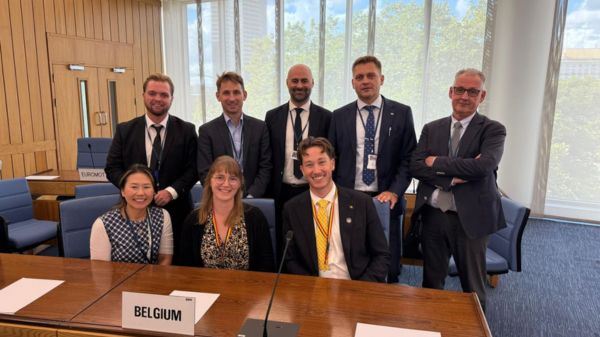
IMO Member States, Belgium delegation. Lloyd's Register, EXMAR, and Belgium’s Federal Public Service develop interim guidelines for ammonia cargo as fuel  

Guidelines expected to receive formal IMO approval in May 2026, enabling ammonia use on gas carriers.

Knut Ørbeck-Nilssen, DNV. DNV to lead Nordic roadmap Phase 2 for zero-carbon shipping transition  

Programme will identify green corridors and tackle cost barriers through new financing approaches.

Monjasa logo. Monjasa seeks trader for Dubai operations  

Marine fuel supplier recruiting for trading role covering sales, purchasing, and logistics in UAE.

IBIA Board Elections 2026 – Call for Nominations announcement. IBIA calls for board election nominations ahead of Friday deadline  

Association seeks candidates for 2026 board positions with submissions closing 12 December.

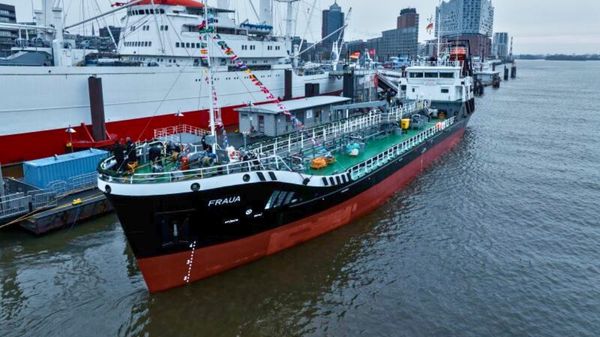
Fraua vessel. BMT Bunker adds tanker MT Fraua to fleet  

BMT Bunker und Mineralöltransport has expanded its fleet with a new vessel.

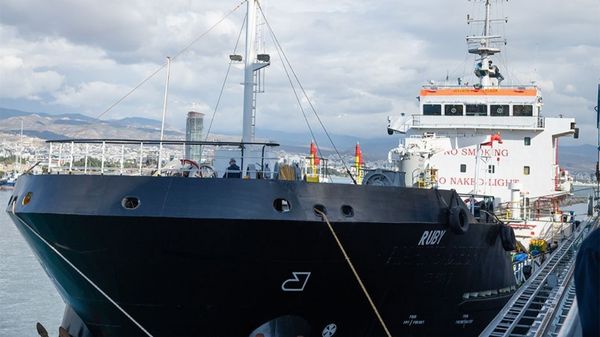
Ruby bunkering vessel. Island Oil expands Cyprus bunkering fleet with vessel Ruby  

Island Oil adds second bunkering vessel to strengthen marine fuel supply operations in Cyprus.

Wärtsilä and Aalto University partnership signing. Wärtsilä and Aalto University extend R&D partnership to accelerate marine decarbonisation  

Five-year agreement expands international collaboration on alternative fuels and clean energy technologies.


 Recommended