A new cement carrier being built at the
Scheepswerf Ferus Smit yard in the Netherlands is due to feature a 6-cylinder
Wartsila 34DF main engine, making it the first bulk carrier to adopt Wartsila's multi-fuel capability.
The ship has been ordered by
JT Cement, a joint venture between
Erik Thun AB of Sweden and
KG Jebsen Cement of Norway. In addition to the main engine, Wartsila has also been contracted to supply an enclosed
Gas Valve Unit (GVU) for easier installation and additional engine room safety. The order with Wartsila was placed in August.
By opting for Wartsila's dual-fuel (DF) technology, the vessel will be able to operate on liquefied natural gas (LNG) and a choice of other fuels, including marine diesel fuel (MDF), biofuel and heavy fuel oil (HFO). In gas mode, the engine is said to fulfil the International Maritime Organization's (IMO's) Tier III requirements without need of any after treatment systems. This is especially important since the ship will operate in Northern European waters, meaning that it will spend time in Sulphur Emission Control Areas (SECAs).
"The arguments in favour of gas fuel are so strong that it is no surprise that more and more vessel types are adopting its use. LNG is no longer a 'niche' fuel for a few specific types of ship; nowadays virtually all merchant vessels can take advantage of the environmental and cost saving benefits that LNG fuel offers. Wartsila is proud to be a technology leader in making this possible," remarked
Lars Anderson, Vice President, 4-Stroke Sales, Wartsila Ship Power.
"Wartsila has a well established and proven track record in dual-fuel engine technology. The selected Wartsila 34DF engine is a proven and flexible engine, which should ensure lower emissions and competitive energy and operation cost," said
Anders Kallsson, Managing Director, Erik Thun AB.
Wartsila has long-standing relationships with both the shipyard and Erik Thun AB, having supplied a number of engines to these customers in the past. The current vessel is scheduled for delivery before the end of 2015. There is also the possibility that a second cement carrier will be built as part of this particular series, Wartsila said.
The Wartsila 34DF engine
The Wartsila 34DF engine is available in 6, 8, 9, 12 and 16 cylinder configurations. It can be operated on LNG, MDF, biofuel and HFO.
Commenting on the engine's capabilities, Wartsila said: "The switch from gas to diesel can be made instantly and without loss of power. The engine has no operating restrictions and features 0 to 100% MCR (maximum continuous rating) in gas mode. The Wartsila 34DF engine has the lowest fuel and lube oil consumption in its class, in both gas and diesel modes."
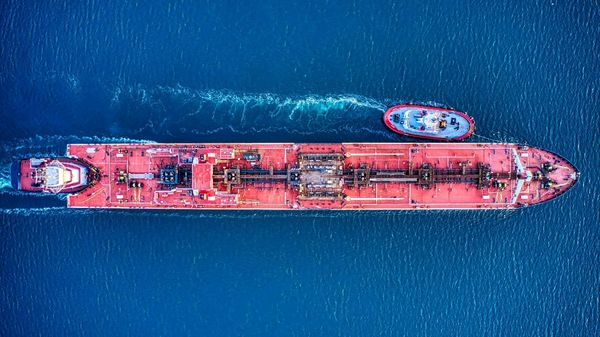
Image: A new cement carrier for JT Cement will feature a 6-cylinder Wartsila 34DF main engine, making it the first bulk carrier to adopt Wartsila's multi fuel capability.