Tue 4 Dec 2012, 01:20 GMT

Propulsion order for first LNG-fuelled ferry in North America


Canada's Société des traversiers du Québec will be the first to operate a gas-powered ferry in North America.


Wärtsilä has been awarded the contract to supply the gas-powered propulsion machinery and corresponding gas storage and handling systems for a new passenger ferry.

The vessel has been ordered by Canadian operator Société des traversiers du Québec (STQ), and will be the first North American ferry to be powered by liquefied natural gas (LNG).

The ship is being built by Fincantieri Cantieri Navali Italiani in Italy and will be used on routes crossing the St. Lawrence River. The Wärtsilä contract was signed in October, 2012. The Wärtsilä equipment is due to be delivered in the autumn 2013, and the vessel is scheduled for delivery by the end of 2014.

The ferry is being built to comply with the stringent emission regulations applicable to its area of operation. With the Wärtsilä 34 dual-fuel generating sets, which will provide the main power generation, Wärtsilä says the strict regulations will be met.

"By operating on LNG, nitrogen oxide (NOx) emissions are at least 85% below those specified in the current International Maritime Organisation (IMO) regulations, and the CO2 emissions are some 25% less than those of a conventional marine engine running on diesel fuel. The sulphur oxide (SOx) and particle emissions are negligible at almost zero percent. This level of environmental sustainability even exceeds the emission reductions mandated by the strict local regulations," Wärtsilä commented.

The IMO has designated some U.S. and Canadian waters as an Emissions Control Area (ECA). This is in line with the International Convention for the Prevention of Pollution from Ships (MARPOL). The new North American Emissions Control Area (ECA), which came into effect on August 1 2012, requires ships travelling in the ECA zone within 200 miles of the U.S. and Canada coasts to burn higher-priced 1% sulphur fuel, below the current global limit of 3.5%.

Long experience in gas technology

In addition to the four main power generating sets, Wärtsilä will also supply its LNGPac system. Designed and developed by Wärtsilä, the LNGPac comprises onboard LNG bunkering, storage tanks and handling equipment, as well as the related safety control and automation systems. The entire Wärtsilä propulsion solution is designed with a focus on safety and simplicity.

"All engines can be seamlessly switched to marine diesel oil (MDO) operation, should gas not be available, thus full redundancy can be achieved. This ensures that the safety factor is at the highest possible level," DNV said.

"Wärtsilä is the established global leader in dual-fuel and gas engine technologies. All in all, Wärtsilä has now sold more than 2000 of its gas fuelled engines, which together have accumulated more than 7 million operational running hours in both land-based and marine applications. We are extremely proud to be contributing in a meaningful way towards more sustainable shipping," remarked Aaron Bresnahan, Vice President, Wärtsilä Ship Power, Sales.

"I am very happy with the outcome of the very demanding design and construction process for this new ship due to start service in Matane, Baie-Comeau and Godbout in 2015. At 130 meters long and with a capacity for 800 passengers and 180 cars, the new ferry will be much larger and better equipped than the "Camille-Marcoux" that it will replace. Its larger hold capacity will be suitable for all types of vehicles. The crossing will be a more pleasant experience for passengers," said Georges Farrah, CEO of STQ.


Global Ethanol Association (GEA) and Vale logo side by side. Vale joins Global Ethanol Association as founding member  

Brazilian mining company becomes founding member of association focused on ethanol use in maritime sector.

KPI OceanConnect Logo. KPI OceanConnect seeks marine fuel trading intern in Singapore  

Bunker supplier advertises role offering exposure to commercial and operational aspects of marine fuel business.

Frank Dahan, CSL Group. CSL Group's Frank Dahan appointed chair of IBIA's Americas regional board  

Dahan brings 29 years of marine transportation and energy experience to the role.

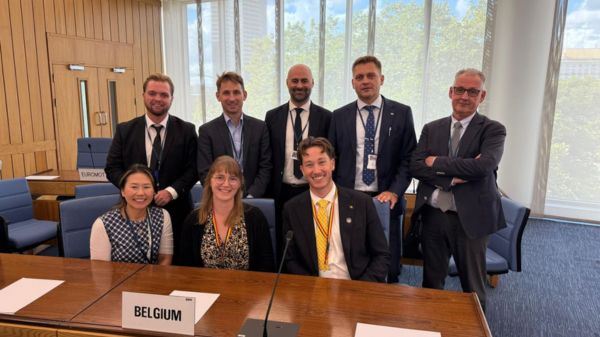
IMO Member States, Belgium delegation. Lloyd's Register, EXMAR, and Belgium’s Federal Public Service develop interim guidelines for ammonia cargo as fuel  

Guidelines expected to receive formal IMO approval in May 2026, enabling ammonia use on gas carriers.

Knut Ørbeck-Nilssen, DNV. DNV to lead Nordic roadmap Phase 2 for zero-carbon shipping transition  

Programme will identify green corridors and tackle cost barriers through new financing approaches.

Monjasa logo. Monjasa seeks trader for Dubai operations  

Marine fuel supplier recruiting for trading role covering sales, purchasing, and logistics in UAE.

IBIA Board Elections 2026 – Call for Nominations announcement. IBIA calls for board election nominations ahead of Friday deadline  

Association seeks candidates for 2026 board positions with submissions closing 12 December.

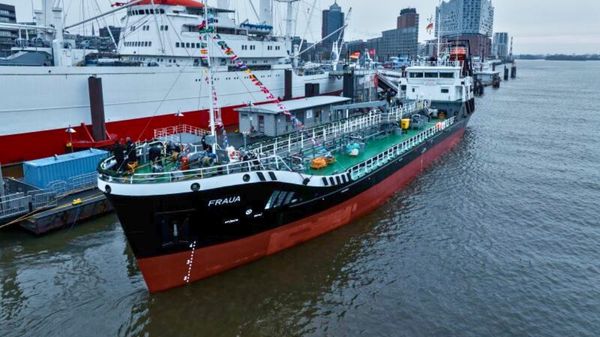
Fraua vessel. BMT Bunker adds tanker MT Fraua to fleet  

BMT Bunker und Mineralöltransport has expanded its fleet with a new vessel.

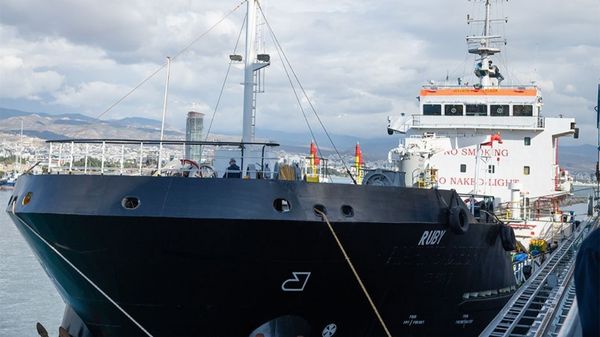
Ruby bunkering vessel. Island Oil expands Cyprus bunkering fleet with vessel Ruby  

Island Oil adds second bunkering vessel to strengthen marine fuel supply operations in Cyprus.

Wärtsilä and Aalto University partnership signing. Wärtsilä and Aalto University extend R&D partnership to accelerate marine decarbonisation  

Five-year agreement expands international collaboration on alternative fuels and clean energy technologies.


 Recommended