Tue 13 Nov 2012, 07:41 GMT

Manufacturing firm orders LNG-fuelled ships


LNG-powered vessels commissioned for both environmental and economic reasons.


Manufacturing company Saudi Basic Industries Corporation (SABIC) has commissioned the construction of two seagoing gas tankers powered by liquefied natural gas (LNG) in anticipation of a European Union (EU) directive to drastically reduce sulphur emissions from vessels operating in the North Sea by 2015.

New EU rules require that the sulphur content in shipping fuels fall to 0.1% from 1% by 2015 in 'sulphur emission control areas' (SECAs) in the Baltic, North Sea and English Channel. In other EU waters, they will be limited to 0.5% sulphur by 2020, in line with global International Maritime Organization rules.

SABIC’s two gas carriers will be used to transport olefins from a major plant on Teesside, England, to ports in North-West Europe and Scandinavia. SABIC is the first chemical company in the world to order gas carriers running on LNG.

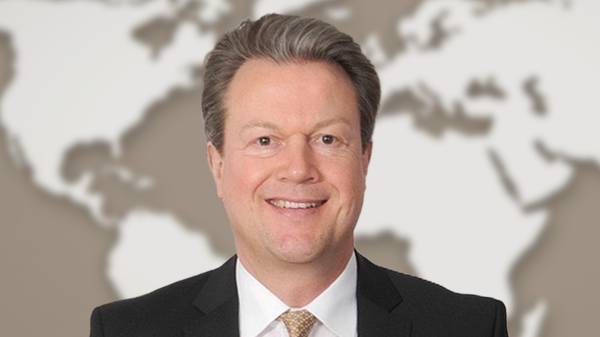
Commenting on the LNG-fuelled ships, Netherlands-based Michel Wintraecken [pictured], SABIC Manager Sourcing & Contracting, Supply Chain Chemicals Europe, said: "SABIC feels a strong sense of responsibility towards sustainability and the environment. This is why we have contracted Dutch company Anthony Veder for the use of two new LNG-powered gas carriers. We signed the basic agreement for the ships in April, construction has already started, and we will take delivery of them in 2014.”

Ships powered by LNG produce no sulphur emissions at all. In addition, carbon dioxide emissions are up to 20% less than with fuel oil, and NOx emissions are almost 90% less.

"We believe this initiative is the right thing for SABIC to do both from an environmental point of view as well as an economic point of view. The environmental benefits are profound and we also see it as a clear advantage that LNG is a bunker fuel which pricing is disconnected from crude oil," said Wintraecken.

Anthony Veder owns and operates a modern, high quality fleet of gas tankers for the transportation of petrochemicals, liquefied petroleum and natural gas, ammonia, and carbon dioxide. "In recent years, we have built up a good deal of experience with LNG-powered ships," said Jan Valkier, CEO of Anthony Veder. "Our fleet is being continuously modernized, renewed and adjusted to comply with regulations, customer requirements and the high standards upheld by the gas industry. We are very pleased to be working together with a company like SABIC in a proactive stance towards the sustainability of commercial shipping."

Image: Michel Wintraecken - SABIC Manager Sourcing & Contracting, Supply Chain Chemicals Europe


Oriental Aquamarine vessel. HMM deploys Korea's first MR tanker with wing sail technology  

Oriental Aquamarine equipped with wind-assisted propulsion system expected to cut fuel consumption by up to 20%.

BC Ferries vessel render. ABB to supply hybrid-electric propulsion for BC Ferries' four new vessels  

Technology will enable ferries to run on biofuel or renewable diesel with battery storage.

Alternative marine fuels port graphic. LNG-fuelled boxships sustain alternative fuel orderbook share despite market slowdown  

Alternative fuels maintained 38% of gross tonnage orders in 2025, driven by container segment.

Conceptual diagram of the MOL–ITOCHU strategic alliance. MOL and ITOCHU sign MoU for cross-industry environmental attribute certificate partnership  

Japanese shipping and trading firms to promote EACs for reducing Scope 3 emissions in transport.

CPN as China's No. 1 marine biofuel supplier in 2025 graphic. Chimbusco Pan Nation delivers 170,000 tonnes of marine biofuel in China in 2025  

Supplier says volumes quadrupled year on year, with a 6,300-tonne B24 operation completed during the period.

V.Group and Njord logo side by side. V.Group acquires Njord to expand decarbonisation services for shipowners  

Maritime services provider buys Maersk Tankers-founded green technology business to offer integrated fuel-efficiency solutions.

Container vessel manoeuvring in port. Has Zhoushan just become the world's third-largest bunker port?  

With 2025 sales of 8.03m tonnes for the Chinese port, Q4 data for Antwerp-Bruges will decide which location takes third place.

Monjasa Oil & Shipping Trainee (MOST) trainees. Monjasa opens applications for global trainee programme  

Marine fuel supplier seeks candidates for MOST scheme spanning offices from Singapore to New York.

Singapore's first fully electric harbour tug. Singapore's first fully electric tug completes commissioning ahead of April deployment  

PaxOcean and ABB’s 50-tonne bollard-pull vessel represents an early step in harbour craft electrification.

Fuel for thought: Hydrogen report cover. Lloyd's Register report examines hydrogen's potential and challenges for decarbonisation  

Classification society highlights fuel's promise alongside safety, infrastructure, and cost barriers limiting maritime adoption.


 Recommended