Wed 9 May 2012, 11:22 GMT

EU agreement to tackle air pollution


The EU has reached an international agreement to update the Gothenburg Protocol, setting more ambitious targets to reduce trans-boundary air pollution.

The revised objectives of the Protocol will see a reduction in EU emissions of around 60% for sulphur, 40% for nitrogen oxides (NOx), 30% for volatile organic compounds (VOCs), 6% for ammonia and 20% for particulate matter compared to 2005 levels. There is also agreement to act on so called 'Black Carbon'.

Commenting on the news, Janez Potočnik, EU Environment Commissioner, said: "This is a significant step forward in protecting citizens’ health and the environment. For the first time, we have an international agreement that acknowledges the link between air pollution and climate change. By agreeing to regulate one of the contributors to climate change, 'Black Carbon', we will see positive impacts at both local and international level."

"This is indeed an important step to reduce air pollution in Europe," said Danish Minister for the Environment Ida Auken. "We have managed to agree to further reduce emissions within the EU and in North America, and we have paved the way for further reduction of emissions from our eastern neighbouring countries. New multilateral environmental agreements are now quite rare, so we have good reason to be satisfied with the outcome of the negotiations."

The Gothenburg Protocol to Abate Acidification, Eutrophication and Ground-level Ozone was adopted on 30 November 1999. It sets emission ceilings for four pollutants: sulphur, oxides of nitrogen (NOx), volatile organic compounds (VOCs) and ammonia. These ceilings were negotiated on the basis of scientific assessments of pollution effects and abatement options. Parties whose emissions have a more severe environmental or health impact and whose emissions are relatively cheap to reduce will have to make the largest cuts.

Once the Protocol is fully implemented, Europe’s sulphur emissions are expected to be cut by at least 59%, its NOx emissions by 42%, its VOC emissions by 28%, its ammonia emissions by 6%, and its particulate matter (PM 2.5) emissions by 22%, compared to emission levels in 2005.

The agreement involves the EU, Norway, Switzerland and the United States of America. The negotiations have also involved other countries covered by the United Nations Economic Commission for Europe (UNECE) region, notably the Russian Federation, Canada, the Ukraine and Georgia.


Global Ethanol Association (GEA) and Vale logo side by side. Vale joins Global Ethanol Association as founding member  

Brazilian mining company becomes founding member of association focused on ethanol use in maritime sector.

KPI OceanConnect Logo. KPI OceanConnect seeks marine fuel trading intern in Singapore  

Bunker supplier advertises role offering exposure to commercial and operational aspects of marine fuel business.

Frank Dahan, CSL Group. CSL Group's Frank Dahan appointed chair of IBIA's Americas regional board  

Dahan brings 29 years of marine transportation and energy experience to the role.

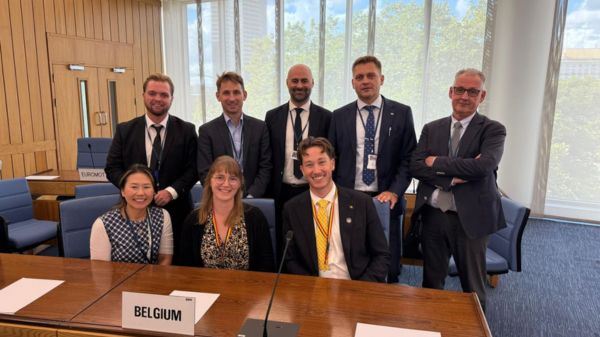
IMO Member States, Belgium delegation. Lloyd's Register, EXMAR, and Belgium’s Federal Public Service develop interim guidelines for ammonia cargo as fuel  

Guidelines expected to receive formal IMO approval in May 2026, enabling ammonia use on gas carriers.

Knut Ørbeck-Nilssen, DNV. DNV to lead Nordic roadmap Phase 2 for zero-carbon shipping transition  

Programme will identify green corridors and tackle cost barriers through new financing approaches.

Monjasa logo. Monjasa seeks trader for Dubai operations  

Marine fuel supplier recruiting for trading role covering sales, purchasing, and logistics in UAE.

IBIA Board Elections 2026 – Call for Nominations announcement. IBIA calls for board election nominations ahead of Friday deadline  

Association seeks candidates for 2026 board positions with submissions closing 12 December.

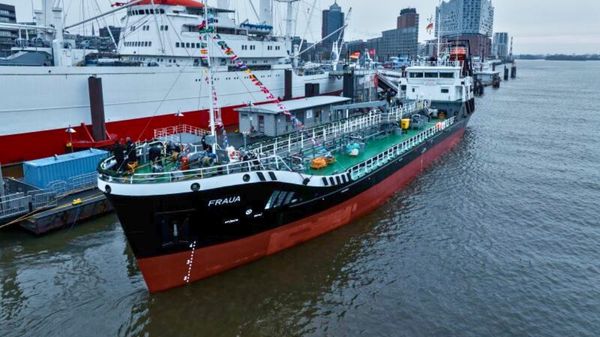
Fraua vessel. BMT Bunker adds tanker MT Fraua to fleet  

BMT Bunker und Mineralöltransport has expanded its fleet with a new vessel.

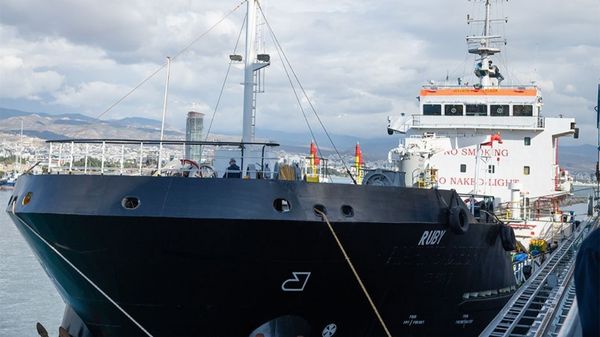
Ruby bunkering vessel. Island Oil expands Cyprus bunkering fleet with vessel Ruby  

Island Oil adds second bunkering vessel to strengthen marine fuel supply operations in Cyprus.

Wärtsilä and Aalto University partnership signing. Wärtsilä and Aalto University extend R&D partnership to accelerate marine decarbonisation  

Five-year agreement expands international collaboration on alternative fuels and clean energy technologies.