Fri 13 Jan 2012, 06:22 GMT

Shipping needs 'a great deal of resilience'


Consultant says shipping will be an industry for long-term players in 2012, where those with a plan for the future will be the ones who fare best.


Shipping is going to need a great deal of resilience to meet the challenges of the next twelve months, according to international accountant and shipping adviser, Moore Stephens. But, for those who can secure funding, there have been few better times to invest.

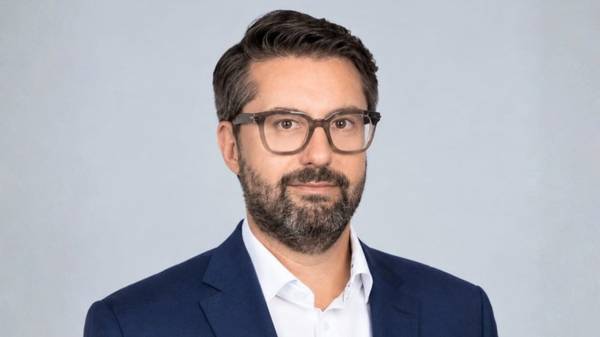
Julian Wilkinson, head of the Moore Stephens Shipping Industry Group, says, "More than ever, shipping will be an industry for long-term players. Operating costs increased in 2011, while the global economic climate deteriorated at a rate outpaced only by the growth of sovereign debt in some eurozone countries.

"The markets are languishing, and are likely to fall further. We have seen how, for the first time in a long while, some of the big tanker-owning companies have come under financial pressure. More owners and operators are likely to seek to renegotiate agreements with their financiers or with the yards building their ships, or both. And we can expect finance costs to increase, along with operating costs. Overtonnaging, meanwhile, remains the spectre at the feast, were there a feast to enjoy.

"We may see government intervention in 2012 to rescue ailing yards, at least on the part of those governments still in a position, financially, to intervene. ‘Impairment’ is likely to become a more familiar term in shipping circles, along with ‘Chapter 11’. The hand of government will also be evident in the tax affairs of the shipping industry. The UK has promised to consult on tonnage tax, which could restore permanently some of the benefits lost in the 2009 reinterpretation of the rules. And the EC should commence its review of tonnage tax regimes in EU countries.

"Meanwhile, demand for seaborne trade continues. Even if there is not enough work for all the new ships, we are seeing the emergence of a younger, more environmentally friendly fleet. There is also evidence of some rationalisation of competition which should feed through to better rates.

"Shipping’s glass is still, remarkably, more half-full than half-empty. Many owners, managers and charterers are reasonably confident of making a major new investment or development in 2012. And the underlying global nature of shipping continues to work in its favour. Given the choice between a domestic retail business in Kolonaki and a shipping business on Akti Miaouli, most would opt for the latter.

"Shipping may not turn the corner in 2012. Nobody yet knows where the corner is. Wider political and economic developments, as always, will play a part. It is said that there is nothing so admirable in politics as a short memory. In shipping, those who can remember the past and have a plan for the future will be the ones who fare best."

Moore Stephens LLP is noted for a number of industry specialisations and is widely acknowledged as a leading shipping and insurance adviser. The company is a member firm of Moore Stephens International Limited, one of the world's leading accounting and consulting associations, with 638 offices of independent member firms in 97 countries.


Christos Doulaveris, Flex Commodities. Flex Commodities appoints Christos Doulaveris as general manager for Greece  

Bunker trader strengthens its Greek operations with a new leadership appointment.

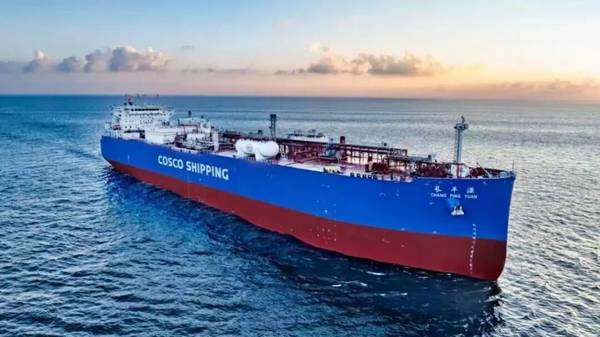
Chang Ping Yuan vessel. China delivers first domestically built VLGC under Chinese flag  

Cosco Shipping’s new 88,000-cbm gas carrier features an LPG dual-fuel main engine.

IMO, GreenVoyage2050 and Republic of Türkiye MoTI logos. Electric and hybrid ferries could cut Sea of Marmara emissions by 63%, IMO study finds  

A GreenVoyage2050 study finds that electrification could slash emissions, avoid €492 million in damage costs and support jobs.

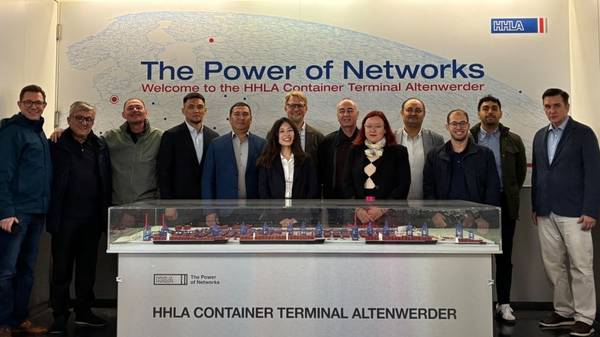
Study visit to Hamburg, Germany, on sustainable port development. Batumi Sea Port officials study decarbonisation practices in Hamburg  

Georgian port representatives visited Hamburg to study emissions accounting, hydrogen technology and automation ahead of their 2026 recertification audit.

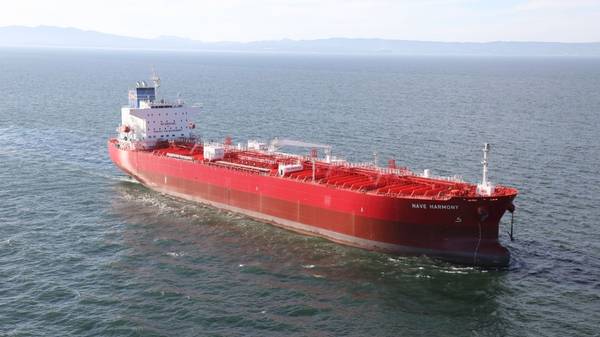
Nave Harmony vessel. Navios Partners takes delivery of methanol-ready MR2 tanker Nave Harmony  

Shipowner adds 49,998-DWT newbuild product tanker equipped with methanol-ready technology.

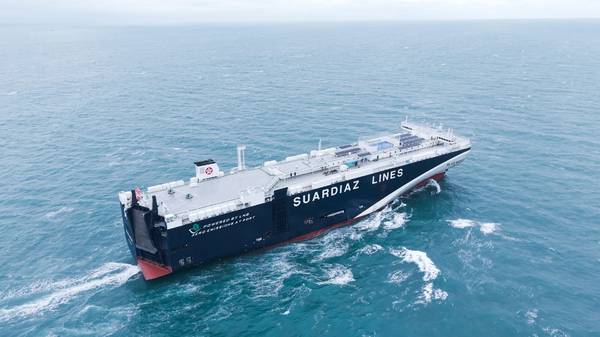
RS Atlantico vessel. Eastern Pacific Shipping delivers LNG dual-fuel PCTC to Suardiaz  

RS Atlantico is the first mid-sized 5,500-CEU car carrier built through the EPS–Suardiaz partnership.

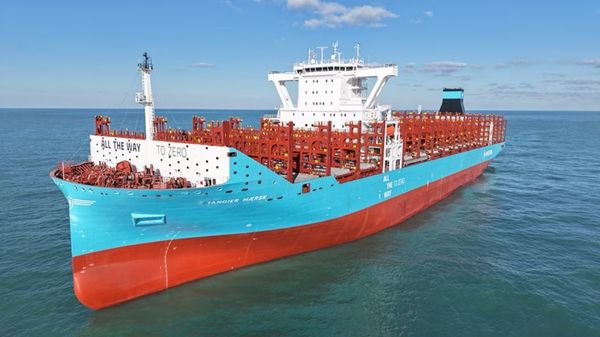
Tangier Maersk vessel. Maersk completes first US ethanol bunkering of a deep-sea container ship  

Shipper tests US-produced corn ethanol as a marine fuel aboard the Tangier Maersk.

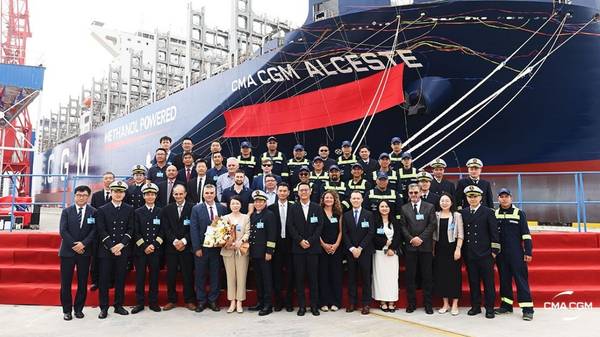
CMA CGM Alceste naming ceremony. CMA CGM names methanol-powered vessel after Molière’s Alceste  

Ship features a MAN B&W 8G85ME two-stroke engine configured to run on conventional marine fuel and methanol.

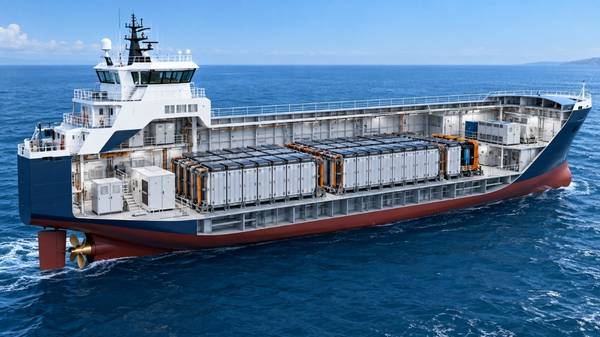
Cutaway illustration of a battery-electric ship. Why batteries still cannot power ships across oceans  

Battery-electric ships dominate short-sea routes, but energy-density and infrastructure constraints keep deep-sea propulsion out of reach.

VPS logo. VPS to run marine fuel management course in Singapore  

Two-day programme in November covers fuel handling, testing and decarbonisation rules, including a laboratory tour.