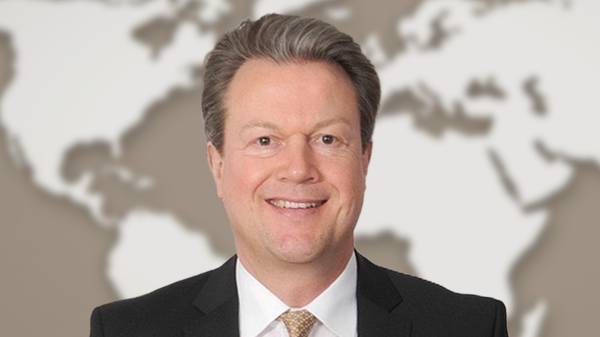
The President of
Mitsui OSK Lines (MOL) has said that slow steaming should become a worldwide standard for the maritime industry.
In his annual message entitled "Do Not Quarrel with Providence, or Blame Others", President
Muto said: "In our slow steaming initiative, last year most of our vessels made more diligent efforts to apply slow steaming. This practice not only reduces fuel consumption, but is also expected to help mitigate the impact of oversupply in vessels.
"Moreover, it is in line with the worldwide trend towards reducing the impact of industry on the environment. As such, slow steaming should become the global standard for the shipping industry in the future."
Muto said that the company's overall performance in 2011 had been influenced by a very difficult business environment, including the strong yen, high fuel prices, downward pressure on the market due to oversupply of shipping capacity, and a decline in demand caused by the economic downturn. The first half of fiscal 2011 marked the biggest loss that MOL has ever reported.
"Our forecast for the second half was that we would recover the losses of the first half as business conditions improved in the dry bulker market and automobile exports recovered. Nevertheless, the management environment surrounding MOL remains unpredictable and clouded by imminent oversupply of vessels as more new ships reach completion, and slumping business sentiment. These factors are expected to impact containership operations, especially, where conditions are extremely harsh with the impending completion of a large number of ultra large containerships, and the prolonged slump in the economies of Europe and the U.S.A.," said Muto.
"Large-scale completion of new vessels is expected to continue this year, so we should prepare ourselves for a prolonged harsh business environment, and approach it with due care. After 2013, however, the number of new vessels completed is expected to level off, providing some light at the end of the tunnel. Over the medium to long term too, we predict that the excessive production capacity of shipyards in China, 2/3 of which is privately operated, will be brought into balance by the market mechanism, and we expect the oversupply of ships to be relieved," added Muto.
Commenting on MOL's financial position, Myto said: "Our financial position is the most sound among all the world's shipping companies, as our credit rating shows. Meanwhile, as the weak market conditions and the financial uncertainty in Europe have combined to bring even some relatively major shipping companies to a point of financial crisis, customers are searching for stable business partners and MOL's relative competitiveness is increasing. Under the current conditions, with customer's selection of shipping companies set to become even more stringent, MOL appears to be in an advantageous position. However, it is vital that we strive to improve our balance sheet and cash flow in the short term through persistent efforts to trim costs and other measures. Such efforts are indispensable for us to maintain and grow this strength as we go forward."
Last year MOL launched its VLGC business for LPG at Singapore-based
Phoenix Tankers Pte. Ltd. and established
MOL Bulk Shipping (Thailand) Co., Ltd. to strengthen its car carrier business in Asia as the automobile industry has concentrated operations in Thailand. In another move, MOLCIS, the group's company for iron ore transportation services in Singapore, increased the scale of its business operations.
In the LNG market, MOL launched a new cooperative agreement in China, setting up a joint venture with
China Shipping (Group) Company to enter the market for LNG transport to China. MOL also began domestic LNG transportation in Indonesia by teaming up with a local partner.
Commenting on the year ahead, Muto said: "2012 is the year of the dragon under the Chinese calendar. Traditionally, dragons are associated with an increase in good fortune. On this theme, I'd like to make this year one for "turning the tables." This will also be the final year of GEAR UP! MOL, and therefore a year for formulating the next midterm management plan to take effect from fiscal 2013. I plan to take time at Compass meetings and other places to discuss our future challenges and opportunities thoroughly and deeply, to plant real seeds, and together draft an action plan to prepare for the future. Although we are in a harsh environmental change, let us show the wisdom, courage, and capacity for action that will enable us to produce changes that will create tomorrow."