Wed 10 Aug 2011, 09:37 GMT

Brownrigg rejects EU emissions trading scheme


Scheme 'will not work for shipping', says UK Chamber of Shipping's director general.


The UK Chamber of Shipping is the latest maritime industry body to reject calls for the industry to be included in the European Union's (EU) emissions trading scheme.

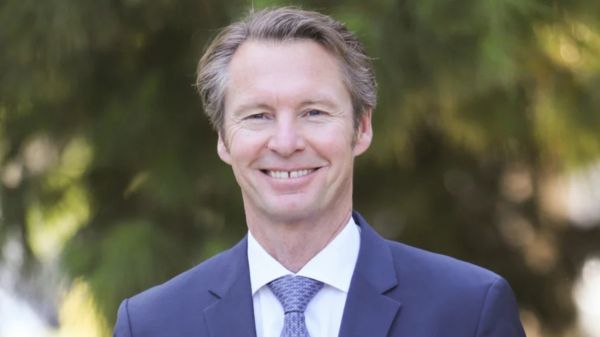
Speaking to the Guardian, Mark Brownrigg [pictured], the UK Chamber of Shipping's director general, said: "The EU's emissions trading scheme will not work for shipping. It is not suitable. It is not a global system, and shipping is."

Brownrigg claimed that if shipping were to be included in the EU emissions trading system, operators would simply choose to refuel at non-EU ports.

Brownrigg commented: "This is a complex international debate for which we need active participation from the shipping industry and governments to find a genuine solution. This must be global - through the International Maritime Organisation – rather than regional."

Brownrigg is said to have declined to make a recommendation on the type of system that should be adopted by the EU. "We are just at the beginning of this discussion," he said, adding: "We would like to see this debate finally begin."

Brownrigg further stressed: "It is crucial that we do not discount either of the main proposed economic mechanisms for encouraging carbon reductions. The debate lies ahead on which option will provide greater certainty of outcome, ease of application, and without damaging the growth of the industry and world trade. That debate must be based on practical considerations rather than conjecture."

Despite rejecting the idea of an EU emissions trading system, it would appear from previous comments made by Brownrigg that he is in favour of emissions trading on an international scale.

Commenting on the Low Carbon Transport strategy launched by the UK Transport Secretary, Lord Adonis, in 2009, Brownrigg was quoted as saying: "I am delighted that the strategy recognizes that it is vital that action to reduce emissions from shipping should be taken on a global level and sets out the government’s commitment to achieve those reductions through an international emissions trading mechanism."

The Council of the European Union stated in 2009 that it too was in favour of the implementation of worldwide market-based instruments to reduce emissions from the maritime and aviation sectors.

In a document entitled "Council Conclusions on EU position for the Copenhagen Climate Conference (7-18 December 2009)", the EU Council said: "The EU supports the use of global market-based instruments to reduce emissions from these sectors and that such instruments should be developed within ICAO and IMO, respectively."

Under the EU emissions trading scheme, large emitters of carbon dioxide within the EU must monitor and annually report their CO2 emissions, and they are obliged every year to return an amount of emission allowances to the government that is equivalent to their CO2 emissions in that year.

A recent report by the European Commission calculated that both the shipping and aviation sectors combined could generate revenues as high as 25 billion euros ($36.7 billion) a year in 2020, if their emissions were capped at 30 percent below 2005 levels.

In the aviation industry, despite claims that airlines would choose to land in countries outside the EU to avoid paying for carbon permits, the sector looks set to be included in the region's emissions trading scheme. This has prompted US airlines to question the legality of the decision, however no airline has so far announced plans to land flights outside the EU as a result.


Global Ethanol Association (GEA) and Vale logo side by side. Vale joins Global Ethanol Association as founding member  

Brazilian mining company becomes founding member of association focused on ethanol use in maritime sector.

KPI OceanConnect Logo. KPI OceanConnect seeks marine fuel trading intern in Singapore  

Bunker supplier advertises role offering exposure to commercial and operational aspects of marine fuel business.

Frank Dahan, CSL Group. CSL Group's Frank Dahan appointed chair of IBIA's Americas regional board  

Dahan brings 29 years of marine transportation and energy experience to the role.

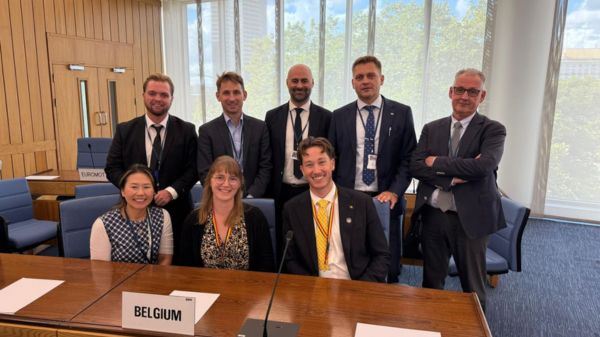
IMO Member States, Belgium delegation. Lloyd's Register, EXMAR, and Belgium’s Federal Public Service develop interim guidelines for ammonia cargo as fuel  

Guidelines expected to receive formal IMO approval in May 2026, enabling ammonia use on gas carriers.

Knut Ørbeck-Nilssen, DNV. DNV to lead Nordic roadmap Phase 2 for zero-carbon shipping transition  

Programme will identify green corridors and tackle cost barriers through new financing approaches.

Monjasa logo. Monjasa seeks trader for Dubai operations  

Marine fuel supplier recruiting for trading role covering sales, purchasing, and logistics in UAE.

IBIA Board Elections 2026 – Call for Nominations announcement. IBIA calls for board election nominations ahead of Friday deadline  

Association seeks candidates for 2026 board positions with submissions closing 12 December.

Fraua vessel. BMT Bunker adds tanker MT Fraua to fleet  

BMT Bunker und Mineralöltransport has expanded its fleet with a new vessel.

Ruby bunkering vessel. Island Oil expands Cyprus bunkering fleet with vessel Ruby  

Island Oil adds second bunkering vessel to strengthen marine fuel supply operations in Cyprus.

Wärtsilä and Aalto University partnership signing. Wärtsilä and Aalto University extend R&D partnership to accelerate marine decarbonisation  

Five-year agreement expands international collaboration on alternative fuels and clean energy technologies.