Fri 24 Dec 2010, 16:42 GMT

Branson: Cleaner ships should be refuelled first


Virgin Chairman suggests the most energy-efficient ships should be given priority when refuelling.


Sir Richard Branson has said that energy-efficient ships burning cleaner fuel should be given priority over vessels running on less environmentally-friendly fuel when calling at ports.

In an interview with Newsweek the Virgin Group Chairman and co-founder of eco-project Carbon War Room said that the initiative was in discussions with a number of ports in America, Africa and the Far East regarding the idea of giving the most fuel-efficient and eco-friendly ships priority over vessels with a lower rating as a strategy to reward efficient ships and penalize poor performers.

The new Carbon War Room initiative, launched on the website www.shippingefficiency.org, uses data compiled by the International Maritime Organization (IMO) to categorize 60,000 ships ships based on their energy efficiency from A to G, with A being the most efficient.

Commenting on the idea of prioritizing vessels according to their carbon footprint, Branson said: "If a ship A wants to come into the port, it maybe should have priority over a ship G. If there’s only one refueling truck, maybe the A ship should be given priority."

Branson referred also to a similar initiative launched for the aviation industry where Carbon War Room has been in discussions with airports regarding the issue of so called 'dirty planes'.

Commenting on the progress made so far, Branson said: "Some airports have actually started stopping dirty planes that use a lot of fuel coming into their airports. Heathrow’s done that, Gatwick’s done that," Branson said.

The launch of the Carbon War Room's online database was met with scepticism amongst certain members of the shipping community with the International Chamber of Shipping (ICS) expressing 'serious concern' about the service, referring to it as 'misleading'.

"The Energy Efficiency Design Index, developed by the International Maritime Organization, has been used completely out of context. While the EEDI is an important benchmarking tool to help ships reduce their carbon emissions, it was not created to compare individual ships of different types with each other. Ships have very different construction and safety requirements, depending on their type and trade, which can cause their energy consumption to vary greatly. Also, the IMO methodology has not been approved for use with all types of ship. It is therefore inappropriate for the Carbon War Room to use this methodology to derive scores for completely different classes of ships," said ICS Secretary General, Peter Hinchliffe earlier this month.

"While the database may appear to show some shipping companies in a good light, it is not appropriate for the EEDI to be used as a tool by charterers to select more efficient ships, or for ports to use the data when setting their dues," ICS said.


American Bureau of Shipping (ABS) logo. ABS introduces nuclear-ready notation for marine and offshore assets  

The classification society has released what it describes as an industry-first notation to support future nuclear conversion of vessels and offshore assets.

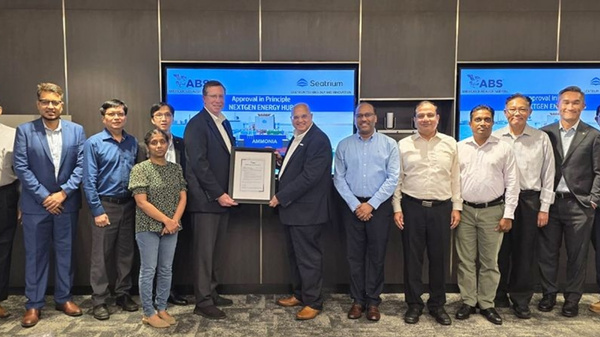
AiP handover ceremony for NEXTGEN Energy Hub (NGEH) design. ABS grants approval in principle for Seatrium’s NEXTGEN Energy Hub design  

The hub concept integrates ammonia bunkering, power generation and electric vessel charging in a single unit.

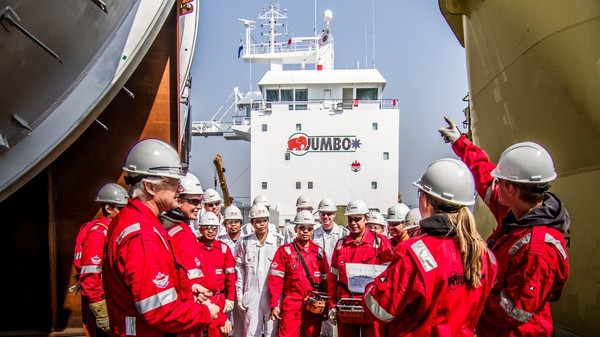
Jumbo Maritime crew aboard vessel. Jumbo orders two methanol-ready L-Class heavy lift vessels from Dajin Heavy Industry  

Dutch heavy lift specialist Jumbo signs newbuilding contract for two 25,000-dwt vessels.

China flag. Zhoushan completes first bonded bunker operation at Majishan port area  

The operation marks full fuel supply coverage across all general cargo terminals in Zhoushan's port system.

US dollar banknotes. Port of Long Beach launches $1m methanol bunkering challenge for oceangoing vessels  

A $1m prize aims to kick-start commercial methanol bunkering at one of North America's busiest ports.

Core Power, Athlos Energy, Deon Policy Institute and ABS logos. Greece floating nuclear study finds no fundamental barriers to implementation  

A PESTLE assessment of floating nuclear power plants in Greece identifies framework gaps, not feasibility barriers.

Northern Pathliner alongside Bergen LNG vessel. Molgas completes LNG cool-down and bunkering for Northern Pathliner at Northern Lights terminal in Norway  

Operation carried out at Øygarden facility, with K Line and Integr8 Fuels in the supply chain.

Rendering of a G2 Ocean OHGC vessel. G2 Ocean expands fleet with six future-fuel ready gantry crane vessels  

Open hatch specialist adds vessels and jet sail technology as part of a broad fleet renewal programme.

CMA CGM Adventure vessel at Port of Mombasa. LNG-powered CMA CGM Adventure makes first call at the Port of Mombasa  

Kenya Ports Authority receives its first large LNG-fuelled container vessel.

Liam Blackmore, Lloyd's Register. Maritime trio shapes IMO safety guidelines for ammonia as marine fuel  

Real-world operational experience feeds directly into new IMO ammonia fuel safety framework.