Mon 23 Aug 2010, 12:13 GMT

Hedging volume rise for Global Risk Management


Danish firm attributes hedging rise to an increase in oil supplier volumes during the second quarter of 2010.


Danish risk management specialist A/S Global Risk Management has revealed that it has seen a rapid rise in the number oil suppliers looking to hedge oil price risk, which has contributed towards a 32 percent rise in hedging volume during the second quarter of 2010.

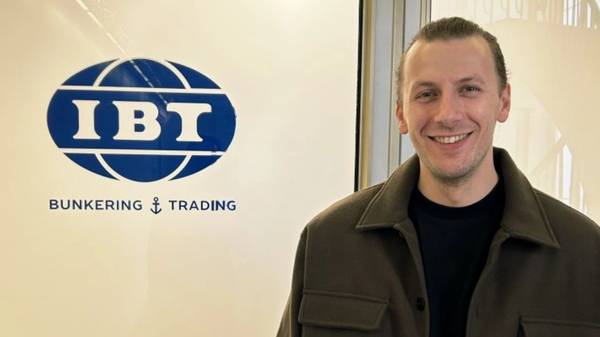
“The increase we have seen in Q2 2010 compared to same quarter last year is primarily driven by an increase in volumes with oil suppliers”, said Jan Knudsen [pictured], Executive Sales Director at Global Risk Management.

“We have traded with oil suppliers for many years, but recently we have experienced an increasing number of oil suppliers wishing to manage oil price fluctuations,” Knudsen added.

Global Risk points out that the typical risk oil suppliers face is the time difference between buying a cargo and selling the product again in the bunker market. The longer the time it takes to sell the product, the greater the risk of declining prices. However, with fuel price risk management, also known as hedging, Global Risk points out that there is a way to address the issue.

Knudsen said: “Through our experience we have learned that suppliers operate in very different ways and require unique solutions in order to mitigate the risks in their operation. We have specialised in offering customised solutions. For example, we offer broken dates instead of only full month. We work with the supplier to determine which solution matches his specific needs whether that would be selling the full month average of a certain Platts quote or the purchase of just three specific dates”.

Commenting on the issue of oil price risk, Morten Groenbech Terp, Oil Risk Manager said “We are aware that nothing is static in the oil business and will work with the supplier to change the hedge should it happen that different circumstances affect the sale of the products and thus creates a mismatch between the hedge and the operational business."

Terp commented that customized tools such as Swaps with broken dates were particularly popular at the moment, adding: “Suppliers are learning to turn volatility into opportunity”.


Container ship near a port. Ammonia emerges as most feasible alternative fuel for deep-sea shipping in 2050 emissions study  

Research combining expert survey and technical analysis ranks ammonia ahead of hydrogen and methanol.

Cargo vessel at sea. EMSA study examines biodiesel blend spill response as shipping adopts alternative fuels  

Research addresses knowledge gaps on biodiesel-conventional fuel blends as marine pollutants and response measures.

BIMCO ETS BARECON clause 2026 graphic. BIMCO adopts ETS clause for bareboat charters, delays biofuel provision  

BIMCO’s Documentary Committee has approved an emissions trading compliance clause while requesting further work on a biofuel charter provision.

SALEFORM 2025 standard form graphic. BIMCO and Norwegian Shipbrokers’ Association launch SALEFORM 2025 ship sale contract  

Updated agreement addresses banking changes, compliance requirements and environmental regulations affecting vessel transactions.

Everllence H2 test engine. Everllence develops hydrogen test bench for marine engines  

German engine maker upgrades Augsburg facility under HydroPoLEn project backed by federal maritime research funding.

CMA CGM Osmium vessel. CMA CGM names 13,000-teu methanol-fuelled containership in South Korea  

CMA CGM Osmium to operate on Asia–Mexico service as part of the carrier’s decarbonisation strategy.

NorthStandard logo. NorthStandard publishes biofuel guide as marine insurance claims emerge  

White paper addresses quality issues and compliance requirements as biofuel testing volumes surge twelvefold.

Clean Maritime Fuels Platform (CMFP) logo. Maritime fuel platform calls for EU shipping ETS revenues to fund clean fuel deployment  

Clean Maritime Fuels Platform urges earmarking of national emissions trading revenues for renewable fuel infrastructure.

Seatransport 73m SLV Lloyd’s Register grants approval for hybrid nuclear power design for amphibious vessels  

Classification society approves Seatransport’s concept integrating micro modular reactors with diesel-electric systems.

Everllence ME-LGIE engine. Everllence and Vale partner on ethanol-powered marine engine development  

Brazilian mining company to develop dual-fuel ethanol engines based on ME-LGI platform.


 Recommended