Thu 12 Aug 2010, 07:08 GMT

Launch date for emissions monitoring system


Laser-based marine emissions monitoring system to launch in September 2010.


US firm W R Systems, Ltd. (WR Systems) is making its debut at the forthcoming Shipbuilding, Machinery & Marine Technology International Trade Fair (SMM Exhibition) in Hamburg on September 7-10 2010, to formally release its Emsys, second generation, laser-based marine emissions monitoring system.

Emsys is the world's first Quantum Cascade Laser(QCL)-based, fully extractive, combined emissions and Particulate Matter (PM) monitoring system, designed to meet the requirements of MARPOL Annex VI, the NOx Technical Code, and additionally the requirements of the International Maritime Organization's (IMO) Emission Control Areas ( ECAs).

Installed within the funnel space, Emsys is designed and tested for continuous operation in multiple engine applications.

W R Systems says compact configuration greatly decreases installation time and, as a result, installation costs are significantly lower than first generation extractive systems.

Emsys is said to be unique in its design by monitoring PM ‘outside the stack'. Its patent pending design is said to meet EPA Regulation PS-1 and ASTM D6216, providing PM measurements in mg/m3 and g/kWh.

Conventional gaseous measurements include NOx, SOx & CO2 for all installed engines, with the optional facility for NH3 (Ammonia) in Selective Catalytic Reduction (SCR) applications. Geographic position (GPS) data is recorded and time-stamped against each emission record, enabling full traceability for assured compliance.

The system is the first production system to incorporate QCL technology. The laser can monitor multiple gases and is designed to be relatively maintenance-free. WR Systems says that combining highly accurate measurements with a unique gas path design eliminates many of the problems associated with traditional extractive and in-stack technology.

Emsys employs a sophisticated dashboard to display voyage emissions performance and compliance information. Configurable emissions reports, which include graphical representation of real-time values and historical trends, are also available.

The system can provide real-time alarms for all monitored emissions based upon the applicable limit and geographical position. Fuel sulphur content is continuously monitored (% m/m) to allow optimised management of fuels for MARPOL, CARB (California Air Resources Board), EU (European Union) and other regional regulatory limits. Emsys is suitable for both diesel engines and boiler installations.

WRSystems has an impressive track record in developing and supporting electronic charting, inertial navigation, radar, interior communication, data distribution, situational awareness, vessel speed, and depth detection systems for military customers world-wide. Additionally, WRSystems offers a high-level shipboard service capability on commercial marine electronics systems.

Commenting on the upcoming product launch, WRSystems Senior Vice President David K Edwards said: "We are truly delighted to be launching EmsysTM to the international marine community in Hamburg. SMM will be a fantastic platform to both demonstrate the benefits of the Emsys system, but more importantly raise the profile of WRSystems to a wider international audience. Emsys is the first in a strategic range of products and services designed to satisfy the market demand for high-reliability, vessel-critical systems and raise the standards of technical support from those currently accepted within the industry. At WRSystems, we pride ourselves in our ability to meet and exceed our customer's expectations."


Anne Mai Hatlem and Prof Lynn Loo. GCMD and Equinor sign five-year partnership on alternative fuels and carbon storage  

Singapore-based centre and Norwegian energy company to combine expertise in maritime pilots and low-carbon fuel supply.

Petrobras logo. Petrobras suspends bunker deliveries at Rio Grande after tropical storm  

Storm damage and power outage leave resumption timeline unclear.

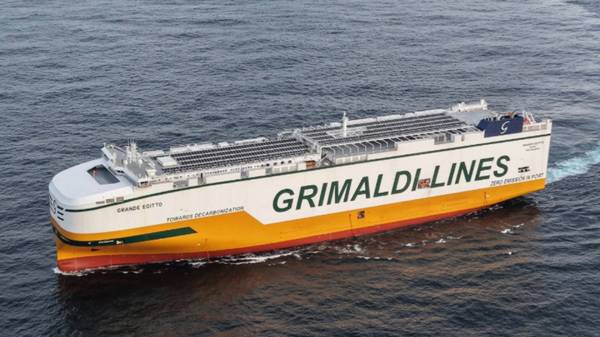
Grande Egitto vessel. Grimaldi adds fourteenth ammonia-ready car carrier to fleet  

Grande Egitto, built by China Merchants Heavy Industries Jiangsu, will operate on the Asia–East Africa trade route.

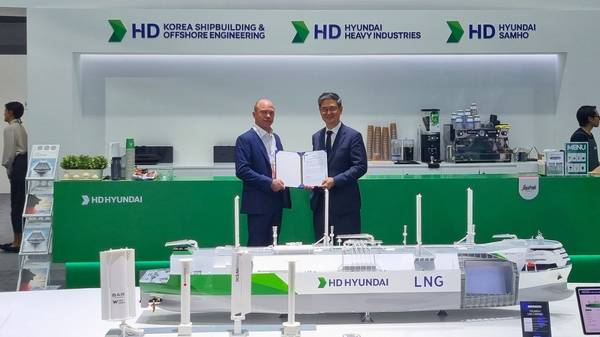
ABS awards AiP to HD HHI and HD KSOE for ammonia bunkering vessel design. ABS grants design approval for ammonia bunkering vessel from HD HHI and HD KSOE  

Approval in principle covers a 22,000-cbm multi-purpose vessel intended to supply ammonia as marine fuel.

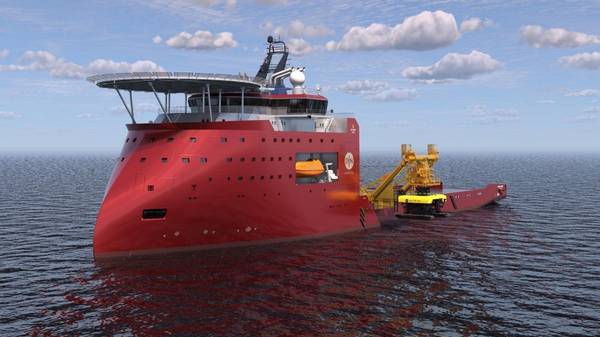
Trenching vessel render. Jan De Nul exercises option for alternative-fuel-capable trenching vessel  

Belgian marine contractor confirms option for a second subsea trenching vessel built on Ulstein's customised design platform.

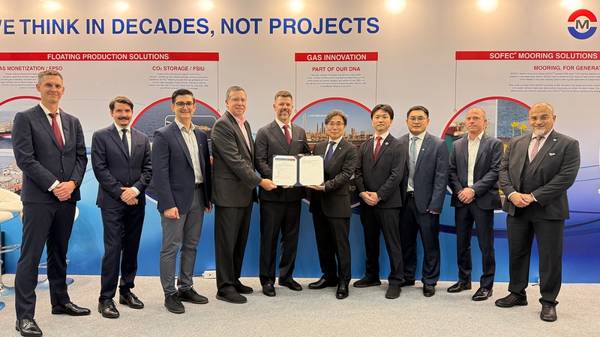
ABS issues NTQ approval to MODEC and Eld Energy. ABS grants technology qualification approval for FPSO fuel cell system  

MODEC and Eld Energy’s solid oxide fuel cell system moves towards offshore trials after clearing initial ABS review stages.

IMO CCC 12th Session. IMO sub-committee finalises revised methanol fuel safety guidelines  

CCC 12 completes revision of interim methanol fuel guidelines while advancing work on carbon capture and low-flashpoint fuel rules.

Volare Shipping logo. Trafigura spins off VLCC fleet into new listed shipping company  

Volare Shipping established, with eight ammonia-ready vessels on order.

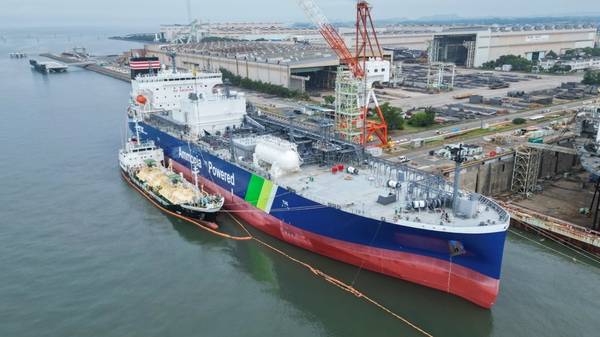
Ship-to-ship ammonia bunkering operation. Japan completes world's first ship-to-ship ammonia bunkering to ammonia-fuelled vessel  

Ammonia fuel transferred between ships at Ariake Shipyard ahead of gas carrier’s sea trials.

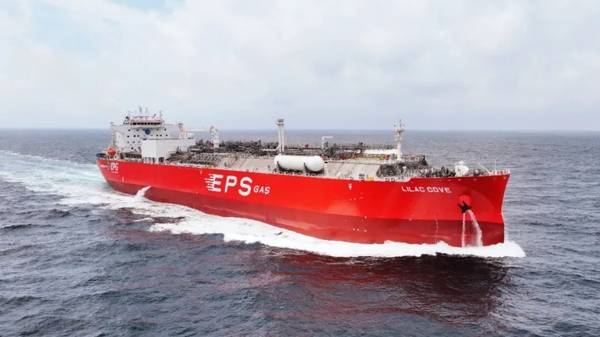
Lilac Cove vessel. Jiangnan delivers second LPG dual-fuel VLAC in series to Singapore’s EPS  

Lilac Cove, the world’s largest liquid ammonia carrier, joins Ivy Cove as Jiangnan advances its six-ship VLAC programme.