
 |
The Maritime and Port Authority of Singapore (MPA) has opened applications for additional licences to supply LNG as marine fuel in the Port of Singapore, with a deadline of 27 March 2026.
According to the authority, applicants must demonstrate capability for end-to-end LNG supply operations from sourcing to vessel delivery. Companies must own or charter at least one Singapore-registered LNG bunker vessel.
The licensing requirements include technical readiness to supply LNG fuels with lower lifecycle greenhouse gas emissions, such as bio-methane and e-methane. Applicants must also implement measures to monitor and mitigate methane slip.
MPA and Enterprise Singapore plan to upgrade the existing Technical Reference for LNG Bunkering (TR56) to a Singapore Standard in the second quarter of 2026. The new standard will align with Singapore's broader bunkering standards framework.
The authority has published new Standards for Port Limit LNG Bunker Vessels alongside the licensing announcement.
MPA stated it will conduct industry briefings to help potential applicants understand the requirements. Application information is available on the authority's website, along with the vessel standards documentation.
The licensing expansion comes as Singapore maintains its position as the world's leading bunkering hub with marine fuel volumes of 56.77 million tonnes in 2025, representing a year-on-year rise of 3.4%. The move follows growing adoption of LNG as a marine fuel amid tightening emissions regulations in the shipping sector.

|
JuWonOil looking to strengthen with two Houston hires
Texas-based firm is recruiting a marine lubricants sales executive and a marine fuels and distillates trader. |
|
|
|
||
|
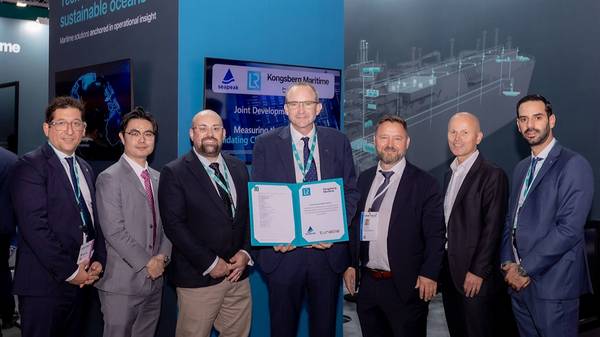
Four firms partner to trial continuous emissions monitoring on LNG carrier
LR, Seapeak, Kongsberg Maritime and Tunable will test onboard CO₂ monitoring against engine data and default emissions factors. |
|
|
|
||
|
Bunker Holding reshuffles commercial leadership across brand portfolio
Appointments announced across KPI OceanConnect, Glander International Bunkering and its digital sales operations. |
|
|
|
||
|
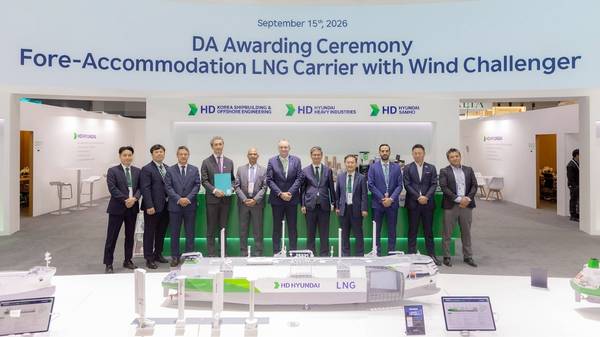
Lloyd's Register grants design appraisal for wind-powered LNG carrier concept
Vessel design featuring four Wind Challenger sails moves closer to commercial deployment. |
|
|
|
||

|
SGMF publishes first ISO-compliant life cycle assessment of methanol as a marine fuel
Study evaluating 15 production pathways completes organisation’s suite of LCAs covering LNG, ammonia and methanol. |
|
|
|
||
|
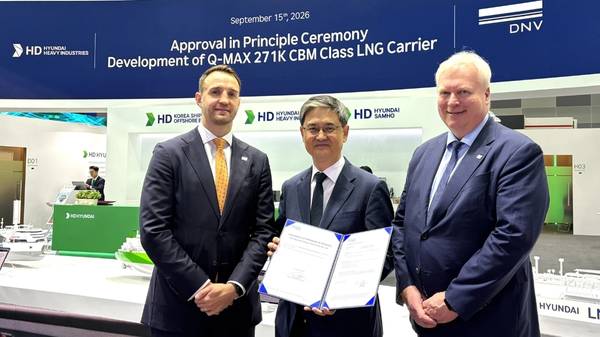
DNV grants approval in principle for HD HHI’s 271,000-cbm LNG carrier design
Classification society backs Hyundai’s largest LNG carrier design yet, featuring five membrane tanks and dual-fuel propulsion. |
|
|
|
||

|
GTT Energy launches new LNG fuel tank design for container ships
'Next-generation' LNG fuel containment system features 2 barg technology. |
|
|
|
||
|
Flex Commodities seeks operator for bunker trading operations
Candidates should have three to five years of relevant bunker or commodity trading operations experience |
|
|
|
||
|
Glander International Bunkering seeks bunker trader for Valencia office
Role open to sales professionals regardless of prior oil industry experience. |
|
|
|
||
|
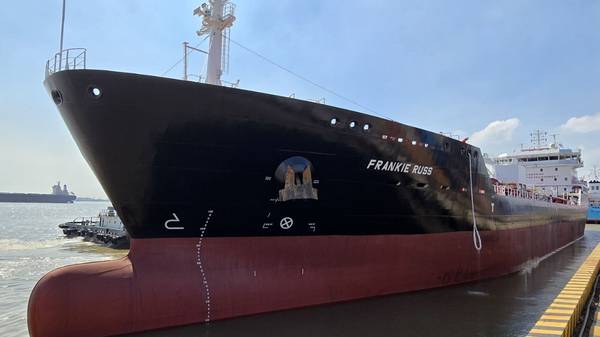
TB Marine takes over technical management of methanol-ready tanker
Newbuild MT Frankie Russ is first tanker in Ernst Russ's fleet. |
|
|
|
||
| Singapore reports record marine fuel sales and container throughput in 2025 [News & Insights] |
| Singapore bunker sales break new ground as TTM volumes surpass 56m tonnes [News & Insights] |
| Singapore awards three methanol bunkering licences from 2026 [News & Insights] |
| World's first operational ammonia bunker vessel enters service [News & Insights] |
| Trelleborg and Simwave launch LNG transfer equipment training programme at Gastech 2026 [News & Insights] |
| LNG bunker fleet may need to more than double by 2030, DNV warns [News & Insights] |
| LR awards approval in principle to Chinese yard for 12,500-cbm LNG bunker vessel design [News & Insights] |
| TFG Marine fits two more US Gulf Coast barges with certified mass flow meters [News & Insights] |
