Tue 27 Jul 2010, 09:07 GMT

Propulsion solution delivers fuel savings


Integrated propeller and rudder design reduces bunker costs in recent trials.


Finnish firm Wärtsilä says its Energopac integrated propeller and rudder design has demonstrated that it is able to significantly reduce fuel costs.

In recent trials carried out in cooperation with the Spliethoff Group, a company that manages more than 55 multi-purpose cargo vessels, Wärtsilä's Energopac solution was said to deliver significant fuel cost benefits by effectively reducing flow separation behind the propeller hub and thereby reducing frictional drag while preserving course-keeping capabilities.

The trials involved eight 17,700 dwt vessels, six of which were fitted with standard rudders and two with Energopac.

The trials are said to have shown that the Energopac solution saves close to 4 percent power in design condition, representing annual fuel cost savings of more than USD 120,000, according to fuel prices in July 2010.

“After 6 months of operation, it has been shown that the reality confirms the theory,” said Frank Louwers, director at Spliethoff. “This facilitated our decision to install the Energopac propulsion solution on the next series of another 5 vessels.”

Custom designed for optimal savings

Launched in 2008, Wärtsilä’s Energopac is an easy-to-install rudder/propeller combination that features a rudder bulb located behind the propeller hub. The bulb is mounted on a custom-designed full-spade flap rudder. As each Energopac installation is designed to fit a specific vessel, it can be fully optimized for energy efficiency without compromising manoeuvrability or comfort levels. Wärtsilä’s in-house computational fluid dynamics (CFD) resources are used in developing an optimal design for the total system.

"High performance propeller designs usually involve a compromise between increased efficiency and reduced vibration levels. Differences in rudder resistance are significant, especially when small corrective steering forces are used to keep a vessel on course. Energopac’s sophisticated full-spade flap rudder delivers excellent rudder balance and manoeuvring performance, and also enables a smaller overall rudder blade area with lower consequent rudder drag," Wärtsilä said.

“Energopac is an effective way of reducing the operational costs of any vessel which spends a significant proportion of time in non-stop sailing,” said Marcel van Haaren, Manager, Sales Engineering, Wärtsilä Ship Power. “Hub losses in a vessel equipped with a conventional rudder/propeller arrangement are significant, but these can be greatly reduced by installing an Energopac system. An increasing number of ship owners are looking to invest in technology that improves energy efficiency and reduces fuel consumption and emissions, and Energopac is a very effective solution.”

For ships with highly-loaded controllable-pitch propeller systems, such as RoRo vessels, ferries, container/multipurpose vessels and vessels with an ice class notation, Wärtsilä says the potential savings with Energopac are large.

"Bornholmstrafikken’s RoRo vessel M/V Hammerodde, for example, reported that results are even better than the predictions obtained from model tests carried out prior to the installation of the Energopac solution," Wärtsilä said.

In addition to the Energopac systems already delivered, another 20 Energopac systems have been ordered and will be delivered in 2010 and 2011.

Wärtsilä said the reductions in fuel consumption depend on the vessel type, its operational profile and also on the reference propeller and rudder. The performance improvements determined through CFD calculations and/or model tests indicate power reduction values ranging from a minimum of 2 per cent to a maximum of 9 per cent.


Global Ethanol Association (GEA) and Vale logo side by side. Vale joins Global Ethanol Association as founding member  

Brazilian mining company becomes founding member of association focused on ethanol use in maritime sector.

KPI OceanConnect Logo. KPI OceanConnect seeks marine fuel trading intern in Singapore  

Bunker supplier advertises role offering exposure to commercial and operational aspects of marine fuel business.

Frank Dahan, CSL Group. CSL Group's Frank Dahan appointed chair of IBIA's Americas regional board  

Dahan brings 29 years of marine transportation and energy experience to the role.

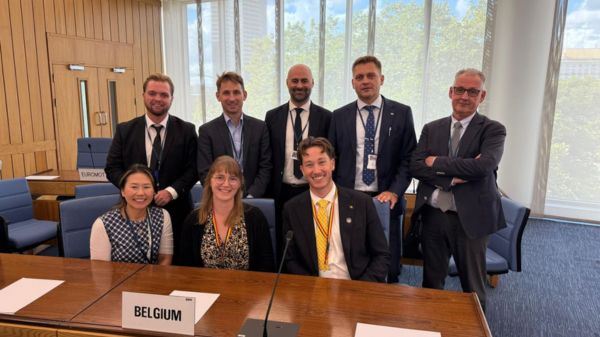
IMO Member States, Belgium delegation. Lloyd's Register, EXMAR, and Belgium’s Federal Public Service develop interim guidelines for ammonia cargo as fuel  

Guidelines expected to receive formal IMO approval in May 2026, enabling ammonia use on gas carriers.

Knut Ørbeck-Nilssen, DNV. DNV to lead Nordic roadmap Phase 2 for zero-carbon shipping transition  

Programme will identify green corridors and tackle cost barriers through new financing approaches.

Monjasa logo. Monjasa seeks trader for Dubai operations  

Marine fuel supplier recruiting for trading role covering sales, purchasing, and logistics in UAE.

IBIA Board Elections 2026 – Call for Nominations announcement. IBIA calls for board election nominations ahead of Friday deadline  

Association seeks candidates for 2026 board positions with submissions closing 12 December.

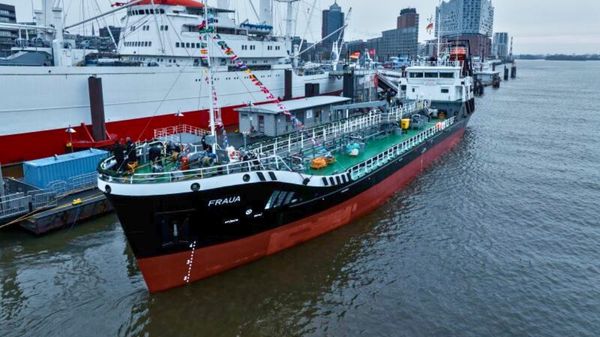
Fraua vessel. BMT Bunker adds tanker MT Fraua to fleet  

BMT Bunker und Mineralöltransport has expanded its fleet with a new vessel.

Ruby bunkering vessel. Island Oil expands Cyprus bunkering fleet with vessel Ruby  

Island Oil adds second bunkering vessel to strengthen marine fuel supply operations in Cyprus.

Wärtsilä and Aalto University partnership signing. Wärtsilä and Aalto University extend R&D partnership to accelerate marine decarbonisation  

Five-year agreement expands international collaboration on alternative fuels and clean energy technologies.


 Recommended