Thu 21 Jan 2010, 10:22 GMT

Sohar: 39% surge in cargo throughput


Omani port sees cargo throughput skyrocket in 2009. Said to be partly due to bunker-saving benefits.


Oman's Port of Sohar recorded a 39 percent increase in cargo throughput last year after handling a total of 9.7 million tonnes of cargo in 2009, according to Jan Meijer, Chief Executive Office of Sohar Industrial Port Company SAOC (SIPC).

The surge in cargo throughput is said to be partly due to the considerable savings in bunkers costs that port officials claim can be achieved by vessels calling at Sohar. An increasing number of shipping lines are said to have realized the benefits of transshipping out of Sohar.

By calling at Sohar, which is well outside the Arabian Gulf, a vessel can save two days of sailing time into the Upper Gulf, and a similar amount of time for the return leg. Besides saving on expensive charter rates as a result, there are also considerable savings in bunker fuel costs.

News of the skyrocketing cargo throughput data follows the announcement earlier this week that two new suppliers will be entering the Sohar bunker market after securing licences on January 17th.

Shell Marine Products and a joint venture operation between Matrix Marine Holding GmbH and Oman Oil Marketing Company (Oman Oil) are due to begin making bunker deliveries in June 2010.

The companies will be offering marine fuels of different grades to vessels calling at the Port of Sohar itself or at the extended anchorage area, which is located close to the international shipping route to and from Strait of Hormuz in the Gulf of Oman.

Commenting on the port's cargo throughput results, Meijer said "Many ports around the world were affected by the recession, but we have announced an increase of the overall throughput during 2009. Growing volumes of liquid bulk and dry bulk, as well as containers, have contributed to this growth.

"Even though it is very difficult to predict what is going to happen financially in the world, the management of the Port of Sohar anticipate further industrial development at the port, with continuous growth in number of vessels and freight tones as well as containers," he added.


Global Ethanol Association (GEA) and Vale logo side by side. Vale joins Global Ethanol Association as founding member  

Brazilian mining company becomes founding member of association focused on ethanol use in maritime sector.

KPI OceanConnect Logo. KPI OceanConnect seeks marine fuel trading intern in Singapore  

Bunker supplier advertises role offering exposure to commercial and operational aspects of marine fuel business.

Frank Dahan, CSL Group. CSL Group's Frank Dahan appointed chair of IBIA's Americas regional board  

Dahan brings 29 years of marine transportation and energy experience to the role.

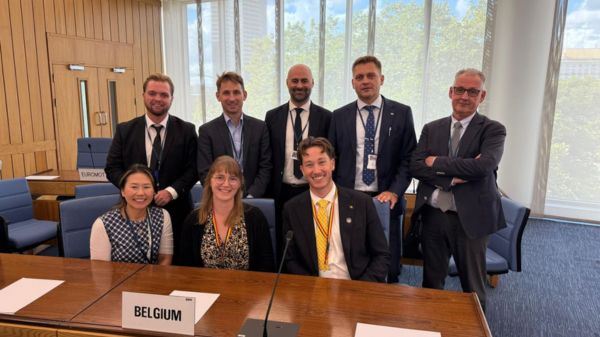
IMO Member States, Belgium delegation. Lloyd's Register, EXMAR, and Belgium’s Federal Public Service develop interim guidelines for ammonia cargo as fuel  

Guidelines expected to receive formal IMO approval in May 2026, enabling ammonia use on gas carriers.

Knut Ørbeck-Nilssen, DNV. DNV to lead Nordic roadmap Phase 2 for zero-carbon shipping transition  

Programme will identify green corridors and tackle cost barriers through new financing approaches.

Monjasa logo. Monjasa seeks trader for Dubai operations  

Marine fuel supplier recruiting for trading role covering sales, purchasing, and logistics in UAE.

IBIA Board Elections 2026 – Call for Nominations announcement. IBIA calls for board election nominations ahead of Friday deadline  

Association seeks candidates for 2026 board positions with submissions closing 12 December.

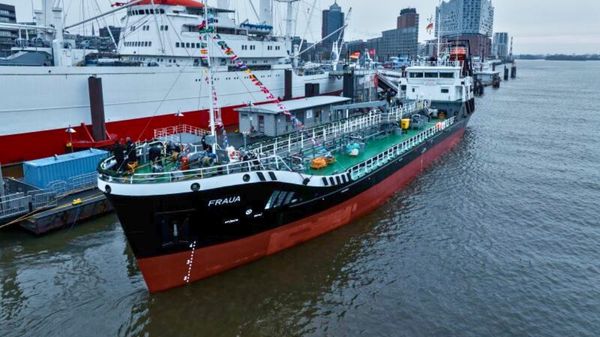
Fraua vessel. BMT Bunker adds tanker MT Fraua to fleet  

BMT Bunker und Mineralöltransport has expanded its fleet with a new vessel.

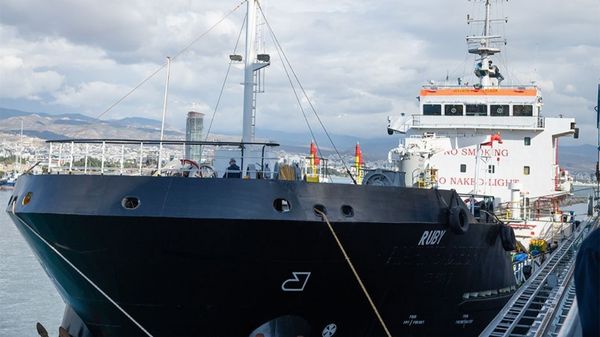
Ruby bunkering vessel. Island Oil expands Cyprus bunkering fleet with vessel Ruby  

Island Oil adds second bunkering vessel to strengthen marine fuel supply operations in Cyprus.

Wärtsilä and Aalto University partnership signing. Wärtsilä and Aalto University extend R&D partnership to accelerate marine decarbonisation  

Five-year agreement expands international collaboration on alternative fuels and clean energy technologies.


 Recommended