
 |
Stolt-Nielsen, through its subsidiary Stolt-Nielsen Gas, has entered into a share purchase agreement to acquire all the shares of LNG bunker supplier Avenir LNG Limited owned by Golar LNG and Aequitas Limited — the Høegh family's investment holding company.
The transaction is expected to be finalized during the first quarter of 2025. Upon completion, Stolt-Nielsen Gas is set to control approximately 94.37% of the outstanding shares and votes in Avenir LNG.
As part of the deal, Golar LNG sold its stake in Avenir LNG to Stolt-Nielsen for $40m, but it will remain a 25% shareholder and debt provider to Higas Srl, a small-scale LNG storage terminal in Sardinia, Italy, that was spun off from Avenir LNG in October 2024.
As of end October 2024, the book value of Higas was $40.5m, of which $24.7m was shareholder loans and $15.8m shareholders equity.
Avenir LNG is a leading supplier of LNG and liquefied biomethane (Bio LNG) as marine fuel. It is the owner of five LNG bunkering vessels, with two newbuildings under construction.
Of the five vessels currently in operation, the 20,000-cbm Avenir Achievement, the 7,500-cbm Avenir Advantage and 7,500-cbm Avenir Accolade are chartered to Shell, PETCO Trading Labuan Company Ltd (PTLCL), a trading arm of Petronas, and NFE Transport Partners, a subsidiary of New Fortress Energy, respectively.
The 7,500-cbm Avenir Aspiration, which has been trading alongside the Avenir Ascension in Northwest Europe — performing small-scale supply services and ship-to-ship bunkering operations for Avenir's London-based physical LNG trading division, Avenir Supply and Trading — has recently been leased to LNG Shipping S.p.A., a wholly owned subsidiary of Eni, in a multi-year time charter commencing in 2025.
The Avenir Ascension, also with a 7,500-cbm capacity, is chartered by Avenir Supply and Trading.
As regards the two as-yet-unnamed ships under construction with Nantong CIMC Sinopacific Offshore & Engineering Co. Ltd (CIMC SOE), both with a 20,000-cbm capacity, they are scheduled to be delivered in Q4 2026 and Q1 2027, respectively, with the former having been chartered by Vitol.
Commenting on the transaction, Udo Lange, CEO of Stolt-Nielsen, said: "This strategic move not only strengthens our position in the LNG sector but also underscores our commitment to pursuing more sustainable energy solutions for the maritime, industrial, and power generation markets."
Jonathan Quinn, Managing Director Avenir LNG, remarked: "Today marks an exciting new chapter for Avenir LNG as we continue to execute our strategy to become the leading small-scale LNG shipping and trading company."
"With the increased support from Stolt-Nielsen Limited, Avenir LNG is well positioned to act dynamically as we pursue our growth strategy in this burgeoning market," Quinn added.
Golar CEO, Karl-Fredrik Staubo, commented: "The sale of Golar’s shareholding in Avenir LNG is in line with our strategy to focus on expanding our market-leading FLNG position. Golar is proud to have founded Avenir LNG into one of the largest small-scale LNG shipping companies globally alongside our partners Stolt Nielsen and Höegh. Following the sale of Hygo Energy Transition Ltd. in 2021, our Avenir LNG investment was no longer deemed a core asset of Golar's portfolio. We wish the Avenir LNG team and Stolt-Nielsen all the best for the future development of Avenir."
Subject to completion of the transaction, Stolt-Nielsen Gas is set to offer to buy the shares of all remaining shareholders in Avenir LNG, Stolt-Nielsen said.
|
IBT Bunkering & Trading appoints Sales Support Specialist
Björn Hauschild joins from shipyard broker CombiTrade. |
|
|
|
||
|
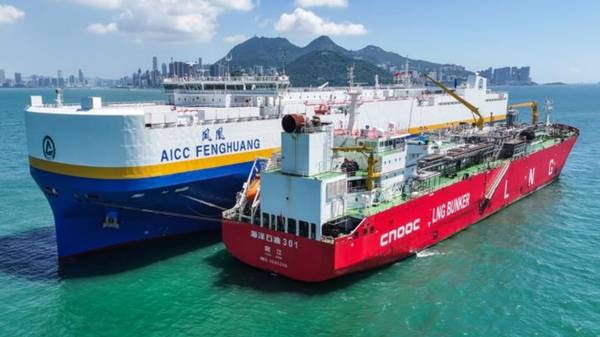
CLPe and CNOOC complete Hong Kong's first LNG bunkering of a pure car and truck carrier
Ship-to-ship operation delivered around 2,600 cbm of LNG to dual-fuel vessel AICC Fenghuang. |
|
|
|
||
|
Mercuria seeks senior sales and account manager for bunker delivery platform
Role can be based either remotely or at one of its offices in London, Geneva, Athens or Las Palmas. |
|
|
|
||
|
Molgas Energy Group appoints Riaan van Kralingen as head of clean fuels
Van Kralingen will oversee the company's liquefied biomethane and EU allowance portfolios, succeeding Caspar Gooren. |
|
|
|
||
|
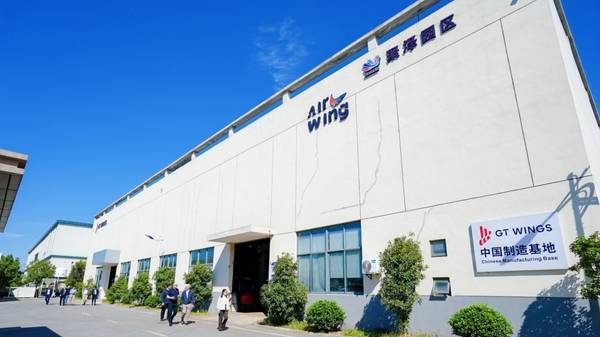
GT Wings launches compact AirWing S Jet Sail for smaller vessels
Wind propulsion developer adds lightweight unit to AirWing range as first customer-ordered AirWing20 units near completion. |
|
|
|
||
|
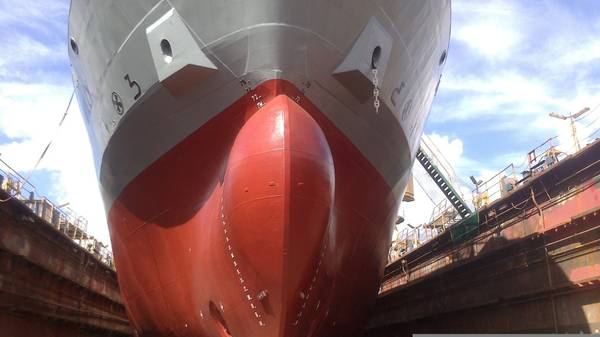
LR publishes retrofit guidance covering alternative fuels and energy-saving devices in one framework
New Guidance Notes address LNG, methanol, ammonia, hydrogen, wind-assisted propulsion and air lubrication retrofits for existing ships. |
|
|
|
||
|
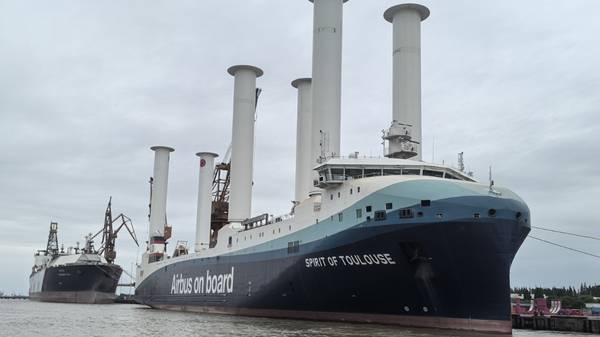
LD Armateurs' Spirit of Toulouse fitted with six Norsepower rotor sails
Six 35m rotor sails installed on the first of three methanol-capable ro-ro ships chartered by Airbus. |
|
|
|
||
|
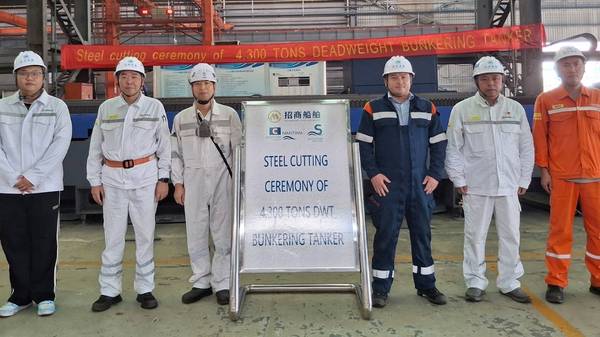
Maritima holds steel-cutting ceremony for Cap Morgiou, first of two Petroineos bunker vessels
Construction starts on bunker vessel able to carry conventional and low-carbon marine fuels, with delivery expected in early 2028. |
|
|
|
||
|
Singapore launches series of measures at SIBCON 2026
MPA announces LNG storage licences, digital bunkering grants and electric harbour craft incentives at 24th conference. |
|
|
|
||
|
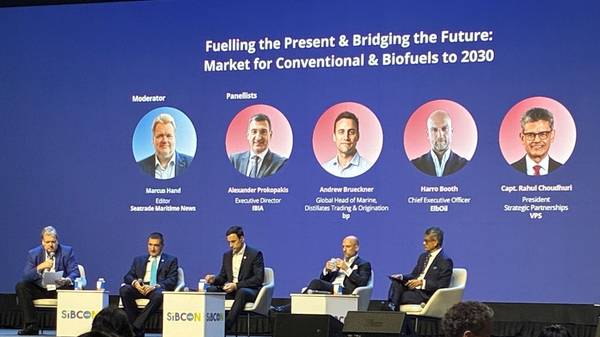
VPS outlines marine fuel standards and quality data at SIBCON 2026
VPS's Rahul Choudhuri addresses Singapore's evolving fuel standards and the quality of conventional fuels and biofuels. |
|
|
|
||
| Peninsula CEO seals deal to build LNG bunker vessel [News & Insights] |
| Wärtsilä to supply Scale Gas LNG bunker vessel's cargo handling system [News & Insights] |
| Stolt-Nielsen Gas chief bullish on firm's future role in LNG bunkering [News & Insights] |
| CLPe and CNOOC complete Hong Kong's first LNG bunkering of a pure car and truck carrier [News & Insights] |
| Maritima holds steel-cutting ceremony for Cap Morgiou, first of two Petroineos bunker vessels [News & Insights] |
| ROC wins order for PSVs featuring replaceable containerised battery system [News & Insights] |
| Axpo completes first LNG bunkering in Valencia, with over half bio-LNG [News & Insights] |
| NYK–MISC joint venture signs charter for 18,700-cbm LNG carrier with Malaysia LNG [News & Insights] |
