Thu 1 Nov 2018, 10:42 GMT

KPI Bridge Oil promotes Victoria Freeman to CFO


New job title coincides with Freeman's ninth anniversary at the firm.


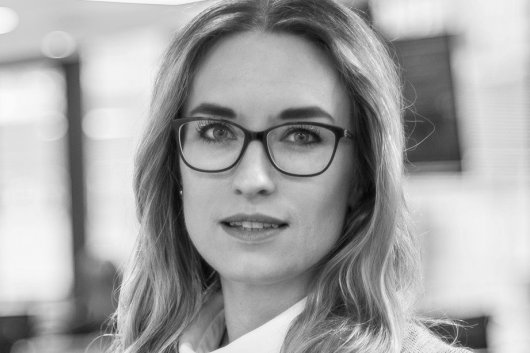
During her time at KPI Bridge Oil, ACA-qualified Victoria Freeman is said to have played a key role in managing the group's financial and accounting operations whilst developing new projects and best practice across its global operations.
Image credit: KPI Bridge Oil
KPI Bridge Oil has announced the promotion of Victoria Freeman to chief financial officer (CFO).

Freeman, aged 34, joined KPI Bridge Oil as an accountant in 2009 and was promoted to Group Financial Controller in 2013 when she took overall responsibility for the accounting and finance functions across the group's nine offices worldwide.

Prior to joining KPI Bridge Oil, Freeman worked in audit at accounting and advisory firm Wilkins Kennedy LLP in London. She is an ACA-qualified accountant and has a first-class degree in economics from the University of Leicester.

Soren Holl, CEO of KPI Bridge Oil Group, remarked: "Since joining KPI Bridge Oil, Victoria has made significant contributions to the company. She has played a pivotal role in managing the group's financial and accounting operations whilst developing new projects and best practice across our global entities. Her commercial insight, leadership and thorough knowledge of the groups financial activities will continue to strengthen our management team and indeed the entire group."

Commenting on the promotion, Freeman - who also, coincidentally, celebrates her ninth anniversary at KPI Bridge Oil on November 1 - said: "I am delighted to take on this exciting new opportunity at this point in my career. During my first nine years with the company I have thoroughly enjoyed working for such a dynamic and forward-looking company. I am proud to be part of an organization where hard work, passion and commitment produces opportunities for both personal and professional progression and I look forward to being an integral part of KPI Bridge Oil's future development and success."


IBIA MFM bunkering training course graphic. IBIA announces new date for mass flow meter training course in Rotterdam  

Training scheduled for 12 May follows mandatory MFM implementation at Rotterdam and Antwerp-Bruges ports.

A Maersk vessel, pictured from above. Maersk and Hapag-Lloyd suspend Strait of Hormuz transits amid Middle East security crisis  

Container carriers reroute services around the Cape of Good Hope as military conflict escalates.

Map of Middle East. Operations continue as normal at most Middle East ports  

Most facilities operating normally, with exceptions in Bahrain, Oman and Saudi Arabia.

Photograph of the 93,000-cbm very large ammonia carrier (VLAC) Gaz Ronin. Naftomar takes delivery of 93,000-cbm dual-fuel ammonia carrier  

Gaz Ronin features a MAN dual-fuel engine with high-pressure selective catalytic reduction technology.

Aurora Botnia leaving harbor. AYK Energy completes world’s largest marine battery retrofit on Wasaline ferry  

Aurora Botnia receives 10.4 MWh battery system, bringing total capacity to 12.6 MWh.

Steel cutting ceremony for an LNG dual-fuel 307,000-tonne crude oil tanker with builder's hull no. 113. Dalian Shipbuilding begins construction on LNG dual-fuel crude tanker  

Development is one of a number of milestones reported by parent company over the past few days.

Photograph of Sallaum Lines' Ocean Breeze vessel with 'Introducing The Blue Corridor' overlaid text. Sallaum Lines launches Blue Corridor sustainability initiative for Europe–Africa ro-ro trade  

Company deploys LNG-capable vessels with AI routing and eco-speed protocols on new green shipping corridor.

The platform supply vessel Viking Energy. Eidesvik Offshore signs yard contract for ammonia retrofit of PSV Viking Energy  

Halsnøy Dokk to convert platform supply vessel as part of EU-backed Apollo project.

Vanquish tanker alongside Jette Theresa oil/chemical tanker docked at terminal. North Sea Port completes risk analysis for alternative fuel bunkering operations  

Port authority says LNG, hydrogen, methanol and ammonia can be safely refuelled across its facilities.

Container ship near a port. Ammonia emerges as most feasible alternative fuel for deep-sea shipping in 2050 emissions study  

Research combining expert survey and technical analysis ranks ammonia ahead of hydrogen and methanol.


 Recommended