Wed 10 May 2017, 09:21 GMT

Port state control success 'depends ultimately' on harmonization of inspections: Kitack Lim


IMO Secretary-General says unified PSC procedures are 'absolutely vital' to eliminate sub-standard shipping.


The Secretary-General of the International Maritime Organization (IMO), Kitack Lim, says the success of port state control (PSC) "depends ultimately" on the harmonization of PSC inspections among various port states.

Speaking during last week's Joint Ministerial Conference of the Paris and Tokyo Memoranda of Understanding (MoU) on Port State Control, Lim said unified PSC procedures and technical cooperation programmes for training PSC officers from diverse PSC regimes were "absolutely vital" in order to eliminate sub-standard shipping.

Kim noted that challenges for port state control officers were continually changing and developing as new and more stringent regulations come into force, such as those surrounding air pollution.

Kim also discussed the work carried out by the IMO through an Assembly resolution and by arranging and hosting workshops to improve communication among the PSC regimes.

On the issue of IMO regulations, Kim said "stringent oversight of compliance and vigorous enforcement" was required for IMO measures to be properly effective - in addition to early entry into force, widespread ratification and effective implementation.

"IMO may develop and adopt the regulatory framework for international shipping, but that's only the first link in a long safety chain - a chain that includes flag States, ROs, the industry itself and, of course, port state control," Kim remarked.

"Even those conventions that command almost universal coverage of the global fleet, such as SOLAS and MARPOL, only have teeth if they are backed up by an effective implementation infrastructure, and port state control is a vital part of that."

New Ministerial Declaration on port state control

Last week, 29 countries from the Paris MoU and the Tokyo MoU signed a new Ministerial Declaration on port state control. The declaration, which has been under preparation for three years, stipulates new goals for port state control and for cooperation on port state control.

The declaration focuses on sulphur regulations and the Polar Code as well as other areas, such as the acceptance of electronic certificates and more transparency and reductions of the burdens imposed on the industry in connection with PSC inspections.

As Bunker Index reported last month, the maritime authorities of Denmark, Singapore and Norway signed a cooperation agreement to promote and develop use of digital certificates.

In order to dramatically reduce the time spent by PSC officers checking documents on board ships in ports all over the world, the Danish Maritime Authority (DMA) said in April that "the next step will be for the authorities to exchange and inspect certificates via the databases of one another rather than to do so on board the ships."

Annual report

The annual Paris and Tokyo MoU report for 2015 showed a decrease in the number of vessels being detained and the number of deficiencies being recorded. The fall was particularly noticeable for the Tokyo MoU, which also reported an increase in the number of inspections for 2015.

One of the seven key deficiencies reported by both the Tokyo and Paris MoU's for 2015 related to Oil Record Book oil filtering equipment and MARPOL. A list of the common issues reported has been provided below.

- Correct codes are not used for entries.
- Operations are not in date and time order.
- Correct date format is not used.
- Entries are unclear and unreadable.
- Bilge water and sludge transfer operations have not been recorded or are being recorded wrongly.
- Fuel and lubricating oil bunkering not recorded correctly.
- Quantities of water steamed off from sludge are not accurately recorded in oil record book.
- Entries not signed by the relevant officer in charge.
- Empty lines have been left between entries.
- Wrong entries are not deleted correctly, (they should be scored out with a single line so the wrong entry can still be read. Then they should be signed and dated with a correction as the next entry).
- The tanks page at the front does not match the IOPP certificate.
- The Master has not signed the pages.
- Oil filtering equipment not functioning correctly, including oil content monitor and three way valve.
- Fuel oil sulphur content exceeding limits in emission control areas.
- Incinerator not allowing for sludge incineration in line with its design criteria.
- EIAPP certificates not available for machinery that requires them.
- Garbage Record Book is incorrectly completed and garbage disposal certificates are not available.
- SOPEP / SMPEP books unavailable and not up to date.
- Sewage treatment unit not in working order.


Global Ethanol Association (GEA) and Vale logo side by side. Vale joins Global Ethanol Association as founding member  

Brazilian mining company becomes founding member of association focused on ethanol use in maritime sector.

KPI OceanConnect Logo. KPI OceanConnect seeks marine fuel trading intern in Singapore  

Bunker supplier advertises role offering exposure to commercial and operational aspects of marine fuel business.

Frank Dahan, CSL Group. CSL Group's Frank Dahan appointed chair of IBIA's Americas regional board  

Dahan brings 29 years of marine transportation and energy experience to the role.

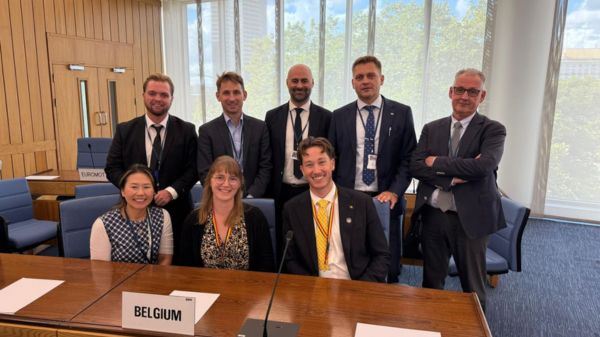
IMO Member States, Belgium delegation. Lloyd's Register, EXMAR, and Belgium’s Federal Public Service develop interim guidelines for ammonia cargo as fuel  

Guidelines expected to receive formal IMO approval in May 2026, enabling ammonia use on gas carriers.

Knut Ørbeck-Nilssen, DNV. DNV to lead Nordic roadmap Phase 2 for zero-carbon shipping transition  

Programme will identify green corridors and tackle cost barriers through new financing approaches.

Monjasa logo. Monjasa seeks trader for Dubai operations  

Marine fuel supplier recruiting for trading role covering sales, purchasing, and logistics in UAE.

IBIA Board Elections 2026 – Call for Nominations announcement. IBIA calls for board election nominations ahead of Friday deadline  

Association seeks candidates for 2026 board positions with submissions closing 12 December.

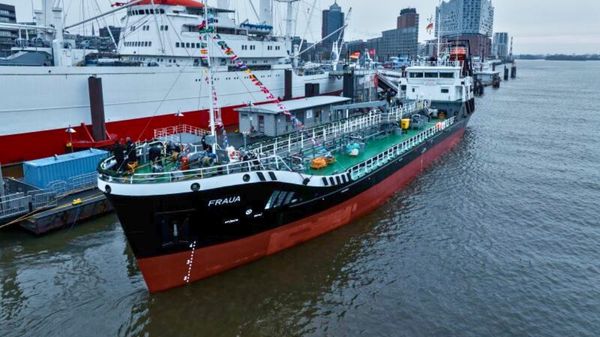
Fraua vessel. BMT Bunker adds tanker MT Fraua to fleet  

BMT Bunker und Mineralöltransport has expanded its fleet with a new vessel.

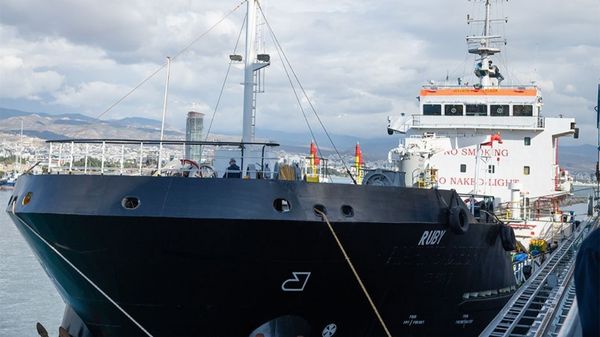
Ruby bunkering vessel. Island Oil expands Cyprus bunkering fleet with vessel Ruby  

Island Oil adds second bunkering vessel to strengthen marine fuel supply operations in Cyprus.

Wärtsilä and Aalto University partnership signing. Wärtsilä and Aalto University extend R&D partnership to accelerate marine decarbonisation  

Five-year agreement expands international collaboration on alternative fuels and clean energy technologies.