Fri 7 Apr 2017, 11:53 GMT

2010 HNS Convention closer to ratification


Focus now turns to member states to ratify and accede to the convention.


The European Parliament has adopted the Recommendations on the 2010 Protocol to the International Convention on Liability and Compensation for Damage in Connection with the Carriage of Hazardous and Noxious Substances by Sea (the '2010 HNS Convention') in its plenary session this week.

The focus now will now turn to the member states to ratify and accede to the convention.

Since the 2010 Protocol has parts of it falling under the exclusive competence of the European Union, member states will need to be authorised through a Council decision to be able to ratify or accede to it. The EU legislative procedure requires the authorisation of the Council and the consent of European Parliament on a proposal by the European Commission.

The threshold required for the entry into force of the Convention is the ratification by 12 IMO member states, including four with not less than two million units of gross tonnage each and the volume of contributing cargo for the general account must be at least 40 million tonnes.

In a statement, Patrick Verhoeven, Secretary General of the European Community Shipowners' Associations (ECSA), said: "We welcome this decision as we are now one step closer to the closure of the EU legislative process by the adoption of the Council decision allowing for the member states to ratify and accede to the convention."

Shipping associations the Baltic and International Maritime Council (BIMCO), the International Chamber of Shipping (ICS) and the ECSA described the 2010 HNS Convention as "an important part of the international maritime liability and compensation regime" as the carriage of HNS by sea is increaseing for almost all ship types, including: container ships, chemical, liquefied natural gas (LNG) and liquefied petroleum gas (LPG) tankers.

Background

The International Convention on Liability and Compensation for Damage in connection with the Carriage of Hazardous and Noxious Substances by Sea, 1996 has been amended by a Protocol of 2010.

Once the 2010 Protocol enters into force, the 1996 Convention, as amended by the Protocol, will be called: 'The International Convention on Liability and Compensation for Damage in Connection with the Carriage of Hazardous and Noxious Substances by Sea, 2010'.

1. The HNS Convention will establish an international liability and compensation regime for pollution damage from hazardous and noxious substances carried by ships. As well as the risks of fire and explosion, including loss of life, personal injury, and loss of or damage to property (HNS damage), it will provide victims (claimants) of HNS damages with compensation.

2. It will create a regime of strict liability for the carrier, establish a regime of compulsory insurance as well as direct action against the carrier's insurer.

3. The regime will ensure that the costs are shared between shipowners and HNS cargo receivers.

"The Convention establishes a comprehensive regime covering pollution damage from hazardous and noxious substances carried by ships. We strongly support the Convention and urge its early entry into force," Verhoeven remarked.

"The shipping industry strongly encourages the member states to take the necessary measures to ratify and accede to the 2010 Protocol to the HNS Convention as soon as possible. In this way, the European Union could lead by example in the ratification of this important International Convention and influence its entry into force," the ECSA said.


Global Ethanol Association (GEA) and Vale logo side by side. Vale joins Global Ethanol Association as founding member  

Brazilian mining company becomes founding member of association focused on ethanol use in maritime sector.

KPI OceanConnect Logo. KPI OceanConnect seeks marine fuel trading intern in Singapore  

Bunker supplier advertises role offering exposure to commercial and operational aspects of marine fuel business.

Frank Dahan, CSL Group. CSL Group's Frank Dahan appointed chair of IBIA's Americas regional board  

Dahan brings 29 years of marine transportation and energy experience to the role.

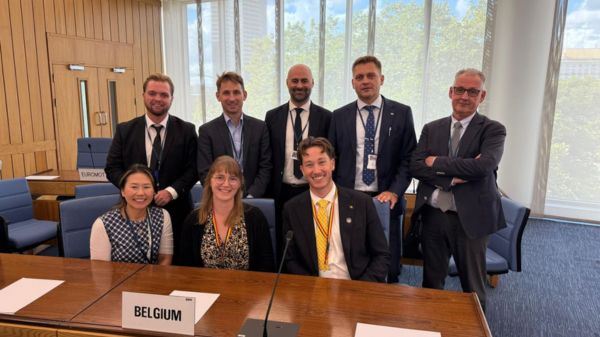
IMO Member States, Belgium delegation. Lloyd's Register, EXMAR, and Belgium’s Federal Public Service develop interim guidelines for ammonia cargo as fuel  

Guidelines expected to receive formal IMO approval in May 2026, enabling ammonia use on gas carriers.

Knut Ørbeck-Nilssen, DNV. DNV to lead Nordic roadmap Phase 2 for zero-carbon shipping transition  

Programme will identify green corridors and tackle cost barriers through new financing approaches.

Monjasa logo. Monjasa seeks trader for Dubai operations  

Marine fuel supplier recruiting for trading role covering sales, purchasing, and logistics in UAE.

IBIA Board Elections 2026 – Call for Nominations announcement. IBIA calls for board election nominations ahead of Friday deadline  

Association seeks candidates for 2026 board positions with submissions closing 12 December.

Fraua vessel. BMT Bunker adds tanker MT Fraua to fleet  

BMT Bunker und Mineralöltransport has expanded its fleet with a new vessel.

Ruby bunkering vessel. Island Oil expands Cyprus bunkering fleet with vessel Ruby  

Island Oil adds second bunkering vessel to strengthen marine fuel supply operations in Cyprus.

Wärtsilä and Aalto University partnership signing. Wärtsilä and Aalto University extend R&D partnership to accelerate marine decarbonisation  

Five-year agreement expands international collaboration on alternative fuels and clean energy technologies.