Fri 11 Nov 2016, 10:28 GMT

2018 inspection campaign to focus on sulphur compliance


Port State Control (PSC) authorities in 45 countries sign up to inspection initiative.


Port State Control (PSC) authorities across 45 countries and five continents have agreed to carry out a so-called Concentrated Inspection Campaign (CIC) in 2018 that will focus on air pollution from ships. The initiative is based on a Danish/Dutch proposal.

The approval of the Concentrated Inspection Campaign means that all 45 countries covered by the Port State Control schemes - in South America, North America, Europe, Asia and Australia - will carry out a thorough examination of a chosen area, such as sulphur, when Port State Control officers board foreign ships. The move is designed to increase compliance with regulations and contribute to ship crews' awareness of the new regulations and the consequences of any violations.

Commenting on the news, the Danish Maritime Authority said: "The 2018 campaign is the result of efforts made by Denmark to ensure enhanced international focus on enforcement."

"The Danish authorities are constantly engaged in work on both the political and the technological side of efficient enforcement," it added.

Peter Krog-Meyer, Senior Adviser of the Danish Maritime Authority, remarked: "We have achieved two important results. Firstly, all over the world there will be even more focus on whether ships meet the sulphur limits. Secondly, it is a strong signal that so many important port states now clearly show that we have joined forces in our efforts to enhance the enforcement of the sulphur provisions across the borders."

Krog-Meyer added: "In Denmark, we have been striving to ensure stronger enforcement for years, and the 2018 inspection campaign is merely one element of much greater efforts that are already being made. And this process will be speeded up in 2017 after the IMO decision on a global sulphur limit in 2020."

Enforcement in Denmark

Earlier this year, Bunker Index recounted how the Danish Ministry of Environment and Food - the Danish agency tasked with monitoring and restricting the regulation of emissions - reported five shipping firms to the police in order to investigate allegations of fuel sulphur content violations.

According to samples of fuel extracted from ships in Danish ports, some of the firms operating the vessels tested were reportedly burning fuel with a sulphur content that was between 20 percent to as much as nine times above the currently allowed limit.

Since January 2015, when MARPOL Emission Control Area (ECA) requirements for the Baltic and North Seas restricted sulphur levels in marine fuels for ships operating in the region, the Danish Maritime Authority has stepped up its inspection programmes.

Denmark currently operates an 'air sniffer' that detects sulphur oxide (SOx) levels in exhaust plumes, with one of the devices fitted to a small aeroplane and the other, to the Great Belt Bridge.

Compliance in the EU

In June, the Baltic Ports Organization (BPO) issued a report entitled 'EU Sulphur Directive - one year after its entry into force', providing information on the implementation of the 0.1 sulphur limit in marine fuel.

The report provided a summary of the actions undertaken by the EU Member States with the European Maritime Safety Agency (EMSA). In terms of compliance, the report said that a high rate of compliance was observed during the first year. Whilst the majority of non-compliance cases were associated with erroneous entries in ship log books, a quite significant part of non-compliance results were associated with fuel used by ship operators.

Fines and the cost of compliance

With both the likelihood of being caught and the fact that fines are rather modest in the E.U., some have warned that there is a financial incentive to cheat rather than adhering to the new requirements. This is in direct contrast to the United States, for example, where penalties for breaching Emission Control Area (ECA) sulphur rules are higher. The move to increase the number of inspections will aim to clamp down on companies that violate the rules.


Global Ethanol Association (GEA) and Vale logo side by side. Vale joins Global Ethanol Association as founding member  

Brazilian mining company becomes founding member of association focused on ethanol use in maritime sector.

KPI OceanConnect Logo. KPI OceanConnect seeks marine fuel trading intern in Singapore  

Bunker supplier advertises role offering exposure to commercial and operational aspects of marine fuel business.

Frank Dahan, CSL Group. CSL Group's Frank Dahan appointed chair of IBIA's Americas regional board  

Dahan brings 29 years of marine transportation and energy experience to the role.

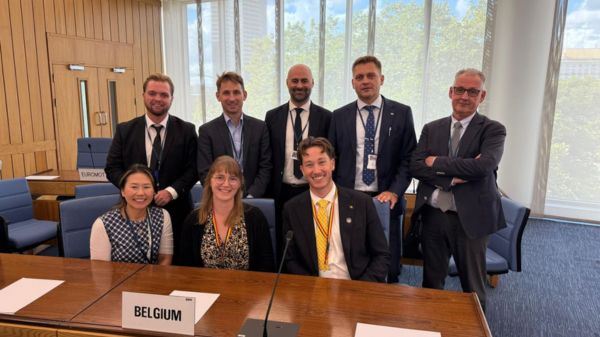
IMO Member States, Belgium delegation. Lloyd's Register, EXMAR, and Belgium’s Federal Public Service develop interim guidelines for ammonia cargo as fuel  

Guidelines expected to receive formal IMO approval in May 2026, enabling ammonia use on gas carriers.

Knut Ørbeck-Nilssen, DNV. DNV to lead Nordic roadmap Phase 2 for zero-carbon shipping transition  

Programme will identify green corridors and tackle cost barriers through new financing approaches.

Monjasa logo. Monjasa seeks trader for Dubai operations  

Marine fuel supplier recruiting for trading role covering sales, purchasing, and logistics in UAE.

IBIA Board Elections 2026 – Call for Nominations announcement. IBIA calls for board election nominations ahead of Friday deadline  

Association seeks candidates for 2026 board positions with submissions closing 12 December.

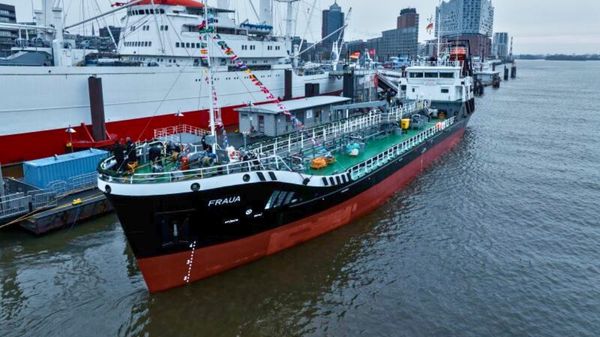
Fraua vessel. BMT Bunker adds tanker MT Fraua to fleet  

BMT Bunker und Mineralöltransport has expanded its fleet with a new vessel.

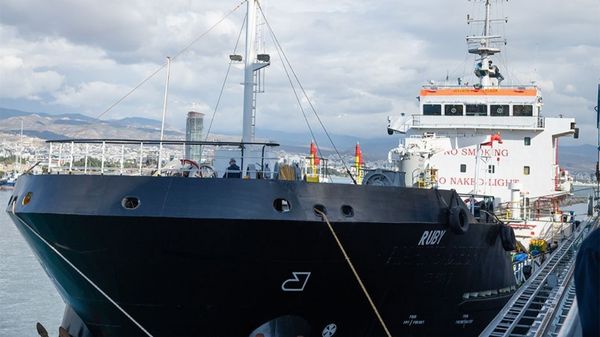
Ruby bunkering vessel. Island Oil expands Cyprus bunkering fleet with vessel Ruby  

Island Oil adds second bunkering vessel to strengthen marine fuel supply operations in Cyprus.

Wärtsilä and Aalto University partnership signing. Wärtsilä and Aalto University extend R&D partnership to accelerate marine decarbonisation  

Five-year agreement expands international collaboration on alternative fuels and clean energy technologies.