Thu 30 Jun 2016, 11:40 GMT

Supergelators hold key to more effective oil spill clean-up


Supergelator molecules entangle the oil molecules into clumps that can be easily skimmed off the water's surface.


The Institute of Bioengineering and Nanotechnology (IBN), the world's first bioengineering and nanotechnology research institute, has announced the invention a smart oil-scavenging material (supergelator) to combat oil spills.

Working to improve the efficiency of cleaning up oil spills IBN's Agency for Science, Technology and Research (A*STAR), based in Singapore, have been developing technology to be used by clean-up crews to manage and contain large spills and prevent secondary pollution.

Current techniques for cleaning oil spills are not only inefficient but may cause further pollution or damage to the environment. The use of toxic detergent-like dispersants and the burning of oil slicks, result in incomplete removal of the oil. After dispersal application the oil molecules remain in the water for long periods and can spread over a large area as they are carried by wind and waves. Burning can only be applied to fresh oil slicks of at least 3 millimetres thickness and this process can also cause secondary environmental pollution.

The IBN researchers have developed new compounds that dissolve easily in environmentally friendly solvents and gel rapidly upon contact with oil. These supergelator molecules arrange themselves into a 3D network, entangling the oil molecules into clumps that can then be easily skimmed off the water's surface.

"Marine oil spills have a disastrous impact on the environment and marine life, and result in an enormous economic burden on society. Our rapid-acting supergelators offer an effective clean-up solution that can help to contain the severe environmental damage and impact of such incidents in the future," said IBN Executive Director Professor Jackie Y. Ying.

IBN's supergelators have been tested on various types of weathered and unweathered crude oil in seawater, and have been found to be effective in solidifying all of them. The supergelators take only minutes to solidify the oil at room temperature for easy removal from water.

The research team have also carried out tests on the secondary impact of the supergelators. They found the compound was not toxic to human cells, neither did it harm zebra fish embryos and larvae. The researchers believe that these qualities would make the supergelators suitable for use in large oil spill areas.

"The most interesting and useful characteristic of our molecules is their ability to stack themselves on top of each other." said IBN Team Leader and Principal Research Scientist Dr Huaqiang Zeng. "These stacked columns allow our researchers to create and test different molecular constructions, while finding the best structure that will yield the desired properties."

IBN is spearheading economic oriented research to advance scientific discovery and develop innovative technology that bridges the gap between academia and industry. They are currently looking for industrial partners to further develop this technology for commercial use.

Image: 3D nanofiber net formed by the supergelators to trap oil molecules. Credit: Institute of Bioengineering and Nanotechnology.


Global Ethanol Association (GEA) and Vale logo side by side. Vale joins Global Ethanol Association as founding member  

Brazilian mining company becomes founding member of association focused on ethanol use in maritime sector.

KPI OceanConnect Logo. KPI OceanConnect seeks marine fuel trading intern in Singapore  

Bunker supplier advertises role offering exposure to commercial and operational aspects of marine fuel business.

Frank Dahan, CSL Group. CSL Group's Frank Dahan appointed chair of IBIA's Americas regional board  

Dahan brings 29 years of marine transportation and energy experience to the role.

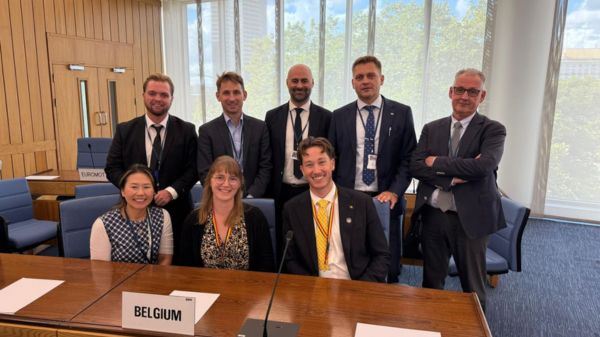
IMO Member States, Belgium delegation. Lloyd's Register, EXMAR, and Belgium’s Federal Public Service develop interim guidelines for ammonia cargo as fuel  

Guidelines expected to receive formal IMO approval in May 2026, enabling ammonia use on gas carriers.

Knut Ørbeck-Nilssen, DNV. DNV to lead Nordic roadmap Phase 2 for zero-carbon shipping transition  

Programme will identify green corridors and tackle cost barriers through new financing approaches.

Monjasa logo. Monjasa seeks trader for Dubai operations  

Marine fuel supplier recruiting for trading role covering sales, purchasing, and logistics in UAE.

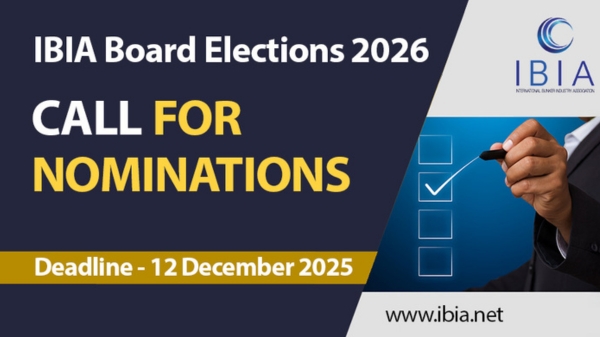
IBIA Board Elections 2026 – Call for Nominations announcement. IBIA calls for board election nominations ahead of Friday deadline  

Association seeks candidates for 2026 board positions with submissions closing 12 December.

Fraua vessel. BMT Bunker adds tanker MT Fraua to fleet  

BMT Bunker und Mineralöltransport has expanded its fleet with a new vessel.

Ruby bunkering vessel. Island Oil expands Cyprus bunkering fleet with vessel Ruby  

Island Oil adds second bunkering vessel to strengthen marine fuel supply operations in Cyprus.

Wärtsilä and Aalto University partnership signing. Wärtsilä and Aalto University extend R&D partnership to accelerate marine decarbonisation  

Five-year agreement expands international collaboration on alternative fuels and clean energy technologies.