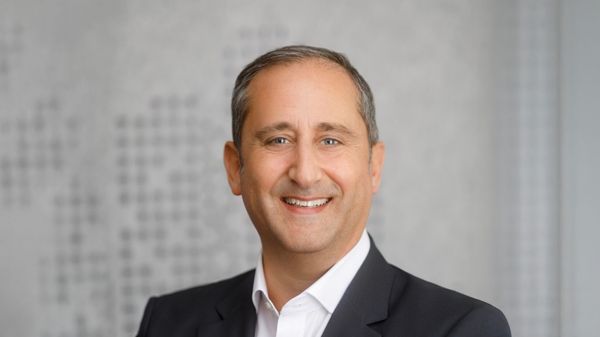
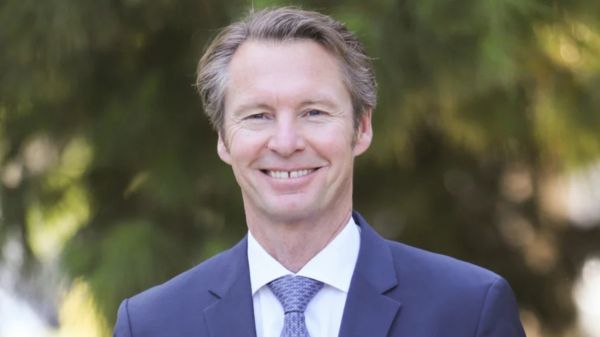
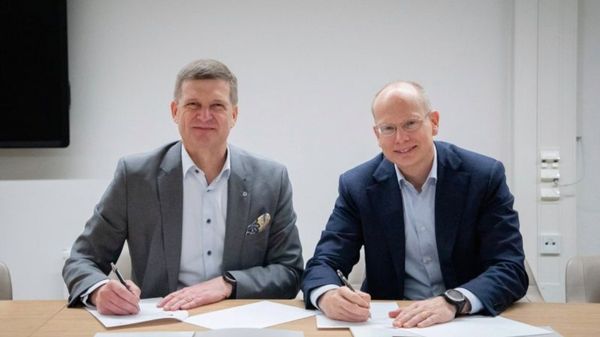
Royal Dutch Shell chief executive officer
Ben Van Beurden last week spelt out his main goal - to surpass Exxon Mobil to become the best-performing oil major.
"I am determined to get us to that number one place," he said, after outlining the company's long-term strategy in London.
Van Beurden, who is resetting the company to perform with lower oil prices, said Shell plans to now slow new investments in its liquefied natural gas (LNG) business as it seeks to increase cash flows.
In February 2016, Shell sealed the $53 billion (36 billion pounds) acquisition of British rival BG Group to form the world's top liquefied natural gas company. The BG deal gave it LNG assets from Australia to North America and consolidated its top position with a liquefaction capacity more than double that of rival Exxon.
The acquisition of BG also made Shell the world's second-biggest oil company, after years vying for that position with Chevron Corp. Yet, Shell's $203 billion market valuation is 45 percent lower than Exxon's and it produced 15 percent less oil and gas than Exxon in the first quarter, even after adding BG's output.
For the first 90 years of its existence, Shell led the industry. It lost that position in the late 1990s as its rivals including Exxon, Total SA and BP Plc went on a deal-making spree. Van Beurden now wants to return the company to the top and he's banking on the recent purchase of BG and other deals to help him.
The success or otherwise of the company's business strategy moving forwards will define the legacy of Shell Chief Executive Ben van Beurden, who in addition to getting to the number one position is seeking to transform Shell into a more specialised group focused on the rapidly growing LNG market and deepwater oil production.
Sale of downstream assets
In recent years, Shell has sold a significant amount of refining capacity as part of its stated strategy: to concentrate its downstream footprint on a smaller number of assets and markets where it can be most competitive.
Recent downstream divestments by Shell include the sale of refineries in the UK, Germany, France, Norway and the Czech Republic; downstream businesses in Egypt, Spain, Greece, Finland and Sweden, Australia and Italy; the initial public offering (IPO) of Shell Midstream Partners L.P. Shell; the sale of its marketing businesses in Denmark and Norway, its LPG businesses in France and a 33.24% shareholding in Showa Shell Sekiyu KK.
Earlier this year, the company also sold its 51 percent shareholding in the Shell Refining Company (SRC) in Malaysia for $66.3 million.
As part of its downstream strategy, Shell also recently announced, in December 2015, that it had taken the final investment decision to build a major new unit at the Pernis refinery in Rotterdam, Netherlands. The solvent deasphalter (SDA) unit will remove heavier fractions from crude oil, allowing the refinery to upgrade a larger proportion of its oil intake into lighter, high-grade products.
Construction work is planned to start this year, subject to permit approvals, with completion expected by the end of 2018.
LNG bunker deliveries
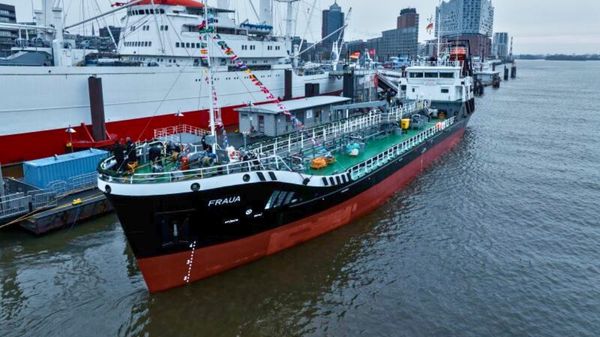
Shell is continuing to move forward with its LNG bunker strategy and is already supplying LNG to clients in a number of key ports.
In May 2015, Shell bunkered the SABIC-chartered vessels Coral Star and Coral Sticho in Teesport, northern England. It was the first LNG bunkering operation for Shell in the UK.
The bunker supplier is also an exclusive strategic partner of AIDA Cruises for the supply of LNG. Shell is to supply the operator's vessels with LNG at the ports of Hamburg, Southampton, Le Havre, Rotterdam and Zeebrugge.
Shell is to also charter series of 15 inland waterway barges being built for Belgium-based Plouvier Transport N.V. The company is to utilise the new 110-metre-long barges to support its growing operations in the Amsterdam-Rotterdam-Antwerp (ARA) and Rhinetrack (Germany/Switzerland) regions.
Strategic LNG bunker agreements
In February 2016, Shell signed a memorandum of understanding (MoU) with
Qatargas and the Maersk Group to explore the development of liquefied natural gas (LNG) as a marine fuel in the Middle East region.
Michiel Kool, managing Director and chairman of Qatar Shell Companies, commented at the time: "Shell is delighted to work in partnership with Qatargas and Maersk to create new market development opportunities for the use of LNG as a marine fuel in the Middle East region from its Qatargas 4 venture. LNG fuel is a new alternative for ship and vessel operators responding to stricter emission control standards."
A second memorandum of understanding followed in April 2016 between Shell, Qatargas and United Arab Shipping Company (UASC), again to explore the development of liquefied natural gas (LNG) in the Middle East region. The MoU envisages LNG supplies for this initiative to be made available from Qatargas 4, a joint venture between Qatar Petroleum and Shell Gas B.V., with United Arab Shipping Company Line potentially using the fuel for its recently built container ships.
Expansion of marine lubricants network
In April 2016, Shell Marine Products (SMP) advised it had expanded its global lubricant network by adding more than 70 ports in less than a year. It had also expanded its operation in 14 countries and now has 604 ports in 56 countries.
"One of our goals as a business is to give our customers peace of mind. We aim to do this via our consistently high quality products, our attentive technical and customer service, as well as making sure our customers can lift the lubricants they need in as many locations as possible," said Jan Toschka, General Manager of Shell Marine Products at the time.