Fri 25 Apr 2008, 13:23 GMT

Royal Caribbean reports higher first quarter earnings


Highest first quarter yieds in company's history achieved despite $685 million fuel costs.


Royal Caribbean Cruises Ltd. has announced net income for the first quarter 2008 of $75.6 million, or $0.35 per share, compared to net income of $8.8 million, or $0.04 per share, in 2007. The significant increase in earnings per share versus the first quarter 2007 was due primarily to increased capacity and higher yields, offset by higher fuel prices.

Revenues for the first quarter 2008 increased to $1.4 billion from revenues of $1.2 billion in the first quarter 2007, whilst higher fuel prices increased costs by $60 million in the first quarter 2008, which reduced earnings per share by $0.28.

Key figures for the first quarter 2008, as compared to the first quarter 2007, were as follows:

* Net Yields increased 7.1% to a record $173 per APCD.
* Excluding fuel, Net Cruise Costs per APCD decreased 1.0%.
* Fuel prices increased 53%, while fuel costs per APCD increased 24%; benefiting from energy saving initiatives and hedging. The average at- the-pump price for the quarter was $592 per metric ton versus $388 per metric ton in 2007.
* Net Cruise Costs per APCD increased 2.9%.

"It is gratifying that, despite the challenging economic times, our guests continue to appreciate the outstanding value offered by our brands," said Richard Fain, Chairman and Chief Executive Officer. "We delivered the highest first quarter yields in our company's history, with significant improvement in ticket prices and continued healthy onboard spending."

The company expects its second quarter 2008 earnings per share to be $0.40 to $0.45, and expects full year 2008 earnings per share to be $2.85 to $3.00.

"Our record yield performance in the first quarter and our solid forward bookings demonstrate our resilience and are certainly reassuring," said Fain. "Our brands have clearly differentiated themselves and our portfolio of innovative newbuilds will continue to feed their momentum."

Fain continued, "Higher fuel prices have been a prolonged challenge for us, but our management team remains focused on cost controls and continues to help mitigate the impact. Except for higher fuel prices, it is very gratifying to see our revenues and earnings projected to be as good or better than our original expectations. Our brands' momentum, cost savings initiatives, growing economies of scale and the efficiencies of our new vessels should continue to improve our shareholder value."

The company expects to have a 5.1% increase in capacity in 2008, driven primarily by a full year of Liberty of the Seas, the Independence of the Seas entering service in May, Pullmantur's purchase of Pacific Star, and Celebrity Solstice entering service in the fourth quarter.

Royal Caribbean does not forecast fuel prices and its cost guidance for fuel is based on current at-the-pump prices net of any hedge impacts. Based on today's fuel prices, the company has included $685 million in fuel expenses in its full year 2008 guidance. This figure is $90 million, or $0.42 per share, higher than at the time of its previous earnings guidance.

As of March 31, 2008, liquidity was $1.4 billion, including $0.4 billion in cash and cash equivalents and $1.0 billion in available credit on the company's unsecured revolving credit facility.

Based on current ship orders, projected capital expenditures for 2008, 2009, 2010, 2011, and 2012, are estimated to be $1.9 billion, $2.0 billion, $2.2 billion, $1.0 billion, and $1.0 billion, respectively. Projected capacity increases for the same five years are estimated at 5.1%, 9.3%, 11.4%, 6.4%, and 3.4%, respectively.


Global Ethanol Association (GEA) and Vale logo side by side. Vale joins Global Ethanol Association as founding member  

Brazilian mining company becomes founding member of association focused on ethanol use in maritime sector.

KPI OceanConnect Logo. KPI OceanConnect seeks marine fuel trading intern in Singapore  

Bunker supplier advertises role offering exposure to commercial and operational aspects of marine fuel business.

Frank Dahan, CSL Group. CSL Group's Frank Dahan appointed chair of IBIA's Americas regional board  

Dahan brings 29 years of marine transportation and energy experience to the role.

IMO Member States, Belgium delegation. Lloyd's Register, EXMAR, and Belgium’s Federal Public Service develop interim guidelines for ammonia cargo as fuel  

Guidelines expected to receive formal IMO approval in May 2026, enabling ammonia use on gas carriers.

Knut Ørbeck-Nilssen, DNV. DNV to lead Nordic roadmap Phase 2 for zero-carbon shipping transition  

Programme will identify green corridors and tackle cost barriers through new financing approaches.

Monjasa logo. Monjasa seeks trader for Dubai operations  

Marine fuel supplier recruiting for trading role covering sales, purchasing, and logistics in UAE.

IBIA Board Elections 2026 – Call for Nominations announcement. IBIA calls for board election nominations ahead of Friday deadline  

Association seeks candidates for 2026 board positions with submissions closing 12 December.

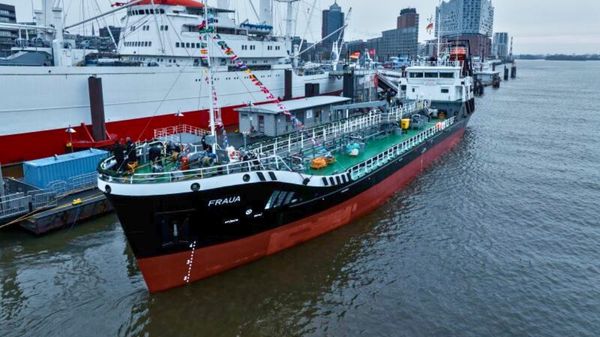
Fraua vessel. BMT Bunker adds tanker MT Fraua to fleet  

BMT Bunker und Mineralöltransport has expanded its fleet with a new vessel.

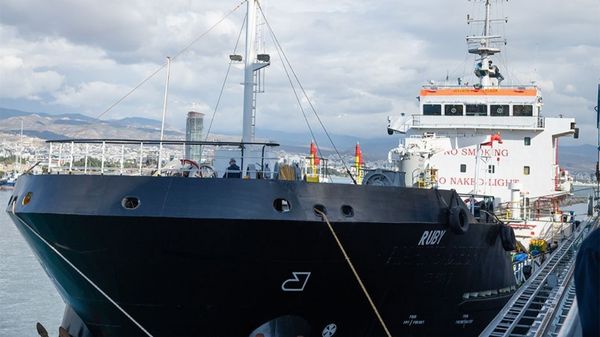
Ruby bunkering vessel. Island Oil expands Cyprus bunkering fleet with vessel Ruby  

Island Oil adds second bunkering vessel to strengthen marine fuel supply operations in Cyprus.

Wärtsilä and Aalto University partnership signing. Wärtsilä and Aalto University extend R&D partnership to accelerate marine decarbonisation  

Five-year agreement expands international collaboration on alternative fuels and clean energy technologies.