Wed 9 May 2012, 18:11 GMT

Eco-solution aimed at reducing fuel consumption


New system will allow owners to adapt their operations in real-time to improve efficiency and lower fuel consumption.


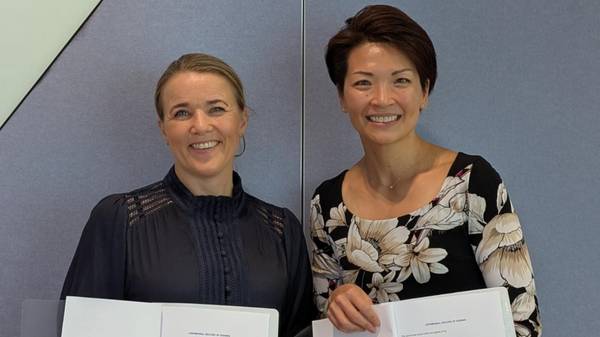
Classification society Nippon Kaiji Kyokai (ClassNK) and NAPA, a software firm for ship design and operations, have announced a collaboration to provide a solution for the Ship Energy Efficiency Management Plan (SEEMP).

The SEEMP solution from ClassNK and NAPA will combine modules to optimise trim, route and speed optimisation and weather routing with an analytics service to offer operational efficiency and decision support.

The system will allow owners and operators to respond quickly and adapt operations in real-time in order to increase eco-efficiency and reduce fuel consumption.

In order to ensure that the collaborative SEEMP solution will be both effective and practical for use on actual vessels, ClassNK and NAPA are working closely with Japan’s largest shipbuilder, Imabari Shipbuilding Co. Ltd..

A trial version of the new solution is expected to be completed within the year, and, upon completion, it will undergo extensive real world testing on vessels owned and operated by an Imabari Group shipping company. Feedback from this verification testing will be used to further develop and refine the system prior to final release. Imabari Shipbuilding will also make use of the system and the results from its verification tests to further improve the performance of new vessels built at its shipyards.

Yasushi Nakamura, Executive Vice President, ClassNK, said: "As the world’s leading classification society, we are trusted by our clients to continuously add value to their operations. In the current economic and regulatory environment, pioneering new means of increasing eco-efficiency and reducing fuel consumption is right at the top of the agenda. ClassNK has a reputation for service excellence, which is why NAPA’s unrivalled hydrodynamics expertise and proven background in ship design makes them the natural choice for this collaboration with the cooperation of Imabari Shipbuildings Co., Ltd."

Juha Heikinheimo, President, NAPA Group commented: "We are delighted to continue our long-time, fruitful co-operation with ClassNK and to join our forces to provide world leading class society eco-efficiency solutions for maritime industry. Eco-efficiency lies right at the heart of NAPA’s business, we are committed to providing environmentally sound solutions from eco-efficient ship design to our operations support software. The partnership with ClassNK shows the potential of NAPA’s software in supporting significant financial and environmental savings. Indeed, when married with sound management practice, improvement of latent efficiencies, optimisation of trim, ballast and floating position, and implementation of voyage optimisation systems, an electronic approach to SEEMP can achieve as much as 15-20% in fuel economy, depending on the vessel type."


Tangier Maersk vessel. Maersk takes delivery of first methanol-capable vessel in 9,000-teu series  

Tangier Maersk is the first of six mid-size container ships with methanol-capable dual-fuel engines.

IBIA MFM bunkering training course graphic. IBIA to run surveyor training course for mass flow meter-equipped bunkering in Rotterdam  

One-day course scheduled for 19 February aims to prepare professionals for MFM-equipped bunkering operations.

CO2 carrier vessel aerial view. MOL secures two 12,000-cbm CO2 carriers for Northern Lights expansion  

Japanese shipowner to deliver vessels in 2028 for cross-border carbon transport and storage project.

MOL and ONGC VLEC long-term charter signing. MOL and ONGC sign 15-year charter deal for two ethane carriers  

Japanese shipowner expands fleet to 16 vessels with newbuildings scheduled for delivery in 2028.

Vessels at sea. Dual-fuel container ship and vehicle carrier fleet reaches 400 vessels  

World Shipping Council reports 83% increase in operational dual-fuel vessels during 2025.

Photograph of a blue cargo vessel. Lloyd’s Register publishes first guidance notes for onboard hydrogen generation systems  

Classification society addresses regulatory gap as shipowners explore producing hydrogen from alternative fuels onboard.

Erasmusbrug bridge in Rotterdam. Rotterdam bunker industry faces upheaval as new regulations drive up costs and shift volumes  

Red III compliance costs and a mass flow meter mandate are creating operational challenges across the ARA region.

Neil Chapman, VPS. VPS appoints Neil Chapman as managing director for the Americas  

Maritime services company names industry veteran to lead regional operations and client partnerships.

Oil refinery infrastructure. Maritime industry shifts towards LNG as alternative fuel enthusiasm stalls  

Geopolitical concerns drive shipping leaders to prioritise established fuels over newer alternatives, survey finds.

OceanScore logo. OceanScore reaches $5m annual recurring revenue as emissions compliance demand grows  

Hamburg-based firm supports compliance workflows for more than 2,500 vessels as regulations enter operational phases.


 Recommended