Fri 27 Jan 2012, 13:19 GMT

Wärtsilä foresees growing interest in LNG


Wärtsilä's CEO has said that the company anticipates a rise in interest for liquefied natural gas (LNG) as a marine fuel.

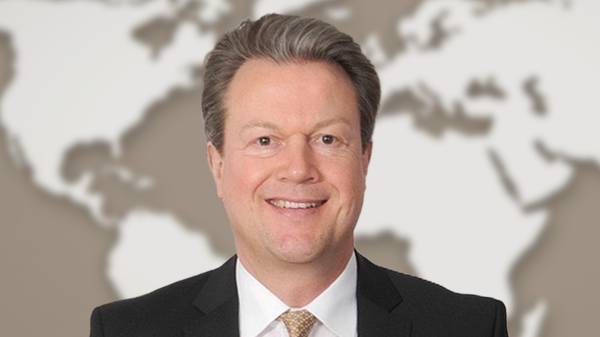
Speaking in the company's financial statements bulletin for January - December 2011, Wärtsilä President and CEO Bjorn Rosengren said: "We anticipate growing interest for gas as a fuel and on a slightly longer term we foresee strong potential in the marine markets for environmental technologies.

Commenting on the Hamworthy takeover, Rosengren said: "The acquisition of Hamworthy will enhance our capabilities in the offshore, marine gas applications, and environmental solutions markets and it will provide important synergies. The acquisition is expected to become effective on 31 January 2012 and it will increase our earnings as soon as it is finalised. However, it will have a slightly negative impact on our profitability in 2012.”

Please find below a summary of financial highlights for January - December 2011

- Order intake increased 13% to EUR 4,516 million (4,005)
- Order intake in joint venture companies grew significantly, EUR 394 million (77)
- Book-to-bill 1.07 (0.88)
- At the end of the period the order book totalled EUR 4,007 million (3,795), +6%
- Net sales decreased 7.6% to EUR 4,209 million (4,553)
- Operating result EUR 469 million, or 11.1% of net sales (EUR 487 million and 10.7%)
- Earnings per share 1.52 euro (1.68)
- Cash flow from operating activities EUR 232 million (663)
- Dividend proposal 0.90 euro/share

Fourth Quarter Highlights

- Order intake increased 25% to EUR 1,250 million (1,003)
- Order intake in joint venture companies grew significantly, EUR 178 million (4)
- Book-to-bill 1.01 (0.69)
- Net sales decreased 15% to EUR 1,238 million (1,462)
- Operating result EUR 145 million, or 11.7% of net sales (EUR 159 million and 10.9%)
- Earnings per share amounted to 0.48 euro (0.50)
- Cash flow from operating activities EUR -71 million (171)

Ship Power Sector

Vessel contracting activity during the fourth quarter 2011 was approximately at the same level as in the third quarter. A total of 1,192 vessels were contracted in 2011, which represents a decrease of 49% compared to the previous year. However, the investment level in newbuilding of ships was comparable to that of 2010, highlighting a shift towards the contracting of specialised vessels.

During 2011, dry and wet cargo trades grew, but the fleet of bulk carriers and tankers grew twice as much as the growth in cargo. Wärtsilä said this demonstrates an imbalance between supply and demand that resulted in the slowing down of contracting for traditional merchant ships in 2011.

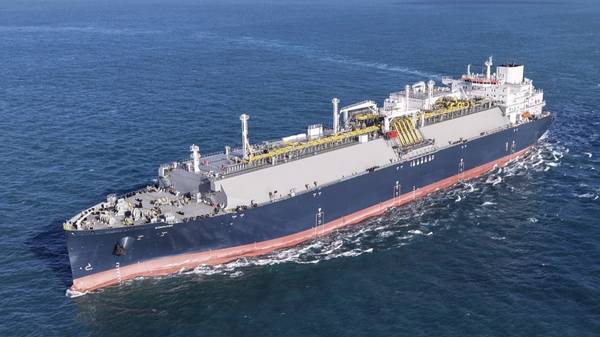
Contracting activity was robust for specialised vessel types throughout the year. By year-end, 50 contracts for LNG carriers were registered and the dual-fuel solution has proven to be the preferred technology for propulsion in this segment.

Vessels used for offshore exploration also experienced very robust contracting activity, with notably 36 contracts for drillships being placed in 2011. In the fourth quarter of 2011, several offshore service vessels (OSV’s) were contracted. China accounts for 44% of contracting in 2011 in terms of number of vessels and 36% in terms of Gross Tonnage compensated with workload (CGT). South Korea accounts for 27% and 45% respectively. Thereby, China continues to be the leading shipbuilding country in terms of number of vessels, while South Korea regained its position as the number one shipbuilder in terms of workload for their shipyards.

Notably, Brazilian yards booked a number of orders for offshore vessels, positioning the country in the top five shipbuilders for 2011.

Ship Power market shares

Wärtsilä’s share of the medium-speed main engine market was steady at 46% (at the end of the previous quarter 46%). Its market share in low-speed engines increased to 22% (18). In the auxiliary engine market Wärtsilä’s share was 4% (3).


American Bureau of Shipping (ABS) logo. ABS introduces nuclear-ready notation for marine and offshore assets  

The classification society has released what it describes as an industry-first notation to support future nuclear conversion of vessels and offshore assets.

AiP handover ceremony for NEXTGEN Energy Hub (NGEH) design. ABS grants approval in principle for Seatrium’s NEXTGEN Energy Hub design  

The hub concept integrates ammonia bunkering, power generation and electric vessel charging in a single unit.

Jumbo Maritime crew aboard vessel. Jumbo orders two methanol-ready L-Class heavy lift vessels from Dajin Heavy Industry  

Dutch heavy lift specialist Jumbo signs newbuilding contract for two 25,000-dwt vessels.

China flag. Zhoushan completes first bonded bunker operation at Majishan port area  

The operation marks full fuel supply coverage across all general cargo terminals in Zhoushan's port system.

US dollar banknotes. Port of Long Beach launches $1m methanol bunkering challenge for oceangoing vessels  

A $1m prize aims to kick-start commercial methanol bunkering at one of North America's busiest ports.

Core Power, Athlos Energy, Deon Policy Institute and ABS logos. Greece floating nuclear study finds no fundamental barriers to implementation  

A PESTLE assessment of floating nuclear power plants in Greece identifies framework gaps, not feasibility barriers.

Northern Pathliner alongside Bergen LNG vessel. Molgas completes LNG cool-down and bunkering for Northern Pathliner at Northern Lights terminal in Norway  

Operation carried out at Øygarden facility, with K Line and Integr8 Fuels in the supply chain.

Rendering of a G2 Ocean OHGC vessel. G2 Ocean expands fleet with six future-fuel ready gantry crane vessels  

Open hatch specialist adds vessels and jet sail technology as part of a broad fleet renewal programme.

CMA CGM Adventure vessel at Port of Mombasa. LNG-powered CMA CGM Adventure makes first call at the Port of Mombasa  

Kenya Ports Authority receives its first large LNG-fuelled container vessel.

Liam Blackmore, Lloyd's Register. Maritime trio shapes IMO safety guidelines for ammonia as marine fuel  

Real-world operational experience feeds directly into new IMO ammonia fuel safety framework.