
 |
Bunker One and Brazilian energy firm Acelen have joined forces to launch a marine supply operation outside the port of Itaqui, in the northern state of Maranhão.
A range of vessels, including large cargo ships and tankers, can now be supplied by Bunker One in the anchorage area of Itaqui, located in São Marcos Bay.
And the new operation will also be able to service different trade routes, including those either originating from or having Europe and the United States as destinations.
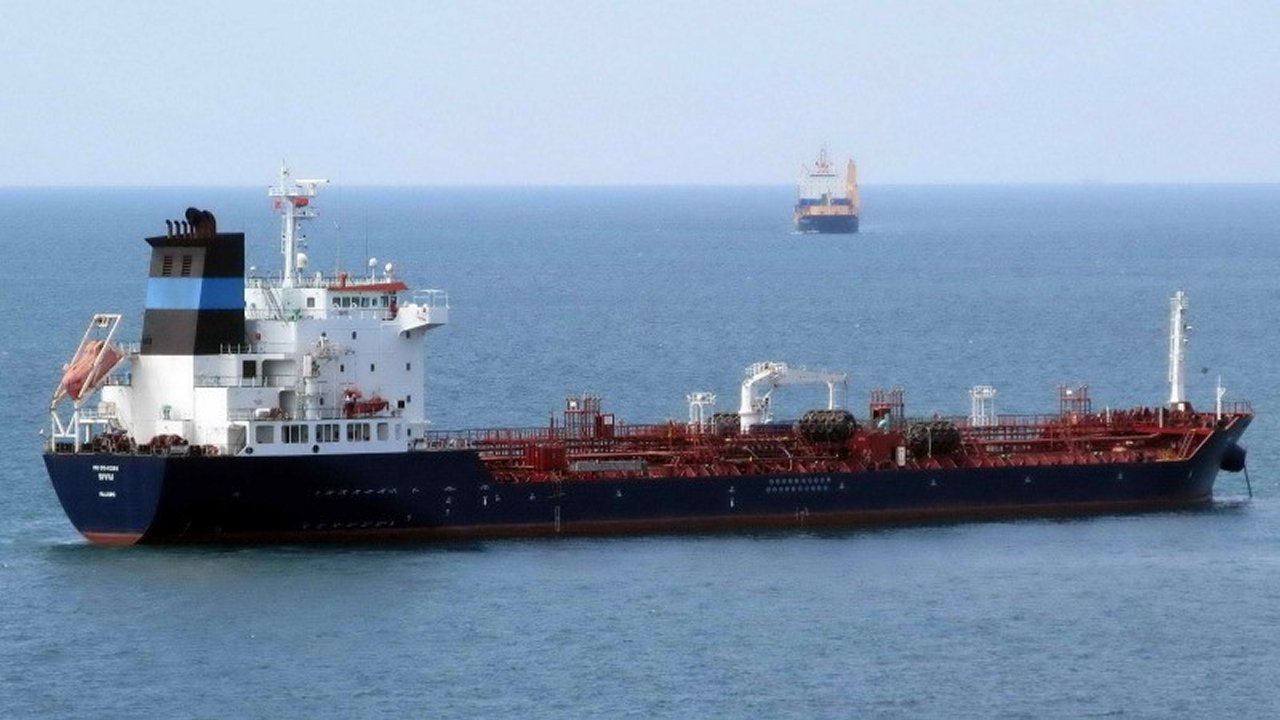
Nova Offshore, a subsidiary of Bunker One, has chartered the barge MT China Spirit for fuel deliveries in Itaqui.
The vessel is described as being highly equipped with a specialised crew, highly stable for navigation and mooring, whilst also complying with oil spill prevention requirements, with an emergency response contract in place.
Built in 2009, the tanker has a total length of 144 metres and a carrying capacity of 17,567 dwt tonnes.
The delivery location is a strategic hub for international trade, particularly for exports of raw commodities such as iron and soybeans and oil-related product distribution inside Brazil.
The option to bunker at anchorage reduces waiting times and calling costs as it allows for bunkering without interfering with loading and unloading operations at the terminals. Up to two ships can be supplied daily, taking into account the time required for each operation and the specifics of each bunkering operation.
"It is a convenient option for long-haul and coastal vessels that want to opt for the so-called Bunker Only Call when the ship heads to that location solely for refuelling. And as clients increasingly look to more sustainable bunker alternatives, we are preparing to meet demand, as we expect it to grow," explained Fillippe Fernandez, Marine Fuels Director at Bunker One (Brazil).
As a result of the tie-up, Bunker One says it expects to "significantly" increase sales volume at the location.
"This partnership will boost Bunker One's operations in Brazil by approximately 30 percent. And it's not just about another line of business or geographic area covered, but the beginning of a promising alliance that has the potential to offer new solutions for the shipping industry in Latin America," commented Flavio Ribeiro, CEO of Bunker One (Brazil).
According to Cristiano da Costa, Vice President of Commercial, Trading, and Shipping at Acelen, the partnership will support the region's growth, increasing the supply and competitiveness of Brazil as a hub option for bunker supply.
"It's an excellent partnership, capable of guaranteeing competitiveness to Brazil's bunker supply in the São Luís do Maranhão region."
The two firms expect the collaboration to increase the domestic market by up to 10 percent of bunker exports.
To deeply understand the bunkering operations in Itaqui, both companies invested in two studies: one on the meteoceanographic conditions of the anchorage areas and another on vessel approach and mooring during the marine fuel supply operations.
The studies used national and international data for analysis of wind, wave, and sea currents to ensure excellence in operational conditions.
The project partners say detailed knowledge of weather conditions will enable operations to be carried out to the highest supply standards.
Energy company Acelen owns the Mataripe Refinery, located near the ports of Madre de Deus and Salvador. The company represents around 14% of Brazil's total refining capacity, covering more than half of supplies in the the northeast of the country.
|
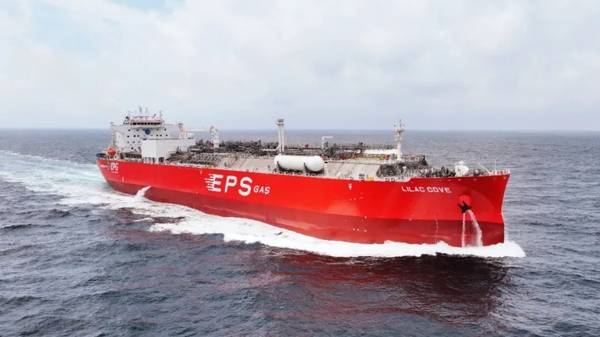
Jiangnan delivers second LPG dual-fuel VLAC in series to Singapore’s EPS
Lilac Cove, the world’s largest liquid ammonia carrier, joins Ivy Cove as Jiangnan advances its six-ship VLAC programme. |
|
|
|
||
|
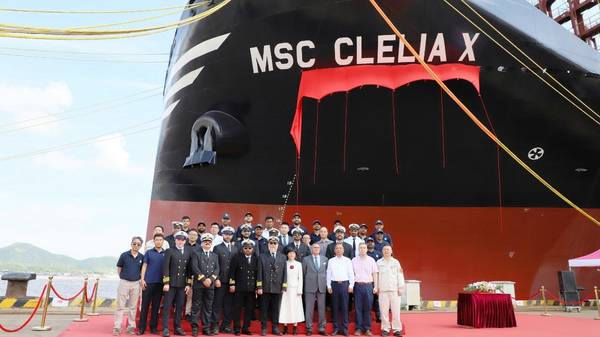
MSC LNG dual-fuel container ship delivered almost a year early
Chinese shipbuilder hands over sixth 10,300-TEU vessel in series to MSC ahead of contract schedule. |
|
|
|
||
|
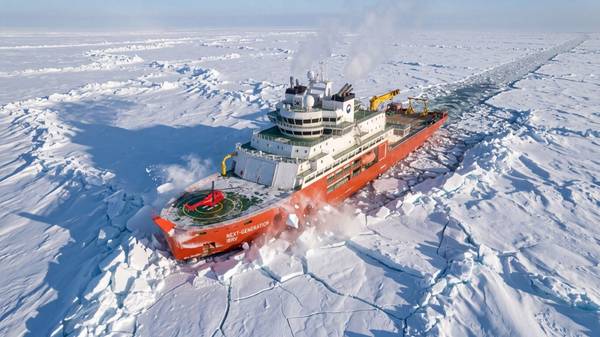
Steel cutting marks start of construction on dual-fuel icebreaking research vessel
Hanwha Ocean begins building a dual-fuel LNG/MGO icebreaker for the Republic of Korea’s Ministry of Oceans and Fisheries, due for delivery in 2030. |
|
|
|
||
|
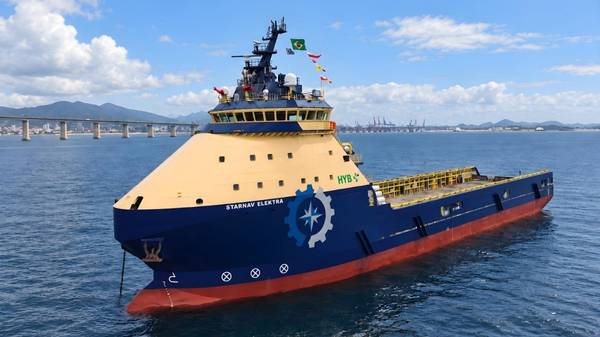
Petrobras christens first vessel under Mar Aberto fleet renewal programme
Platform supply vessel Starnav Elektra, built in Santa Catarina with an all-female crew, marks the first delivery under the fleet initiative. |
|
|
|
||
|
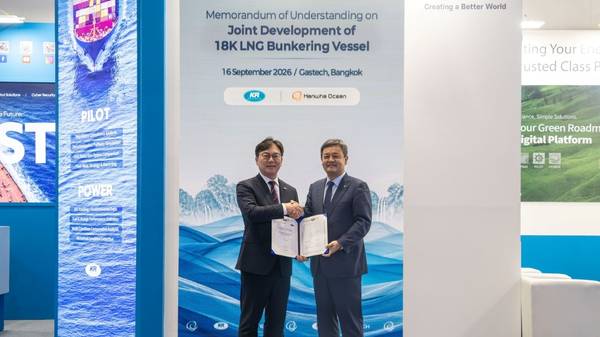
KR and Hanwha Ocean agree to develop 18,000-cbm LNG bunkering vessel designs
Pair will jointly explore two design concepts for a new LNG bunkering vessel. |
|
|
|
||
|
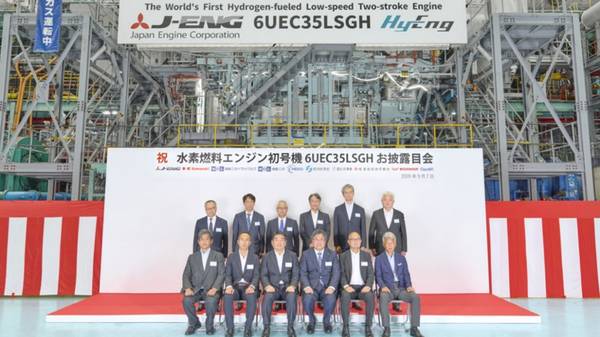
Japan Engine completes land-based testing of landmark hydrogen-fuelled engine for large vessels
Hydrogen co-firing rate of at least 95% achieved during factory testing. |
|
|
|
||
|
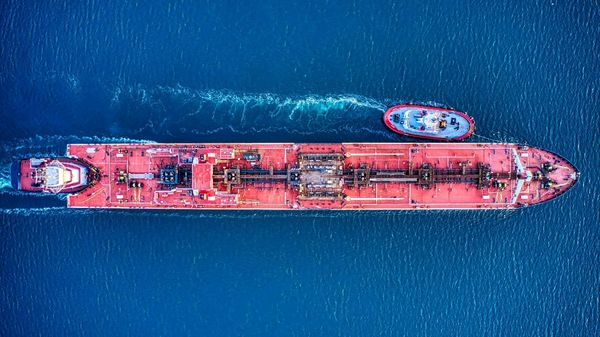
Ethanol edges into shipping’s fuel mix as methanol crossover eases adoption barriers
Rising interest from cargo owners, shared technology with methanol and Brazilian production growth push ethanol beyond regional niche status. |
|
|
|
||
|
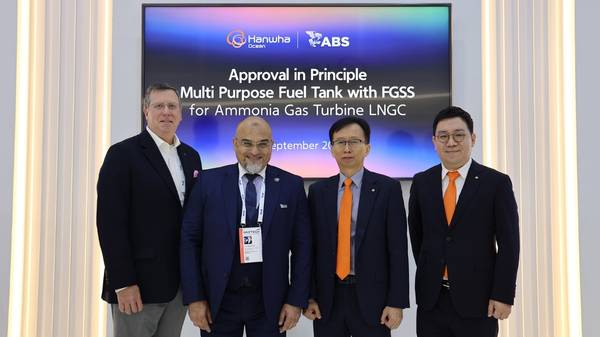
ABS grants Hanwha Ocean approval for dual-fuel tank enabling LNG-to-ammonia switch
In-principle approval awarded for fuel tank and supply system enabling LNG carriers to convert to ammonia without replacement. |
|
|
|
||
|
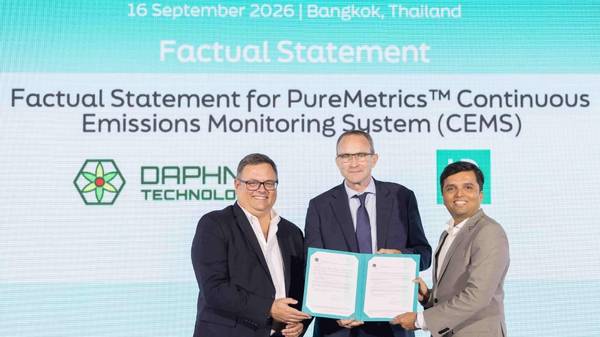
Lloyd's Register confirms suitability of Daphne Technology's emissions monitoring system
Factual Statement validates the PureMetrics design for monitoring greenhouse gas emissions from marine engines. |
|
|
|
||

|
IMO issues shipboard biofuel blend checklist developed by IBIA
Checklist for FAME-based biofuels formally incorporated into IMO document, supporting crews handling biofuel blends for the first time. |
|
|
|
||
| Bunker One launches its first methanol bunker tanker [News & Insights] |
| Bunker Holding and NeoGreen Hydrogen sign MoU for green ammonia and synthetic fuels [News & Insights] |
| KPI OceanConnect and Uni-Tankers complete biofuel trial [News & Insights] |
| Bunker Holding launches five-year plan [News & Insights] |
| KR and Hanwha Ocean agree to develop 18,000-cbm LNG bunkering vessel designs [News & Insights] |
| GTT Energy launches new LNG fuel tank design for container ships [News & Insights] |
| Hanwha Power secures ABS approval for 22,000-cbm LNG bunkering vessel design [News & Insights] |
| LNG dual-fuel crude oil tankers launched for Maran and Capital Ship [News & Insights] |
| Fincantieri launches Viking Astrea with liquid-hydrogen propulsion at Ancona shipyard [News & Insights] |
