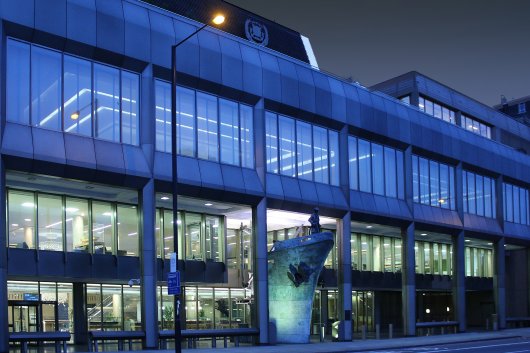
The International Maritime Organization's (IMO) 78th Marine Environment Protection Committee (MEPC) has approved draft amendments to MARPOL Annex VI to designate the Emission Control Area (ECA) for sulphur oxides (SOx) and particulate matter for the Mediterranean Sea, with a view to adoption at MEPC 79 towards the end of the year.
The latest development follows December's 22nd Meeting (COP 22) of the Contracting Parties to the Convention for the Protection of the Marine Environment and the Coastal Region of the Mediterranean (Barcelona Convention), where delegates agreed to adopt the decision on the designation of the Mediterranean SOx ECA, thus clearing the way for submission of a joint and coordinated proposal to last week's MEPC 78.
The Mediterranean Sea is one of the world's busiest shipping lanes. In 2019, it saw around 24 percent of the global fleet of ships and more than 17 percent of worldwide cruises.
Around 507m people in the Mediterranean region live in areas with air pollution at levels exceeding respective national ambient air quality standards, and/or levels which are unhealthy, according to the World Health Organization (WHO). As regards the number of deaths, more than 228,000 people are calculated to have died prematurely from exposure to air pollution in 2016, a State of the Environment and Development in the Mediterranean (SoED) report states.
Experience with ECAs implemented in Europe, North America and the US Caribbean area have already demonstrated local air quality improvements.
Work is also set to continue to further investigate nitrogen oxide (NOx) emissions for the future implementation of a combined SOx and NOx ECA in the Mediterranean.
The Med SOx ECA could come into force in January 2025, lowering the maximum sulphur content of marine fuel to 0.1 percent from the current global limit — implemented in January 2020 — of 0.5 percent.
Zero 2050 GHG target
Discussions on the revision of the existing IMO GHG target of 50 percent by 2050 (set in 2018) also took place during MEPC 78, with a general acceptance amongst member states that the shipping industry must achieve net zero or absolute zero GHGs by 2050 at the latest. Notably, there was support for a 50 percent reduction by 2030, which Dr Sian Prior, Lead Advisor to the Clean Arctic Alliance, contends is needed if we are to reach a trajectory that is in line with the Paris Agreement's goal of maintaining global heating below 1.5°C.
However, despite improved GHG ambitions, NGO Seas At Risk argues that total decarbonization of the maritime industry should instead be reached by 2040. The nonprofit commented: "States are now talking about ending ship climate emissions by 2050, but years of inaction mean that target is no longer good enough. A failure to act earlier means the shipping industry has already burnt a large part of its 1.5°C carbon budget. Talk of enhanced ambition is welcome but having failed to act earlier, the shipping industry must now halve its emissions by 2030 and decarbonise entirely by 2040, not 2050, to keep global heating below 1.5°C."
The Clean Arctic Alliance, which is made up of 20 NGOs, expressed "dismay over the IMO's failure to make progress" at MEPC 78. The polar coalition is demanding that the maritime sector raises the Carbon Intensity Indicator (CII) requirements to a 7 percent annual improvement in carbon intensity — applied to all ships — in order to keep shipping on a 1.5°C pathway.
It is also supporting deep mandatory cuts in emissions from ships operating in and near the Arctic to protect the region from "catastrophic climate impacts".
Investment and R&D fund
Meanwhile John Butler, President & CEO of the World Shipping Council, urged authorities to play a more important role in supporting the transition to zero emissions. He noted: "Container and vehicle carriers are already investing in the development of zero GHG technologies and are committed to enabling the industry's transition to zero. Governments need to take decisive action now to provide clear regulatory structures and market signals that drive investment and support ambitious front runners."
Also on the issue of zero-carbon investment, Guy Platten, Secretary General of the International Chamber of Shipping (ICS), was especially critical of the IMO's rejection of a proposed research and development fund at MEPC 78.
"By refusing to take forward the shipping industry's proposed research and development fund, the IMO has wasted its opportunity to kick[-]start a rapid transition to zero-carbon technologies which will be vital if we are to decarbonise completely by 2050. Despite the support of many IMO States, we have been frustrated by short-sighted political manoeuvring which has led to the proposal in effect being killed. The signal this sends means that the financial risk associated with green investment will remain high, slowing down efforts to switch to zero-carbon fuels as soon as possible," Platten remarked.

|
Petrobras resumes bunkering operations at Rio Grande Terminal after power restoration
Brazilian supplier restarts marine fuel supply after completing an inspection following an electricity outage. |
|
|
|
||
|
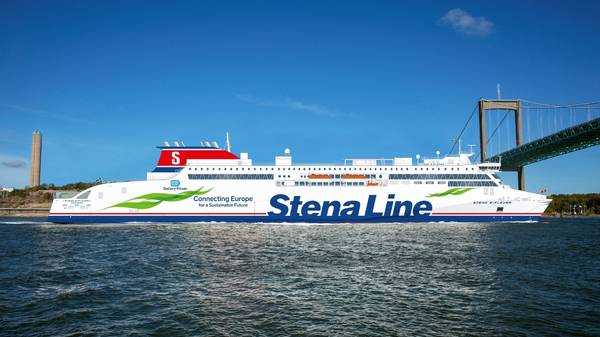
Stena RoRo orders battery-ready E-Flexer 2.0 ferries from Chinese yard
Vessels include diesel engines capable of running on biodiesel and are methanol-ready. |
|
|
|
||
|
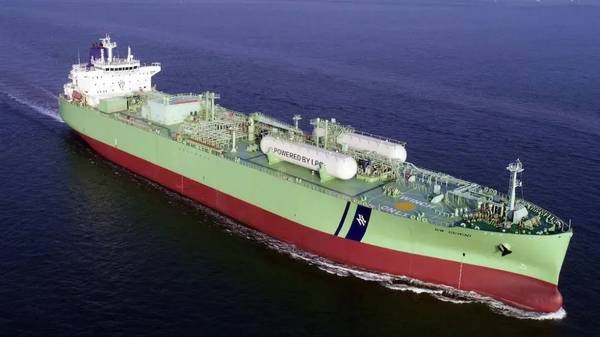
Nord Gas Solutions to supply cargo and fuel systems for eight BW LPG VLGCs
Gas-handling systems specialist awarded contract for new 90,000-cbm vessels. |
|
|
|
||
|
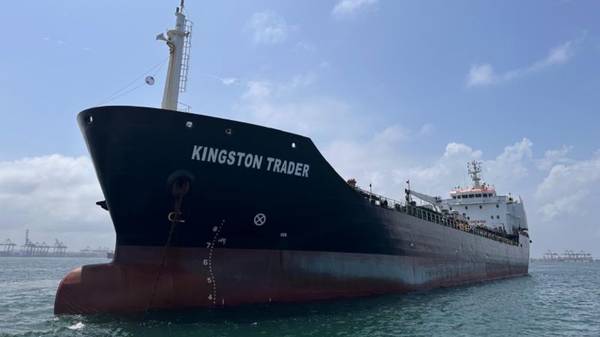
TFG Marine fits mass flow meter to Jamaica-bound bunker barge
Kingston Trader becomes the first Caribbean bunkering vessel with mass flow metering as TFG Marine’s fleet coverage nears 90%. |
|
|
|
||
|
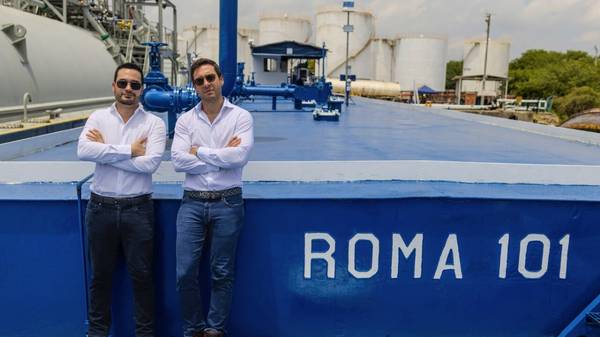
Monjasa announces full-chain marine fuel operations in Cartagena
Monjasa says it now covers the entire marine fuel supply chain in Colombia, from oil wells to ship-side deliveries. |
|
|
|
||

|
Ceremonies held for Van Oord’s methanol-hybrid rock installation vessels
Two ships advance through parallel construction at China’s CIMC Raffles shipyard. |
|
|
|
||
|
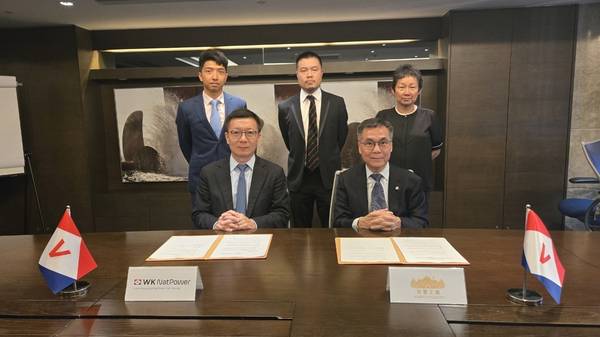
Wah Kwong NatPower signs MoU to explore Hong Kong marine electrification
Venture will examine shore power, vessel charging and electric vessel deployment around Aberdeen’s waterfront. |
|
|
|
||
|
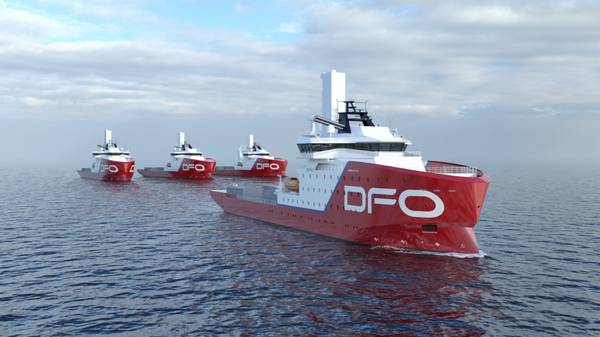
Dong Fang Offshore orders CSOV with battery-hybrid propulsion
Vard secures fifth newbuild contract from Taiwanese firm, with delivery scheduled for 2028. |
|
|
|
||
|
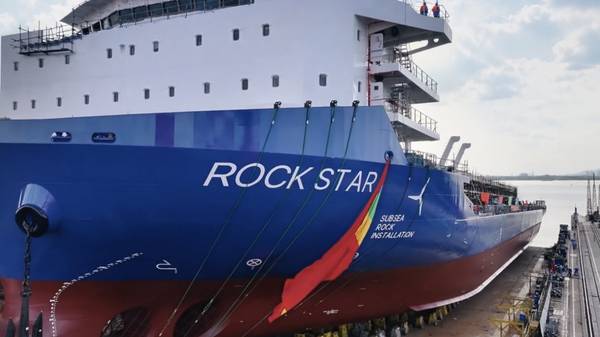
CSL and OWL launch first subsea rock installation vessel for offshore wind
MV Rock Star can run on MGO and methanol and is designed to support scour protection and cable burial for offshore wind projects. |
|
|
|
||
|
Lloyd’s Register study backs 200,000-cbm LNG carriers for fleet renewal
Analysis finds larger LNG carriers could cut transport costs while retaining access to most major terminals. |
|
|
|
||
| Delta Energy launches carbon credit desk for bunkers and cargoes [News & Insights] |
| Gasum commits to making biogas from ship wastewater [News & Insights] |
| GoodFuels and Itochu sign APAC biofuel accord [News & Insights] |
| IMO and EMSA gather maritime experts to address seafarer training for alternative fuels [News & Insights] |
| IMO seminar examines technical hurdles facing ammonia as a marine fuel [News & Insights] |
| ICS to host webinar on wind-assisted propulsion for shipping [News & Insights] |
| IMO sub-committee finalises revised methanol fuel safety guidelines [News & Insights] |
| Lloyd's Register confirms suitability of Daphne Technology's emissions monitoring system [News & Insights] |