Fri 24 Jun 2016, 10:26 GMT

Moody's downgrades shipping sector outlook


Credit rating firm says the supply-demand imbalance 'will persist over the coming 12 to 18 months'.


On Wednesday, Moody's Investors Service Report downgraded its outlook on rated shipping companies, saying that combined earnings would likely decline this year by 7 to 10 percent.

The New York-headquartered firm now considers the outlook for the sector to be negative despite rating it as stable in March with an anticipated low single figure drop in earnings overall.

Whilst tanker shipping remains stable, Moody's said that container shipping and dry bulk shipping remain beset by the problem of too many ships and too-slow growth in demand.

"Capacity is already high, and we expect supply growth will continue to outpace demand growth by more than 2% in 2016, supporting the negative outlook on the segment," the report read. "The existing supply-demand imbalance will persist over the coming 12 to 18 months."

Moody's expects the container shipping industry will be hampered by subdued demand for finished and semi-finished goods. Whilst dry bulk shipping - already suffering from the twin blows of declining commodity prices and an increase in capacity despite weak demand - will continue to deteriorate over the next few years, the credit rating specialist said.

The report may well dampen overall confidence levels in the shipping industry which rose slightly in the three months to May 2016, according to the May 2016 Shipping Confidence Survey from international accountant and shipping adviser Moore Stephens.

However, even then, economic and geopolitical uncertainty was uppermost in the thoughts of many of their respondents. "Overall world economic growth is still not moving concertedly in a positive direction," said one, "so that we have what might best be described as a patchy global economic recovery."

The Shipping Confidence Survey at the time noted that in common with Moody's reporting, a surfeit of tonnage and a paucity of scrapping were referenced by a number of respondents. One respondent in the survey noted: "Far too many newbuildings in the ultra-to-VLOC size range will be hitting the market in the next 12-to-18 months," while elsewhere it was noted that what is needed is, "strong scrapping, fewer dry newbuildings, stiffer regulations, better and more uniform control."


Christos Doulaveris, Flex Commodities. Flex Commodities appoints Christos Doulaveris as general manager for Greece  

Bunker trader strengthens its Greek operations with a new leadership appointment.

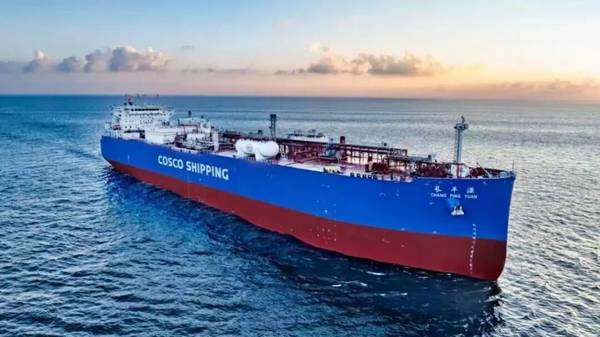
Chang Ping Yuan vessel. China delivers first domestically built VLGC under Chinese flag  

Cosco Shipping’s new 88,000-cbm gas carrier features an LPG dual-fuel main engine.

IMO, GreenVoyage2050 and Republic of Türkiye MoTI logos. Electric and hybrid ferries could cut Sea of Marmara emissions by 63%, IMO study finds  

A GreenVoyage2050 study finds that electrification could slash emissions, avoid €492 million in damage costs and support jobs.

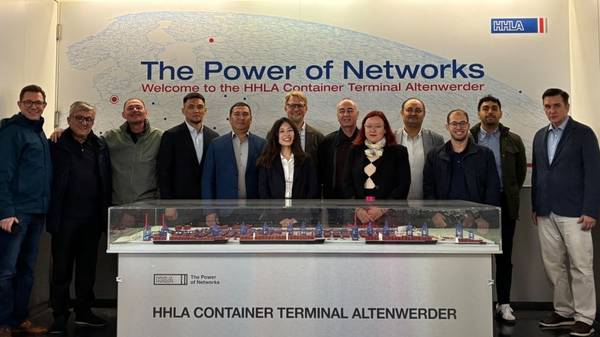
Study visit to Hamburg, Germany, on sustainable port development. Batumi Sea Port officials study decarbonisation practices in Hamburg  

Georgian port representatives visited Hamburg to study emissions accounting, hydrogen technology and automation ahead of their 2026 recertification audit.

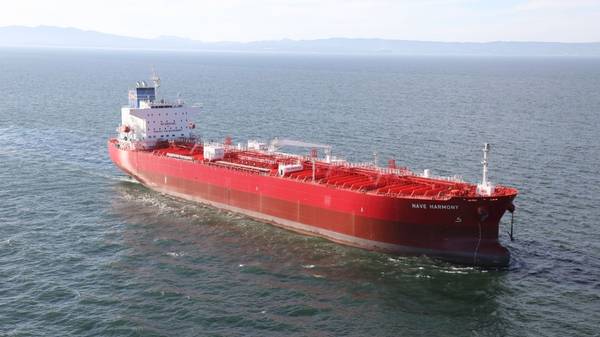
Nave Harmony vessel. Navios Partners takes delivery of methanol-ready MR2 tanker Nave Harmony  

Shipowner adds 49,998-DWT newbuild product tanker equipped with methanol-ready technology.

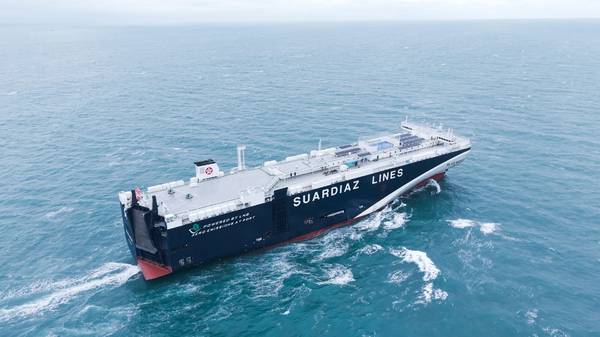
RS Atlantico vessel. Eastern Pacific Shipping delivers LNG dual-fuel PCTC to Suardiaz  

RS Atlantico is the first mid-sized 5,500-CEU car carrier built through the EPS–Suardiaz partnership.

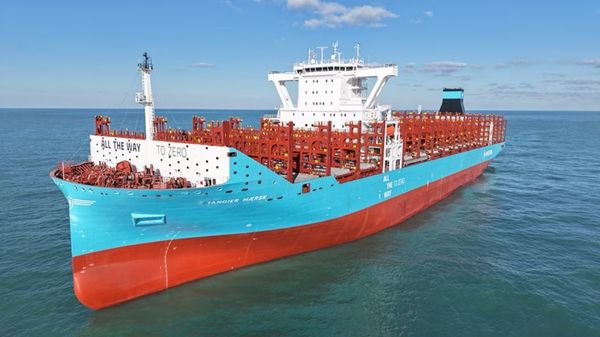
Tangier Maersk vessel. Maersk completes first US ethanol bunkering of a deep-sea container ship  

Shipper tests US-produced corn ethanol as a marine fuel aboard the Tangier Maersk.

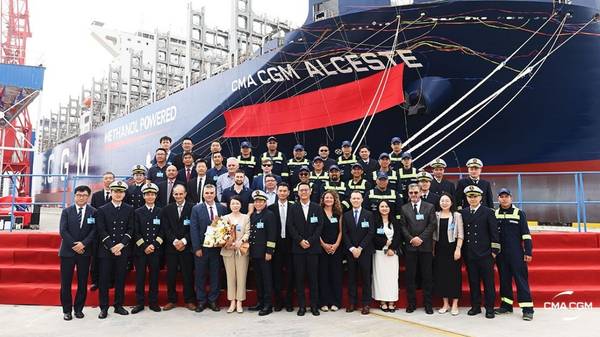
CMA CGM Alceste naming ceremony. CMA CGM names methanol-powered vessel after Molière’s Alceste  

Ship features a MAN B&W 8G85ME two-stroke engine configured to run on conventional marine fuel and methanol.

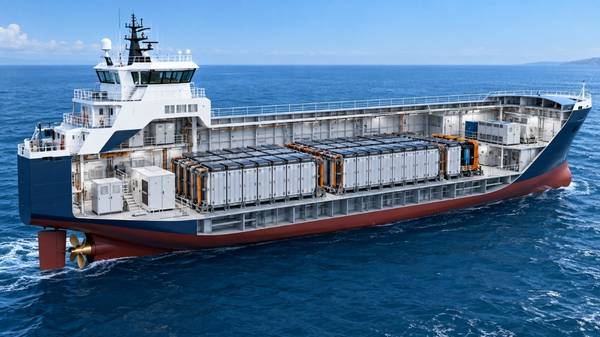
Cutaway illustration of a battery-electric ship. Why batteries still cannot power ships across oceans  

Battery-electric ships dominate short-sea routes, but energy-density and infrastructure constraints keep deep-sea propulsion out of reach.

VPS logo. VPS to run marine fuel management course in Singapore  

Two-day programme in November covers fuel handling, testing and decarbonisation rules, including a laboratory tour.