The world's first dual-fuel pure car and truck carrier (PCTC), the
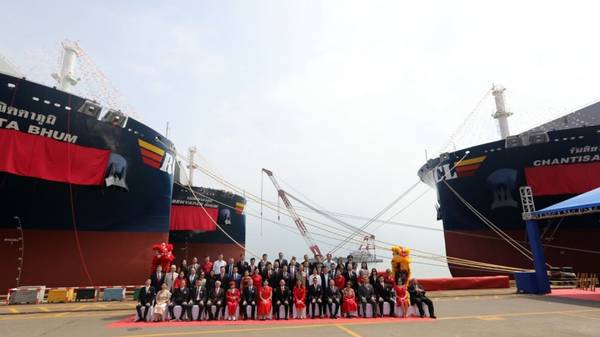
MV Auto Eco, was named during an official ceremony in
Zeebrugge, Belgium, on 21st November.
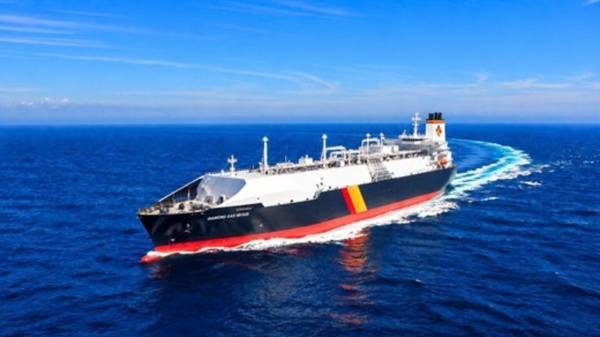
Built at the Nantong COSCO KHI Ship Engineering Co., Ltd. (NACKS) shipyard - a joint venture between Kawasaki Heavy Industries (KHI) and China Ocean Shipping (Group) Company (COSCO) - in Nantong, China, the new vessel is able to operate on liquefied natural gas (LNG), marine gas oil (MGO) or heavy fuel oil (HFO).
The 181-metre-long MV Auto Eco is owned by
United European Car Carriers (UECC) - a joint venture between Nippon Yusen Kabushiki Kaisha (
NYK Line) and
Wallenius Lines. It is the first of a two-sister-ship order that was
signed in March 2014.
The MV Auto Eco is the first PCTC of its kind to be fitted with an LNG fuel propulsion system, and is said to be able to complete a 14-day voyage using solely LNG fuel, including main engine and auxiliary power generation.
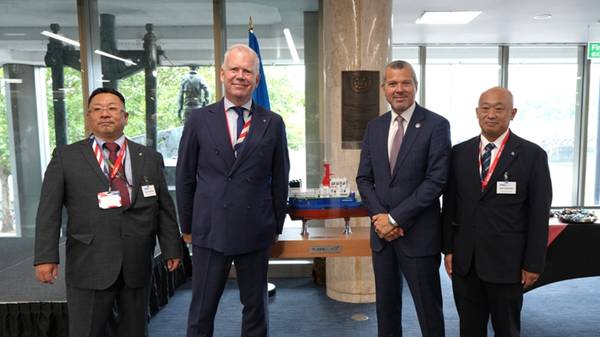
During the naming ceremony,
Glenn Edvardsen, CEO of UECC, said: "It is the first PCTC of its kind in the world to be fitted with a dual-fuel LNG propulsion system, allowing it to complete a fourteen-day, round-trip voyage solely on LNG, without refuelling. Auto Eco not only meets existing emissions regulations but also exceeds them, allowing her to trade in any environment control area worldwide."
Geert Bourgeois, Minister-President of the Government of Flanders, commented: "The fact that the ceremony for the world's first and largest dual fuel LNG PCTC is happening here in Flanders emphasizes the significant logistics operations of shipping companies in Flanders. It also stresses the leading role of the Port of Zeebrugge as an LNG hub for Europe.
"The Flemish government approved an action plan, 'Clean Power for Transport', to stimulate the use of alternatively fuelled vehicles and related infrastructure. I am sure that in the following years, UECC, with its focus on LNG as marine fuel, can play a crucial role in this ambitious policy. I would like to extend a sincere thank you for choosing Flanders and the Port of Zeebrugge as your hub and reinforcing our LNG and sustainable resources cluster in Flanders."
Gas4Sea barge to supply MV Auto Eco
Gas4Sea, a
new LNG bunkering business that
NYK Line recently established with partners
Mitsubishi Corporation and
Engie, is expected to carry out its first delivery later this year using a purpose-built LNG bunkering vessel.
As
reported by Bunker Index in 2014, the new 5,000 cubic metre-capacity bunkering vessel will be used to carry out ship-to-ship LNG fuel deliveries in Zeebrugge to LNG-fuelled vessels owned by UECC. It is scheduled to operate from Zeebrugge's Fluxys LNG terminal.
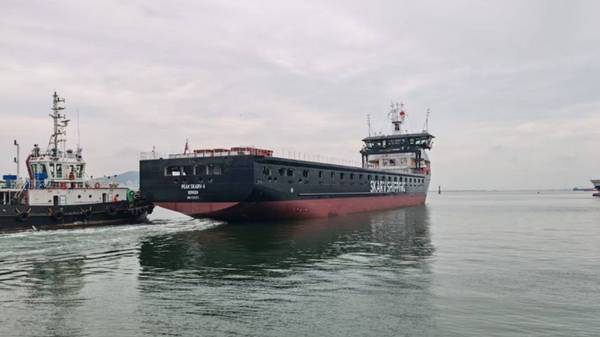
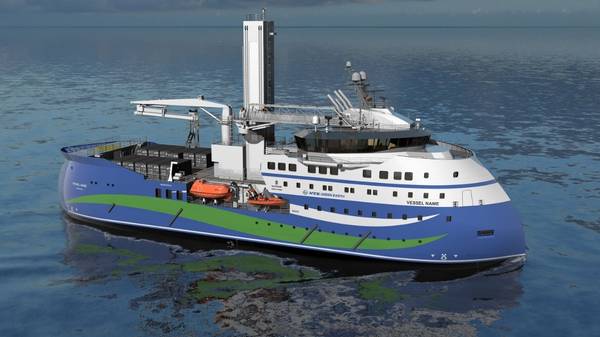
The LNG bunker barge will have a length overall (LOA) of 111 metres, a beam of 16.8 metres and a draft of 4.9 metres, with twin azipods for high manoeuvrability. Bureau Veritas has been chosen to class the vessel.
Referring to the delivery barge at the Auto Eco naming ceremony,
Koichi Chikaraishi, Senior Managing Corporate Officer at NYK Line, said: "The port [Zeebrugge] will operate not only as a place where cargo is loaded and discharged but also as an LNG supply platform. This new LNG bunkering vessel will begin its service in the near future, and we certainly appreciate the great support that we have continued to receive from the government of Flanders in our efforts to pursue advancements."