Fri 15 Jun 2012, 09:47 GMT

Propulsion system cuts fuel costs by 30%


The first in a series of five very advanced Coast Guard vessels has reached its final port destination in Falkenberg at the West coast of Sweden.

With the help of Volvo Penta’s innovative propulsion system the ships are expected to reduce fuel consumption by approximately 30% compared to traditional installations.

After successful test runs at the Baltic Sea with the Baltic Workboat in Estonia and subsequent naming ceremony at the end of May 2012 bears the ship KBV312 now the flag of Sweden. It is the first ship in a series of five versatile coastguard vessels which will be used primarily for maritime surveillance, border control, and fisheries control, protection of the environment, rescue and civil protection, monitoring and diving operations.

Efficient Propulsion system and great fuel savings

To give the vessel the best overall performance the highly efficient Volvo Penta IPS 1050 complete propulsion system was selected. The system consists of triple Volvo Penta IPS 1050 based on 3 x D13-800 Rating 4 engines at 588 kW each, giving at total propulsion power of 1764 kw and 3 x IPS 3 fully integrated pod units ( gearbox, exhaust system, rudder and steering machinery).

The very low fuel consumption over the whole speed range is said to be creating significant cost savings for the Swedish Coast Guard and with reduced CO2 and NOx emissions the environmental impact will also be reduced. The engines are already meeting the EPA tier 3 emission levels in force 2014. The system is type approved by DNV.

During test trials the vessel reached a speed of 32 knots fully loaded and the time to accelerate from idle to 20 knots was only 7.5 seconds.

High manoeuvrability and low noise

The steerable IPS pod units with forward facing contra rotating propellers give very good grip in the water without slip and create an active rudder control with all thrust pointing in the desired direction. The good grip and the unbeatable low end torque are used to create good acceleration in all sea conditions and allow the vessel to steer sharply without cavitation and loss of speed.

The combination of twin turbo engine and Volvo Penta Duoprop technology provides the vessel with a very good bollard pull, above 10 tons, which is very useful for a vessel in search and rescue operations.

New Joystick driving, autopilot interface and integrated bridge control

The KBV312 is equipped with the latest in Volvo Penta’s electronic vessel control EVC-E. In addition to the successful Joystick docking and dynamic positioning features, the KBV312 is also equipped with Joystick driving and steering at cruising. No steering wheel is used and the joystick is comfortable incorporated in the armrest of the helmsman’s chair. In addition, the vessel is equipped with three joystick docking positions as wheel as a full engine room control station.

The EVC-E system is connected to an integrated bridge control (Integrated Alarm Monitoring and Control System - IAMCS) through a newly developed interface from Volvo Penta. All alarm and monitoring, alarm acknowledgement and rudder indication is handled on the IAMCS display.

A new Autopilot interface connects the EVC steering control to the vessels autopilot, with easy and safe connection and disconnection.

Fire fight mode

Another new EVC feature is that the main centre engine can be disconnected from normal driving during harbour manoeuvres, so that the engine power can be used to power the vessels fire pump used for external fire fighting. During fire fight mode, the vessel can be operated with the outer engines with the joystick or the normal control handles, to give the flexibility to operate in any sea and wind conditions.

Five vessels in total

This first vessel will be followed by four more vessels during the coming year, to be stationed around the Swedish coast. The Volvo Penta IPS system is now well established in patrol, pilot, off-shore service vessels and people transportation operations. In all, totally over 14000 IPS units have been delivered worldwide, mainly in leisure applications, but now starting to be one of the important propulsion alternatives in commercial applications to save fuel and reduce environmental impact with regard to exhaust emissions and noise.

Main data of the vessel

LOA= 25.5 m, Max Beam=6,2m, Draught 1.5m. Full load displacement 52 t. Total power 1764 kW, Speed at full load 32 knots, Range > 600Nm

DNV   Sweden 

TMS Tankers logo. Lloyd’s Register delivers fleet-wide energy transition roadmap for TMS Tankers  

LR Advisory maps vessel-level compliance risk and decarbonisation pathways across the Greek owner’s tanker fleet.

Dr Prapisala Thepsithar, GCMD. GCMD shares biofuel assurance and green finance insights at Hong Kong shipping decarbonisation forum  

The Global Centre for Maritime Decarbonisation presented pilot findings on biofuels and energy efficiency financing.

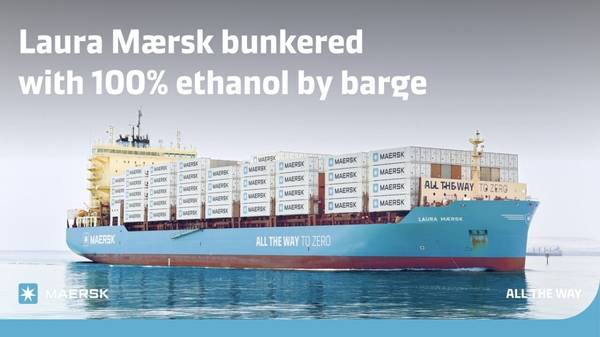
Laura Maersk ethanol bunkering graphic. Maersk conducts large-scale ethanol bunkering trial on Laura Maersk in Rotterdam  

A.P. Moller – Maersk has conducted a barge-delivered ethanol bunkering operation as part of ongoing fuel trials.

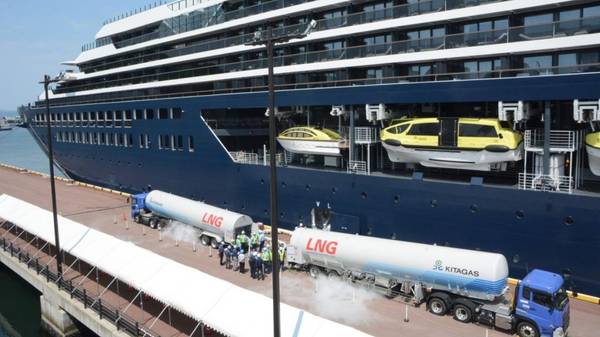
Luminara vessel truck-to-ship bunkering. MOL Techno-Trade completes first LNG bunkering for international cruise ship in Hokkaido  

Truck-to-ship LNG operation at Hakodate marks first such supply to an international cruise vessel in Hokkaido.

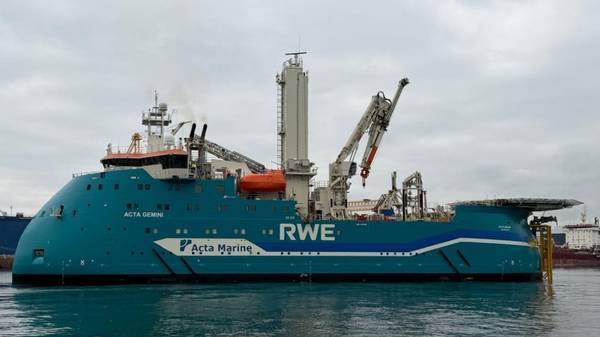
Acta Gemini vessel. Acta Marine takes delivery of methanol dual-fuel CSOV Acta Gemini for RWE wind farm charter  

The vessel will support operations at the Sofia Offshore Wind Farm at Dogger Bank.

Yeva Wood and Kirsten Møller Jørgensen. Malik Supply expands Danish team with bunker trader and finance hire  

Danish bunker supplier Malik Supply adds two new staff across its Fredericia and Aalborg offices.

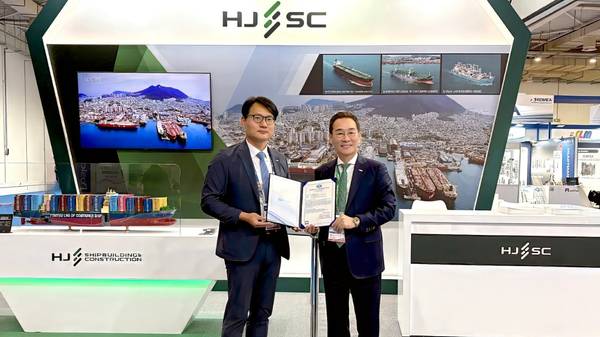
AiP award ceremony for a 10,000-teu biofuel-powered container ship. HJSC wins AiP for 10,000-teu biofuel-powered container ship design  

South Korean shipbuilder HJ Shipbuilding & Construction receives classification society approval for its biofuel vessel design at Posidonia.

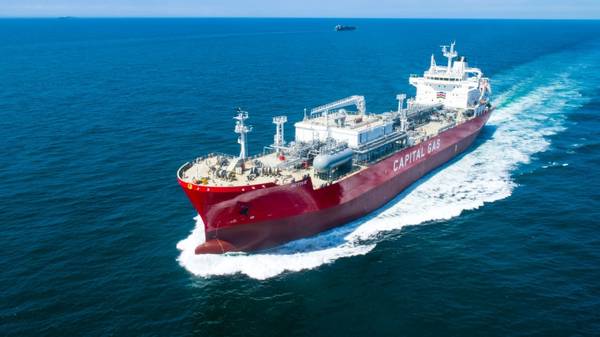
Active vessel. Capital Clean Energy Carriers takes delivery of LNG carrier and dual-fuel gas carrier, secures five new charters  

Athens-based CCEC expands its fleet and pushes contracted revenue backlog to $3.1bn.

VPS logo. Fuel quality management for vessels in extended idle: Arabian Gulf, Gulf of Oman and adjacent anchorages | Rahul Choudhuri, VPS  

Managing fuel quality deterioration following the closure of the Strait of Hormuz.

Person signing a document. Agastya Green Fuels signs 250,000 t/yr e-methanol offtake deal with Sri Lanka’s SAR Group  

Indian producer and Sri Lankan maritime firm agree long-term green methanol supply partnership.