Mon 14 May 2012, 16:07 GMT

INTERTANKO appoints managing director


Katharina Stanzel is due to commence her new role as managing director in July.


Tanker owners' association INTERTANKO has confirmed that its Council has approved the appointment of current deputy managing director, Katharina Stanzel, as managing director, effective July 1, 2012.

Stanzel replaces Joe Angelo, who will return to his previous position of deputy managing director and director for regulatory affairs and the Americas.

Commenting on the news, INTERTANKO chairman, Captain Graham Westgarth, said: “We are delighted that Kathi has been confirmed as INTERTANKO’s next managing director. Kathi’s vision, and dedication and commitment to INTERTANKO and its members will be invaluable as she takes over the leadership of our first class international shipping association.

"We are also extremely pleased to have Joe continue with INTERTANKO as part of the leadership team. Joe agreed to take on the duties and responsibilities of managing director as part of our long term succession plan and he has served us well in that capacity,” he said.

INTERTANKO is also finalising a five year strategic plan, whose main objectives are to look ahead and ensure that, given the realities of today’s regulatory and economic climate, the association is well-positioned to face the challenges expected.

The Council believes that the most likely scenario the tanker industry will face in the coming five years will be one of strong environmental concern within an unstable geopolitical state and that the major issues confronting its members during this period would be:

1. Sustainability of the tanker industry.

2. Human element.

3. Tanker safety and performance.

4. Global maritime security threats.

5. Greenhouse gas emission reductions.

6. Air emission reductions.

7. Ballast water management.

The Council agreed that the aim of INTERTANKO must be to engage proactively at every level, working with all stakeholders, including regulators, to ensure that the interests of its members are taken into account and that operational realities are considered, leading to regulation that is workable and practical.

Council members said there should also be a focus on developing industry co-operation, and on achieving a cohesive and proactive approach in getting governments to understand the consequences of their decisions, thereby influencing the outcomes of the political decision-making process.

INTERTANKO said that it remained deeply concerned about the current tanker market and that members have been struggling to cover their operating costs at prevalent market rates. It firmly believed that this situation cannot be maintained long term, as it threatens the sustainability of oil tanker operations.

To assist members, INTERTANKO has developed an optimal speed model. This shows the relationship between the TCE earnings and CO2 emissions, based on a known freight rate for a specific route and different tanker speeds.

Its objective is to provide members with a tool that will allow them to achieve an optimal speed for their ships and voyages, to the benefit of the tanker operator and the environment, since reduced speed means reduced CO2 emissions.

The Council also reaffirmed that it wishes to continue to promote a global switch to cleaner fuels. Compliance with ECAs by use of cleaner fuels may be attractive when compared with the significant cost of fully equipping a ship with two or three scrubbers.

INTERTANKO has developed ECA Guidelines based on a number of specific technical, operational, safety and cost-efficiency elements, which need to be considered by shipowners when choosing between alternatives for compliance with the ECA regulatory regime between 1st January 2015 and the enforcement of a global sulphur cap in 2020, or 2025.

These Guidelines are not intended to promote one means of compliance over another, the Association stressed. They are intended to facilitate shipowners’ decisions on how to comply with the ECA regulatory regime and to provide advice on the foreseeable impacts of each of the alternatives to meet ECA emission limits.

INTERTANKO said that it will continue its campaign to promote the need of professional standards on quality control of bunkers delivered, seeking the co-operation of other shipowner associations and of the bunker suppliers. At the same time, it will increase its bunker quality reports to members.

The Council said that it found it completely unacceptable that some EU ports, having no quality control requirements on bunkers delivered, consider off-spec bunkers on board ships as ‘waste’ and require costly de-bunkering to follow the EU Waste Directive.


TMS Tankers logo. Lloyd’s Register delivers fleet-wide energy transition roadmap for TMS Tankers  

LR Advisory maps vessel-level compliance risk and decarbonisation pathways across the Greek owner’s tanker fleet.

Dr Prapisala Thepsithar, GCMD. GCMD shares biofuel assurance and green finance insights at Hong Kong shipping decarbonisation forum  

The Global Centre for Maritime Decarbonisation presented pilot findings on biofuels and energy efficiency financing.

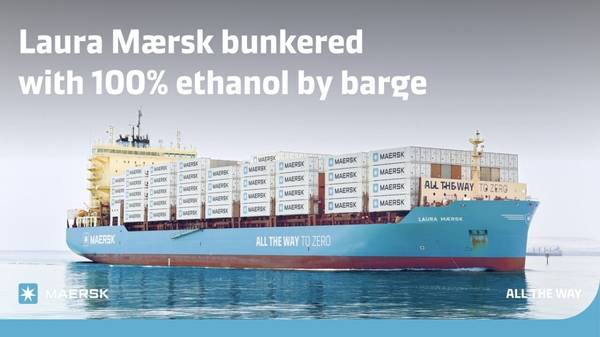
Laura Maersk ethanol bunkering graphic. Maersk conducts large-scale ethanol bunkering trial on Laura Maersk in Rotterdam  

A.P. Moller – Maersk has conducted a barge-delivered ethanol bunkering operation as part of ongoing fuel trials.

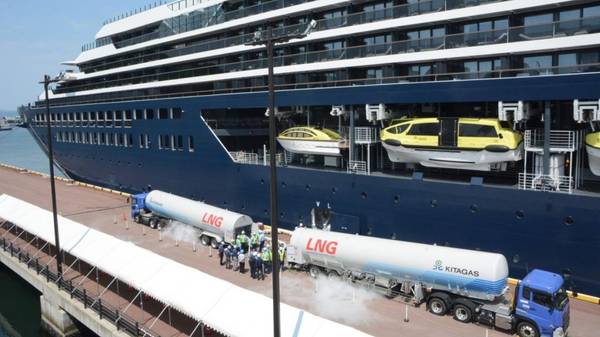
Luminara vessel truck-to-ship bunkering. MOL Techno-Trade completes first LNG bunkering for international cruise ship in Hokkaido  

Truck-to-ship LNG operation at Hakodate marks first such supply to an international cruise vessel in Hokkaido.

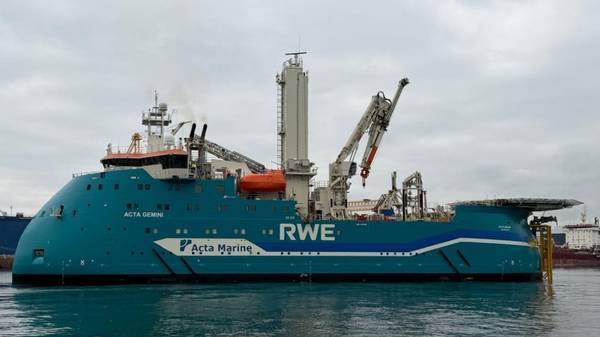
Acta Gemini vessel. Acta Marine takes delivery of methanol dual-fuel CSOV Acta Gemini for RWE wind farm charter  

The vessel will support operations at the Sofia Offshore Wind Farm at Dogger Bank.

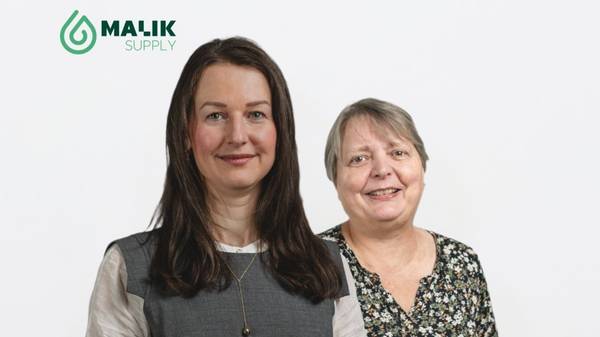
Yeva Wood and Kirsten Møller Jørgensen. Malik Supply expands Danish team with bunker trader and finance hire  

Danish bunker supplier Malik Supply adds two new staff across its Fredericia and Aalborg offices.

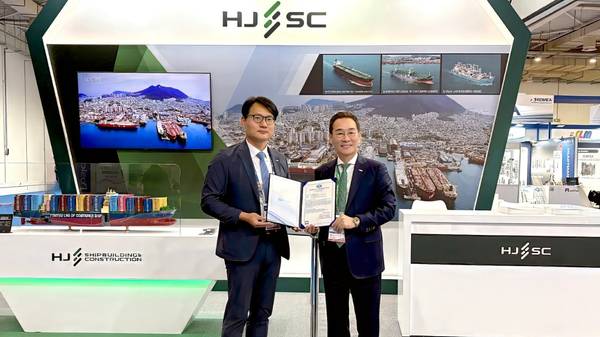
AiP award ceremony for a 10,000-teu biofuel-powered container ship. HJSC wins AiP for 10,000-teu biofuel-powered container ship design  

South Korean shipbuilder HJ Shipbuilding & Construction receives classification society approval for its biofuel vessel design at Posidonia.

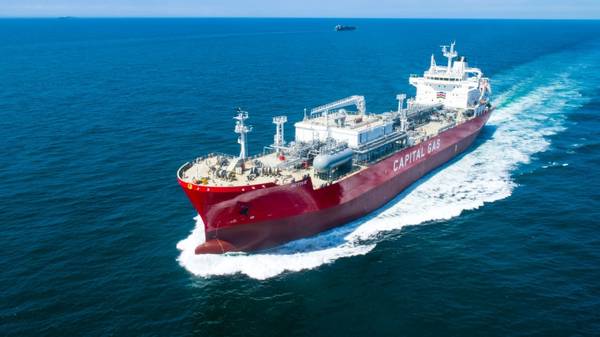
Active vessel. Capital Clean Energy Carriers takes delivery of LNG carrier and dual-fuel gas carrier, secures five new charters  

Athens-based CCEC expands its fleet and pushes contracted revenue backlog to $3.1bn.

VPS logo. Fuel quality management for vessels in extended idle: Arabian Gulf, Gulf of Oman and adjacent anchorages | Rahul Choudhuri, VPS  

Managing fuel quality deterioration following the closure of the Strait of Hormuz.

Person signing a document. Agastya Green Fuels signs 250,000 t/yr e-methanol offtake deal with Sri Lanka’s SAR Group  

Indian producer and Sri Lankan maritime firm agree long-term green methanol supply partnership.