Mon 18 Oct 2010, 06:36 GMT

MHI steps up low-speed engine testing


New testing equipment to be used to verify that technologies satisfy new IMO emission standards.


Mitsubishi Heavy Industries, Ltd. (MHI) has announced that it will install testing equipment for two-stroke, low-speed, fuel-efficient marine diesel engines at the company's Kobe Shipyard & Machinery Works in Hyogo, Japan. Installation is slated for completion in the spring of 2012.

The testing system will be used for verification of various elemental technologies to satisfy the Tier III nitrogen oxide (NOx) emission standards of the International Maritime Organization (IMO). Those standards require operators of marine diesel engines installed on ships constructed on or after January 1, 2016 and operating in emissions-controlled areas to reduce NOx emissions by about 80 percent from the current Tier I regulated level.

The 4UE-X3 testing system will be manufactured based on MHI's Mitsubishi-UE Diesel Engine UEC60LSE-Eco model, an electronically controlled 600 millimeter cylinder-bore four-cylinder engine. In preparing to satisfy Tier III regulations, MHI says it has already begun verification of the company's de-NOx system that adopts selective catalytic reduction (SCR).

According to MHI, selective catalytic reduction is regarded to be a cost-efficient method that has minimal negative impact on fuel efficiency and eliminates the need for platinum, a precious metal, in a de-NOx catalyst. Used in combination with other methods, SCR is said to achieve high de-NOx capability.

MHI said it will also verify elemental technologies such as exhaust gas recirculation (EGR) and stratified water injection by the new testing system as part of its strategy to satisfy Tier III regulations.

In operating the testing equipment, MHI also plans to test technology for MEET - the Mitsubishi Marine Energy & Environmental Technical Solution System, a scheme whereby the company is aiming to propose various MHI marine-use machinery products as a package.

MHI has been operating a single-cylinder testing machine at its Nagasaki Research & Development Center, but opted to introduce multi-cylinder large-size testing equipment in order to accommodate the need for the company's engines to satisfy increasingly stringent environmental regulations in the coming years.

"Through introduction of the new testing system MHI will also accelerate further development of energy-saving related technologies as a global leader in the low-speed marine diesel industry, toward commercialization of even more reliable and efficient products," the company said in a statement.

MHI said it will set up a training facility where disassembly maintenance work of major components of both electronically and mechanically controlled diesel engines can be practiced.

"By locating the training center near to the testing system, trainings of engine operation and maintenance using the test machine will be possible. With these two facilities, MHI will be able to respond to customers' needs and provide enhanced high-quality services globally, at the same time upgrading after-sale service capability of UE engine licensees in Japan and other countries," MHI said.


VPS logo. Fuel quality management for vessels in extended idle: Arabian Gulf, Gulf of Oman and adjacent anchorages | Rahul Choudhuri, VPS  

Managing fuel quality deterioration following the closure of the Strait of Hormuz.

Person signing a document. Agastya Green Fuels signs 250,000 t/yr e-methanol offtake deal with Sri Lanka’s SAR Group  

Indian producer and Sri Lankan maritime firm agree long-term green methanol supply partnership.

Bunker Holding logo. Bunker Holding seeks risk specialist for Copenhagen internal pricing desk  

Danish bunker group is expanding its internal pricing team to meet growing demand for fixed-price solutions.

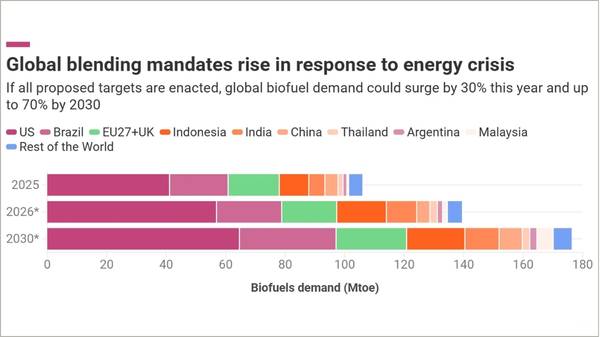
Global biofuels demand chart. Biofuel demand could surge 70% by 2030 as food price fears mount  

T&E warns governments risk trading an oil crisis for a food crisis as biofuel targets strain vegetable oil and fertiliser markets.

Shore power illustration. Shore power shifts from voluntary measure to compliance requirement, DNV white paper finds  

Shore power is moving from an optional emissions tool to a regulatory obligation for shipowners in key trades.

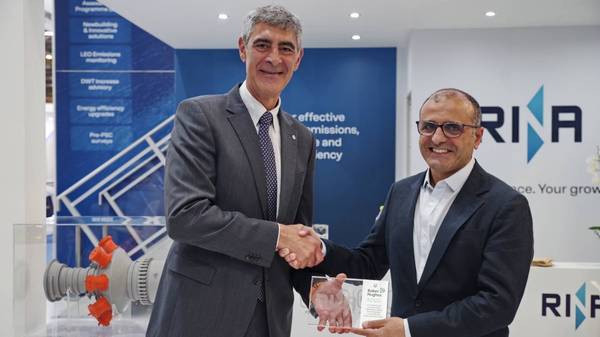
Giosuè Vezzuto and Ahmed Eldemerdash. Baker Hughes’ NovaLT 16 gas turbine receives RINA type approval for marine propulsion on hydrogen and natural gas  

Certification covers operation on natural gas and blends up to 100% hydrogen for marine use.

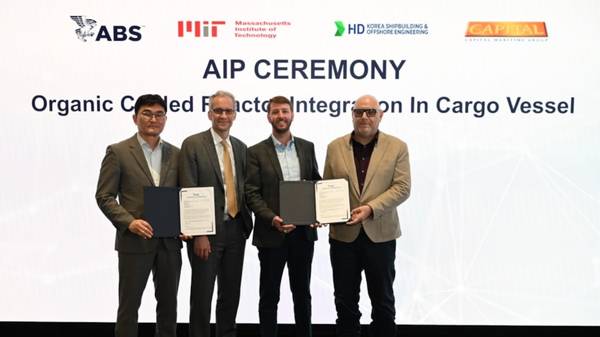
AiP award ceremony for nuclear reactor integration in cargo vessel design. ABS grants approval in principle for nuclear reactor integration in cargo vessel design  

ABS, HD KSOE, Capital Maritime Group and MIT have received approval in principle for a nuclear-powered cargo vessel propulsion system.

Green e-fuel export corridor consortium partners logos. Green e-fuel export corridor between Brazil and Belgium advances to feasibility stage  

A consortium has been formed to develop a green e-fuel corridor linking Porto do Açu to Antwerp-Bruges.

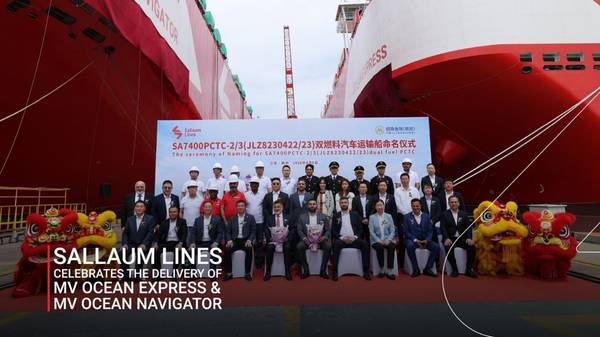
Naming ceremony of Ocean Express and Ocean Navigator vessels. Sallaum Lines takes delivery of two LNG-fuelled PCTCs in simultaneous handover ceremony  

RoRo carrier receives MV Ocean Express and MV Ocean Navigator from Chinese shipyard.

Person signing a document. Agastya Group signs MoU with Andhra Pradesh government for 1 MTPA green methanol hub at Mulapeta Port  

India-based Agastya Group plans a $6.5bn green methanol export facility on the country's east coast.