Wed 21 Jul 2010, 07:26 GMT

Anchorage supplies continue at Dalian


Vessels receive fuel at anchorage following the closure of berths at Dalian.


China's Chimbusco is continuing to carry out bunker deliveries at Dalian port following an explosion at two crude oil pipelines on Friday.

The country's leading supplier is delivering marine fuel at anchorage only, since the government is not permitting bunker deliveries to be carried out at the port's berths since last week's incident.

Chimbusco is sourcing product from Qingdao, where it has storage tanks with a capacity of approximately 200,000 cubic metres. The company is understood to have enough stock at the facility to supply both Qingdao and Dalian, while closures continue at Dalian for up to two weeks.

The port's other bunker supplier China Shipping & Sinopec Suppliers Co. (China Bunker) is understood to have suspended bunker supplies at Dalian.

The closures at Dalian, one of the country's largest ports, follow a pipeline explosion and fire at the Xingang zone at Dalian port, which operates the nation’s largest crude terminal. The explosion occurred as oil was being offloaded from a tanker on Friday. Approximately 1,500 tonnes of oil are reported to have spilled into the sea.

The incident led to the closure of around 90 percent of berths at Dalian. Most of the facilities in the Dayaowan area of the port have been closed, and traffic to the Beiliang section, which handles grain shipments, has been restricted but not stopped.

Ships carrying locally-produced corn, have been unable to dock at Dalian because of the congestion, and have been diverted to the nearby ports of Jinzhou and Bayuquan.

However, it is understood that soybean cargoes have been arriving as normal into Dalian and that there has been no noticeable impact on the delivery of soybeans to Dalian, which accounts for around 10 percent of China's soybean imports.

In the oil sector, Friday's incident is expected to have a downward effect on oil prices in the region as traders seek to sell prompt cargoes rather than have vessels waiting at Dalian for a period of up to two weeks incurring demurrage.

Even if the port reopens earlier than anticipated, there is likely to be a long queue to discharge at Dalian, which receives around 10 percent of the country's crude oil imports.

Meanwhile, PetroChina has announced that the company's largest refinery, located in Dalian, is operating at 95 percent of capacity.

The 410,000 barrels-per-day (bpd) facility is said to be operating as normal despite the closure of nearby berths because the plant relies on its own docks to ensure steady crude supplies and fuel shipments. The docks are able to berth vessels as large as 100,000 tonnes.

The other refinery in Dalian, operated by West Pacific Petrochemical Corp., is reported to have diverted some crude cargoes to other domestic ports because of the oil spill.

The 200,000 bpd facility, which receives around three crude oil cargoes per month through Dalian port, is estimated to have enough crude stockpiles for approximately one week.

The refinery cut its production rates by 20 percent to around 140,000 barrels per day after the pipeline explosion.


TMS Tankers logo. Lloyd’s Register delivers fleet-wide energy transition roadmap for TMS Tankers  

LR Advisory maps vessel-level compliance risk and decarbonisation pathways across the Greek owner’s tanker fleet.

Dr Prapisala Thepsithar, GCMD. GCMD shares biofuel assurance and green finance insights at Hong Kong shipping decarbonisation forum  

The Global Centre for Maritime Decarbonisation presented pilot findings on biofuels and energy efficiency financing.

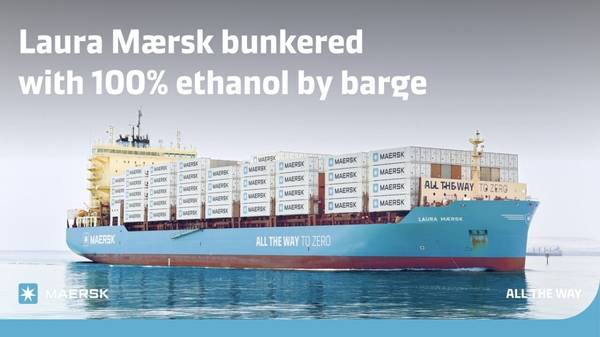
Laura Maersk ethanol bunkering graphic. Maersk conducts large-scale ethanol bunkering trial on Laura Maersk in Rotterdam  

A.P. Moller – Maersk has conducted a barge-delivered ethanol bunkering operation as part of ongoing fuel trials.

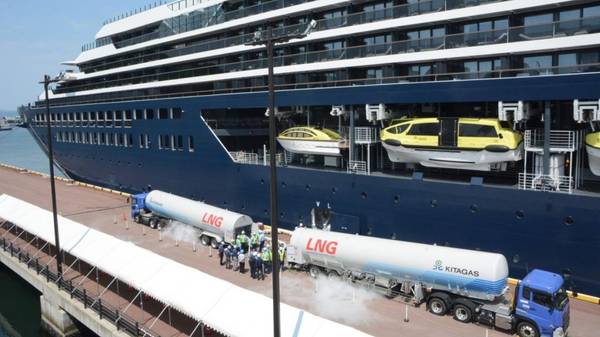
Luminara vessel truck-to-ship bunkering. MOL Techno-Trade completes first LNG bunkering for international cruise ship in Hokkaido  

Truck-to-ship LNG operation at Hakodate marks first such supply to an international cruise vessel in Hokkaido.

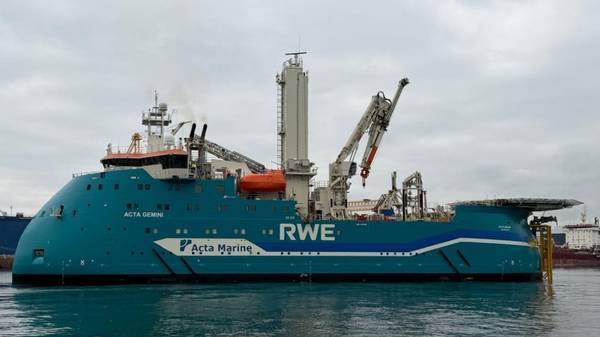
Acta Gemini vessel. Acta Marine takes delivery of methanol dual-fuel CSOV Acta Gemini for RWE wind farm charter  

The vessel will support operations at the Sofia Offshore Wind Farm at Dogger Bank.

Yeva Wood and Kirsten Møller Jørgensen. Malik Supply expands Danish team with bunker trader and finance hire  

Danish bunker supplier Malik Supply adds two new staff across its Fredericia and Aalborg offices.

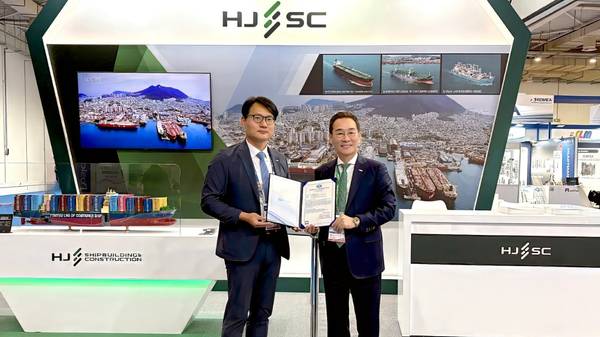
AiP award ceremony for a 10,000-teu biofuel-powered container ship. HJSC wins AiP for 10,000-teu biofuel-powered container ship design  

South Korean shipbuilder HJ Shipbuilding & Construction receives classification society approval for its biofuel vessel design at Posidonia.

Active vessel. Capital Clean Energy Carriers takes delivery of LNG carrier and dual-fuel gas carrier, secures five new charters  

Athens-based CCEC expands its fleet and pushes contracted revenue backlog to $3.1bn.

VPS logo. Fuel quality management for vessels in extended idle: Arabian Gulf, Gulf of Oman and adjacent anchorages | Rahul Choudhuri, VPS  

Managing fuel quality deterioration following the closure of the Strait of Hormuz.

Person signing a document. Agastya Green Fuels signs 250,000 t/yr e-methanol offtake deal with Sri Lanka’s SAR Group  

Indian producer and Sri Lankan maritime firm agree long-term green methanol supply partnership.