Thu 4 Mar 2010, 11:03 GMT

Safety warning over Trieste low sulphur ruling


Association says ship safety may be sacrificed in order to generate harbour funds via euro fines.


INTERTANKO, the International Association of Independent Tanker Owners, has said that a ruling by the Port of Trieste regarding the use of low sulphur fuel may lead to safety being compromised in order to generate additional revenue.

With effect from 3 March 2010, vessels visiting Trieste and using fuels with a sulphur content exceeding 0.1%, and therefore not complying with EU Directive 2005/33/EC, will be prosecuted with a fine of between Euros 15,000 and 150,000.

Exemption to the law will no longer be granted and all eventual special authorisations issued in the past are cancelled, it states.

INTERTANKO says that this means that ship and port safety may be sacrificed purely in order to generate local harbour funds.

Trieste Port does say that a reduction of the fine may be requested according to the European Recommendation (2009/1020/EU of 21.12.2009) within 30 days from the notification of fine, showing evidence of steps taken by ship operator, class and boiler manufacturer to complete the work enabling the vessel to burn fuel according to the EU Directive.

However once a fine reduction application has been submitted, Trieste Port points out that the supporting documents are subject to evaluation by the officer on duty. If this evidence is considered insufficient to merit a reduction of the fine to the minimum, then the fine could rise to the maximum set by law - Euros 150,000.

Moreover, if a vessel which has been fined calls Trieste again without being in compliance with the EU Directive in question, the vessel, its owner/operator and its master will be banned from entering all Italian ports.

Ships which are not yet modified to use 0.1% sulphur MGO, and which do not receive permission to consume low sulphur HFO in their boilers, have three possible courses of action, all of which penalise the owner/operator for headlining safety:

* Either they may choose to use 0.1% MGO and do their outmost to manage the associated risks;

* Or they may emphasise safety and use low sulphur HFO in their boilers but face prosecution and fines;

* Or they may simply refuse to call at Trieste until modifications have been completed.

For some ships a switch from HFO to MGO in the boilers without having performed the necessary modifications is considered significantly less safe than the alternative of using low sulphur HFO. Boiler manufacturers and class have explicitly rejected any liability for the consumption of MGO in the boilers in cases where they have indicated that there is a need for modification.

"Many of these modifications have not yet been completed due to the slow response from the boiler manufacturers. This is something that is out of the control of ship owners and operators, many of whom initiated the modifications process almost a year ago after having been misled by earlier advice from boiler manufacturers that their boilers work safely on distillate fuels – advice that has since been retracted, " INTERTANKO said.

INTERTANKO said that the shipowner's obligation is to seek and follow the boiler manufacturer’s advice, adding that until the beginning of 2009, all boiler manufacturers had the same answer - "No problem, our systems can safely work with low sulphur distillates". "The same (mis)information was also given to the regulators, which prevented the EU from seeing the need to call a technical meeting," INTERTANKO commented.

INTERTANKO said that it and other ship owner associations had been asking for a technical meeting since 2003, with the request repeated in 2006 and 2008. Then at the beginning of 2009, ship operators began to ask the boiler manufacturers to guarantee their systems as fit for the purpose of safe compliance with this provision. In the end, INTERTANKO said the technical meeting only took place in October 2009 – just months before the EU Regulation on 0.1% sulphur fuels at berth entered into force on 1 January 2010.

"The safe operation of ships, and the safety of their crews and cargoes, should not be put at risk by the need to generate cash for port authorities. INTERTANKO trusts that information supplied by ships with the modification process underway will be considered in the light of the EC Recommendation which recognises that there may be operational problems and safety risks associated with the use of the required fuels in ships that have not undergone technical adaptations, and which invites EU Member States to consider the existence of detailed evidence of the steps taken by ships to ensure safe compliance with the Directive," INTERTANKO added.

INTERTANKO says that it has sent a letter inviting the Harbour Master Office to revisit its 'strict and unexpected' decision.


TMS Tankers logo. Lloyd’s Register delivers fleet-wide energy transition roadmap for TMS Tankers  

LR Advisory maps vessel-level compliance risk and decarbonisation pathways across the Greek owner’s tanker fleet.

Dr Prapisala Thepsithar, GCMD. GCMD shares biofuel assurance and green finance insights at Hong Kong shipping decarbonisation forum  

The Global Centre for Maritime Decarbonisation presented pilot findings on biofuels and energy efficiency financing.

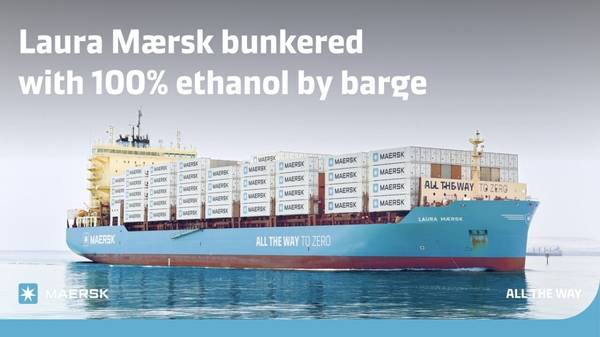
Laura Maersk ethanol bunkering graphic. Maersk conducts large-scale ethanol bunkering trial on Laura Maersk in Rotterdam  

A.P. Moller – Maersk has conducted a barge-delivered ethanol bunkering operation as part of ongoing fuel trials.

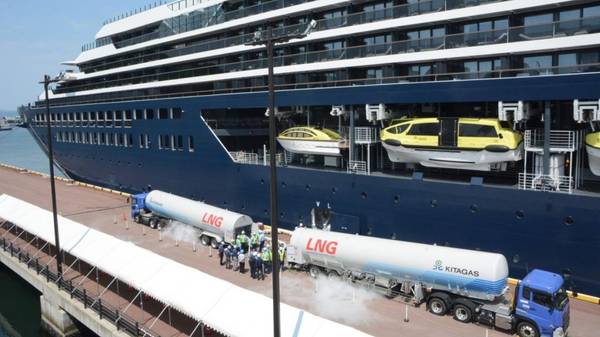
Luminara vessel truck-to-ship bunkering. MOL Techno-Trade completes first LNG bunkering for international cruise ship in Hokkaido  

Truck-to-ship LNG operation at Hakodate marks first such supply to an international cruise vessel in Hokkaido.

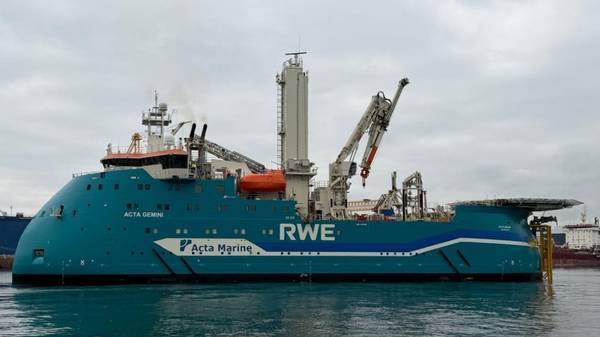
Acta Gemini vessel. Acta Marine takes delivery of methanol dual-fuel CSOV Acta Gemini for RWE wind farm charter  

The vessel will support operations at the Sofia Offshore Wind Farm at Dogger Bank.

Yeva Wood and Kirsten Møller Jørgensen. Malik Supply expands Danish team with bunker trader and finance hire  

Danish bunker supplier Malik Supply adds two new staff across its Fredericia and Aalborg offices.

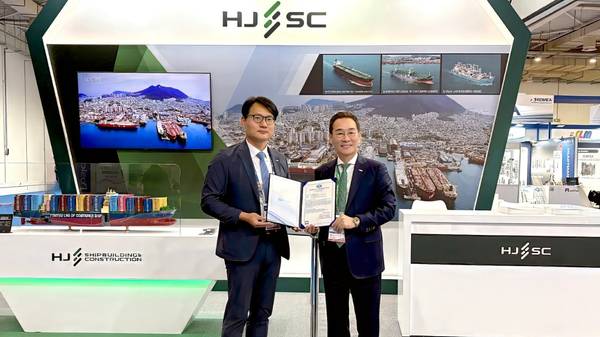
AiP award ceremony for a 10,000-teu biofuel-powered container ship. HJSC wins AiP for 10,000-teu biofuel-powered container ship design  

South Korean shipbuilder HJ Shipbuilding & Construction receives classification society approval for its biofuel vessel design at Posidonia.

Active vessel. Capital Clean Energy Carriers takes delivery of LNG carrier and dual-fuel gas carrier, secures five new charters  

Athens-based CCEC expands its fleet and pushes contracted revenue backlog to $3.1bn.

VPS logo. Fuel quality management for vessels in extended idle: Arabian Gulf, Gulf of Oman and adjacent anchorages | Rahul Choudhuri, VPS  

Managing fuel quality deterioration following the closure of the Strait of Hormuz.

Person signing a document. Agastya Green Fuels signs 250,000 t/yr e-methanol offtake deal with Sri Lanka’s SAR Group  

Indian producer and Sri Lankan maritime firm agree long-term green methanol supply partnership.