
 |
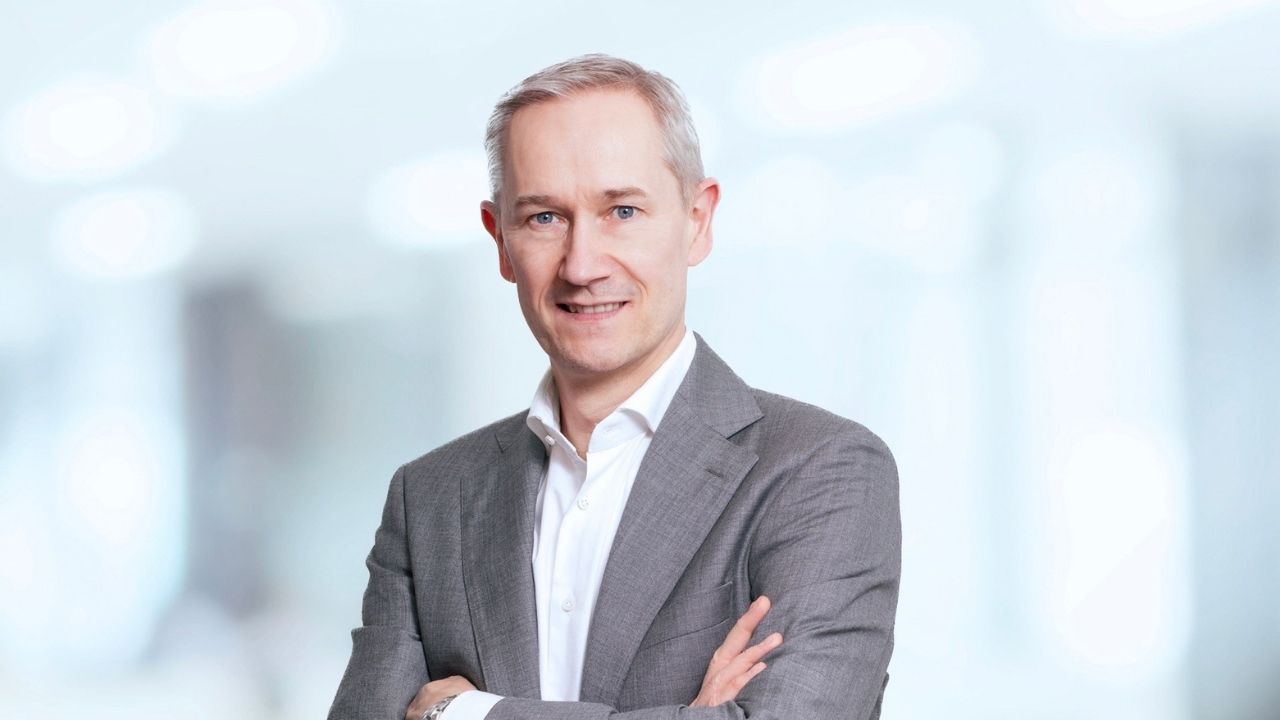
Marine biofuels have moved beyond the trial stage and are now part of mainstream fuel procurement, according to Jeroen de Vos, head of global operations and quality at bunker supplier Peninsula and vice-chair of the International Bunker Industry Association (IBIA).
Writing in a blog post published on 7 October, de Vos noted that biofuel blends containing fatty acid methyl ester (FAME), including used cooking oil methyl ester (UCOME), are now available across bunkering hubs and are being used by shipowners seeking to reduce lifecycle greenhouse-gas emissions from existing fleets.
He explained that, for many vessels, FAME-based blends can be introduced through existing fuel systems and supply infrastructure, though this does not remove the need for preparation. The product must be suitable for the vessel, its equipment and its operating conditions, with OEM, classification society and flag requirements considered before use.
De Vos pointed to the publication of the Shipboard Biofuel Blend Checklist for FAME-based biofuels as evidence of this shift. The checklist, developed by the IBIA Technical Working Group, was submitted by IBIA and issued as an annex to IMO document MEPC 85/INF.10. It covers fuel assessment, compatibility, tank preparation, water management, bunkering, fuel treatment, storage and machinery monitoring, and builds on CIMAC Guideline 04/2024 on marine fuels containing FAME.
“When practical guidance developed by industry is formally included within the IMO documentation framework, it shows how far the conversation has moved,” de Vos wrote. “The question is no longer simply whether biofuels can be used in shipping. It is how they can be used safely, efficiently and consistently.”
Confidence, not just availability
De Vos argued that one of the barriers to wider biofuel adoption is confidence rather than supply. He said discussions around biofuels can focus disproportionately on perceived risks while overlooking the operational experience, technical guidance and use cases already available.
He cited work by CIMAC, IBIA and the Global Centre for Maritime Decarbonisation (GCMD) on fuel quality, onboard management, compatibility and supply-chain assurance, as well as contributions from the Mærsk Mc-Kinney Møller Center for Zero Carbon Shipping on fuel-transition research. He also referenced OEM guidance covering fuel acceptance, treatment, lubrication, machinery monitoring and operating parameters.
“It is time for the industry to move away from allowing the biofuel discussion to be shaped by fear-driven narratives and worst-case scenarios,” de Vos wrote. “Risks must be understood, assessed and managed, but they also need to be kept in perspective.”
Standards integration
De Vos highlighted the inclusion of FAME-containing marine fuels within ISO 8217:2024, which he said explicitly covers renewable-source marine fuels within its scope. The 2024 edition contains four specification tables, with Table 1 covering distillate and bio-distillate marine fuels and Table 3 covering bio-residual marine fuels. The standard permits FAME content of up to 100% by mass in designated DF grades, while FAME content for RF grades under Table 3 is agreed between buyer and seller, De Vos explained.
He said this integration means FAME-based biofuels and blends are no longer treated as exceptions to conventional marine fuel standards but are instead incorporated into the industry’s fuel specification through defined grades, parameters and test methods.
Peninsula’s biofuel supplyDe Vos mentioned that Peninsula has built its biofuel offering around an International Sustainability and Carbon Certification (ISCC)-certified supply chain, dedicated biofuel expertise, in-house quality specialists and a delivery network. The is said to have company completed more than 450 biofuel deliveries globally during 2025, supporting more than 100 customers, with the activity helping to avoid more than 150,000 tonnes of CO₂e over the year.
“The fuel itself is only part of the solution,” de Vos wrote. “The controls, expertise and operational support surrounding its use are equally important.”
He concluded that biofuels are already being supplied, delivered and used by vessels as part of routine operations, and stressed that the industry’s focus should shift from questioning whether biofuels have a role to play towards embedding them into standard marine operations at scale.
|
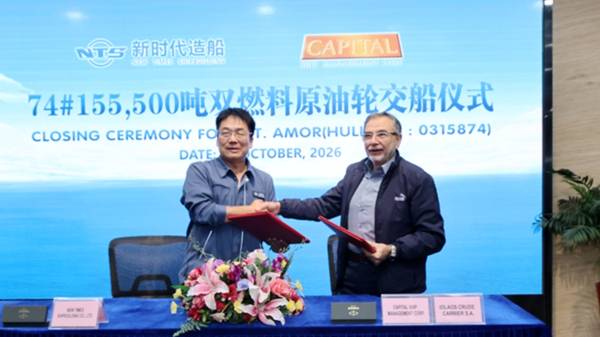
LNG dual-fuel crude tanker handed over to Capital
Jiangsu New Times Shipbuilding delivers the 155,500-DWT LNG dual-fuel crude oil vessel Amor. |
|
|
|
||

|
Gasum names Lowina Lundström as vice president, biogas
Former EIT InnoEnergy executive joins Gasum's management team to lead biogas business development from 1 December. |
|
|
|
||
|
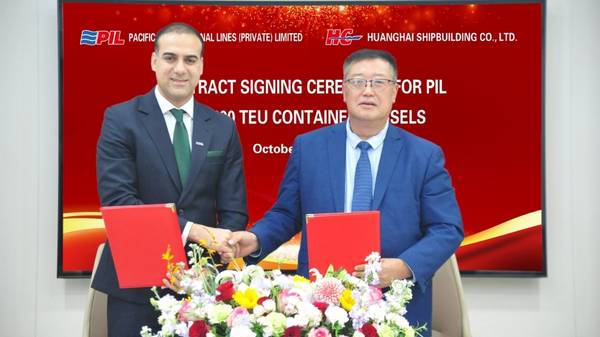
PIL orders seven methanol-ready feeder vessels from Huanghai Shipbuilding
Singapore carrier's 1,400-TEU newbuilds will boost intra-Asia capacity and support its 2050 net zero target. |
|
|
|
||
|
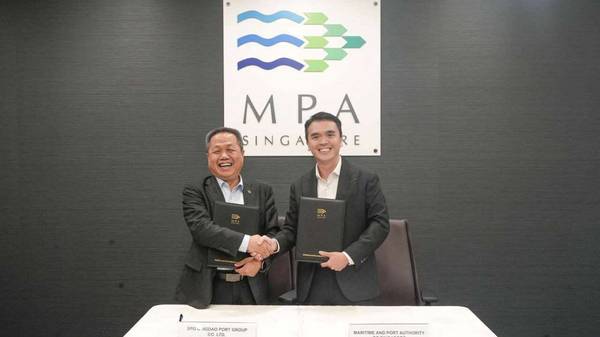
Singapore and Qingdao sign work plan to advance green and digital shipping corridors
MPA and Shandong Port Group’s Qingdao Port have agreed to pursue methanol bunkering pilots and data-sharing initiatives between the two ports. |
|
|
|
||
|
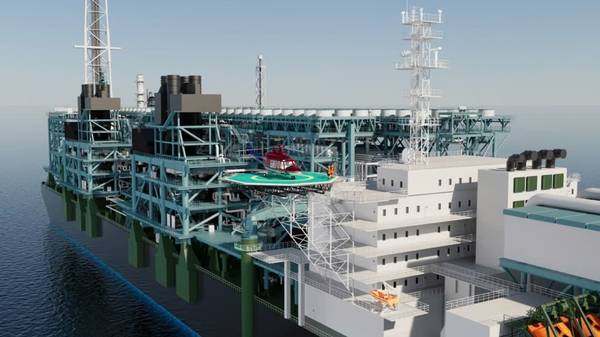
Wärtsilä to supply dual-fuel engines and thrusters for Delfin Midstream's FLNG vessel
Finnish technology group lands propulsion order for first floating LNG vessel built for US Gulf export project. |
|
|
|
||

|
Uni-Fuels advertises for senior bunker trader in Dubai
Nasdaq-listed firm recruiting for its trading team as it aims to drive growth. |
|
|
|
||
|
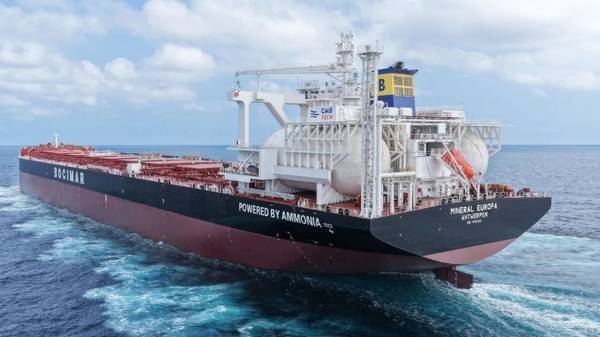
Green ammonia bunkered to ammonia-powered bulk carrier in Australian first
Pilbara Ports, Fortescue and CMB.Tech complete a ship-to-ship ammonia transfer at Port Hedland, supporting plans for a clean fuel bunkering hub in the region. |
|
|
|
||
|
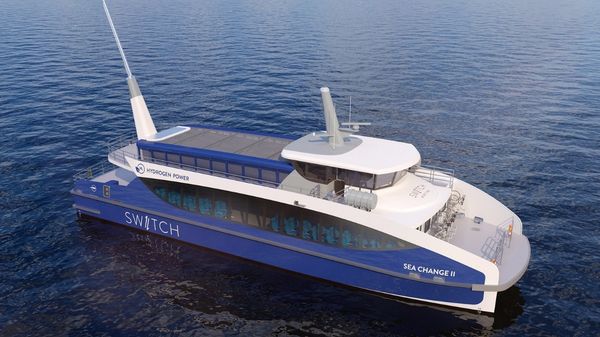
US Coast Guard agrees design framework for hydrogen-fuelled New York ferry
Switch Maritime and Incat Crowther reach regulatory agreement for a 150-passenger hydrogen fuel cell-electric fast ferry intended for New York's waterways. |
|
|
|
||
|
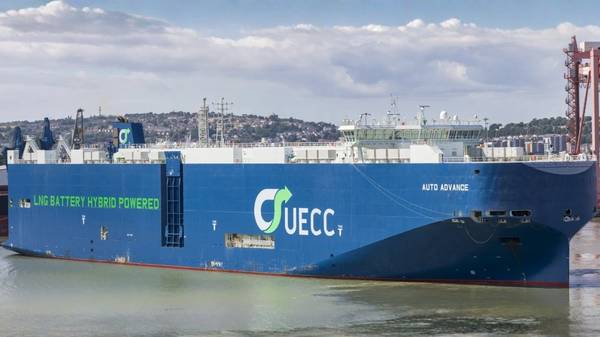
UECC fits WE Tech hybrid power systems on newbuild ro-ro vessels
Norwegian short-sea operator says battery and shaft generator technology from WE Tech Solutions has cut fuel use and auxiliary engine reliance on three newbuilds. |
|
|
|
||
|
Envision's green ammonia used to bunker world's first VLAC
Chinese energy group supplies vessel owned by Eastern Pacific Shipping as it links production and marine fuel supply chains. |
|
|
|
||
| Peninsula seeks sales trader for Singapore bunker fuel desk [News & Insights] |
| Peninsula welcomes 2026 graduate cohort across global bunkering network [News & Insights] |
| Peninsula completes first LNG bunkering operation at Sagunto [News & Insights] |
| Peninsula and Evos sign MoU to develop biofuel storage at Algeciras terminal [News & Insights] |
| Peninsula outlines case for bio-LNG as near-term emissions pathway for LNG-fuelled vessels [News & Insights] |
