
 |
Wind-assisted propulsion has moved from a niche technology to a commercially viable decarbonisation option, according to panellists at a webinar hosted by the International Chamber of Shipping (ICS) on 29 September.
The session, titled 'Wind Assisted Propulsion Webinar', brought together representatives from technology providers, researchers and operators to discuss the growing uptake of wind power across the shipping sector. The panel comprised Lauren Eatwell, head of WindWings at BAR Technologies; Frederik Gerhardt, lead naval architect for wind-powered ships at RISE Research Institutes of Sweden; Changbae Jin, specialist in the ship technical unit at Mitsui O.S.K. Lines (MOL); Chris Waddington, technical director of ICS; and Jean Zanuttini, president of Neoline. The discussion was moderated by John Stawpert, ICS’s principal marine director.
Waddington opened proceedings with a history of wind-assisted propulsion (WAP), tracing it back to the Flettner rotor ship Buckau in 1925, followed by the Shin Aitoku Maru in 1980, the Usuki Pioneer in 1985 and the Ashington in 1987. He noted that uptake has accelerated since 2013, with more than 100 ships now fitted with WAP systems. Waddington noted that the International Maritime Organization (IMO) began introducing regulations around that period to support wider adoption of energy-efficiency technologies, and the industry expects new IMO safety guidelines for WAP to be approved in 2029, supplementing existing class rules.
Gerhardt discussed the work RISE is doing to support the design, testing and research of the technology. He observed that, as adoption increases, research priorities are shifting towards crew training, stating that wind-assisted propulsion is “useless” without it. He pointed to crew familiarisation using a simulator of a very large crude carrier fitted with wing sails as one example, and said the technology needs to be optimised to work alongside existing ship systems.
Jin outlined MOL’s experience installing the Wind Challenger system on an LNG carrier. He described how the project progressed from onshore testing in 2013 to its first commercial application on the Shofu Maru in 2022, a second installation in 2024, and the fitting of two Wind Challenger sails on a 174,000-cbm LNG carrier in 2026, which he said represented the company’s first multi-sail application. Jin explained that one challenge is quantifying fuel savings under changing operating conditions, and that MOL has developed a methodology, backed by independent third-party verification, to evaluate savings transparently. According to Jin, projected savings reach up to 12% for a two-sail LNG carrier and up to 30% for a four-sail configuration. He stressed that wind-assisted propulsion “is no longer just a future concept” but a decarbonisation solution already applied to commercial vessels.
Eatwell described WindWings’ wing-sail design, which she compared to an aeroplane wing positioned on its side, with slots allowing air to flow through to reduce stall risk and improve performance. She said the company analyses thousands of routes using real weather data to build performance profiles before designing systems suited to real-world conditions. WindWings installed its first wing sail in 2023, and by 2026, nine vessels were fitted with 23 wing sails in total. Eatwell noted that ports have shown increasing acceptance of the technology, and that owners should base investment decisions on vessel-specific simulations covering the ship, route and operating profile.
Zanuttini discussed Neoline’s approach, in which wind-assisted propulsion accounts for around 60% of a wider efficiency mix that also includes slow steaming and auxiliary energy optimisation. He referenced the Neoliner, a 136m ro-ro vessel with capacity for 400 cars built in 2025, which he said demonstrated an 80–90% reduction in fuel consumption during its pilot project, with a goal of reaching zero emissions.
During the question-and-answer session, panellists addressed concerns around bridge stability, night vision and directional stability. Eatwell said these factors are closely assessed during simulation, while Zanuttini noted that they are considered at the new-design stage. He cited the mounting of navigation lights on rotating masts and maintaining the correct alignment of coloured light sectors relative to the hull as the main challenges for the Neoliner, though he stressed wind-assisted propulsion remains a safe option overall.
On sailing through storms, Zanuttini said that, with appropriate system settings, vessels can operate safely in high winds, although this can contribute to structural fatigue, making crew training in monitoring essential. Eatwell agreed, emphasising the need for crew confidence in managing the systems.
On crew-training requirements, Gerhardt said bridge crew should be involved early in projects, including through simulator demonstrations, so they can provide feedback and are already familiar with systems by the time of installation.
Jin, addressing how efficiency can be maximised, said real-time measurement of wind conditions around the sails is key, since factors such as the hull and interaction between rotor sails can affect wind entry. Accurate sensing and advanced weather routing are both central to optimising performance, he added.
Summarising their takeaways, Eatwell said wind-assisted propulsion increases resilience and reduces fuel burn, calling it a safe step towards lowering carbon emissions. Zanuttini described the technology as “booming”, whilst Jin reiterated that it is already applied to commercial vessels and that transparency around fuel savings will become increasingly important.
Gerhardt posited that there is “no magic bullet” for decarbonisation, and that solutions need to be combined holistically, with crew involved from early project stages. Waddington suggested shipowners need as many decarbonisation options as possible, adding that wind-assisted propulsion “rightly” has a place in that mix, and that adoption of the IMO’s mid- and long-term greenhouse-gas measures later this year could provide further incentive for uptake.
|
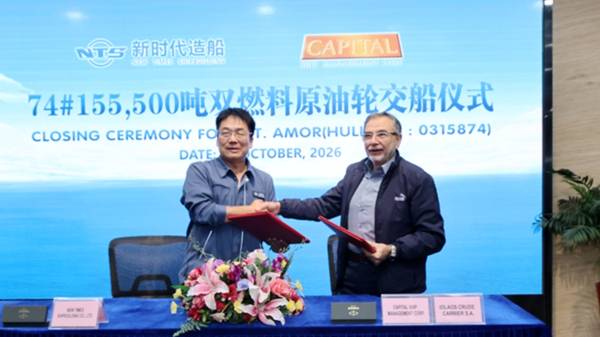
LNG dual-fuel crude tanker handed over to Capital
Jiangsu New Times Shipbuilding delivers the 155,500-DWT LNG dual-fuel crude oil vessel Amor. |
|
|
|
||

|
Gasum names Lowina Lundström as vice president, biogas
Former EIT InnoEnergy executive joins Gasum's management team to lead biogas business development from 1 December. |
|
|
|
||
|
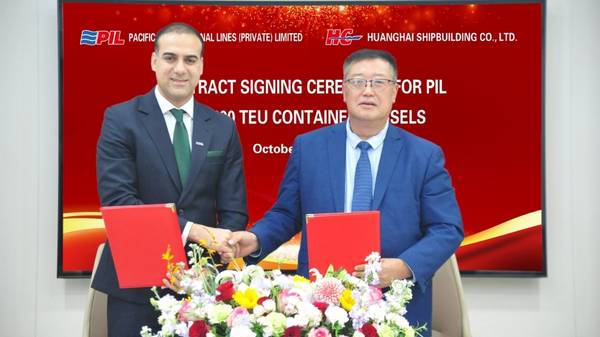
PIL orders seven methanol-ready feeder vessels from Huanghai Shipbuilding
Singapore carrier's 1,400-TEU newbuilds will boost intra-Asia capacity and support its 2050 net zero target. |
|
|
|
||
|
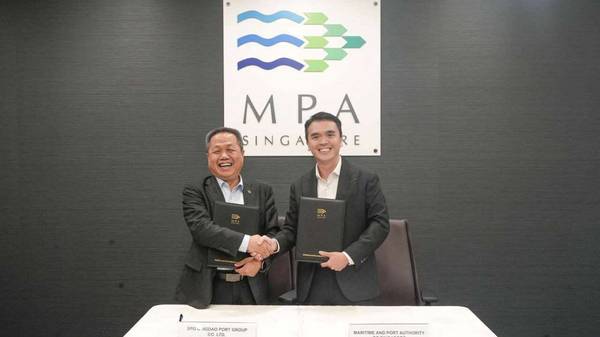
Singapore and Qingdao sign work plan to advance green and digital shipping corridors
MPA and Shandong Port Group’s Qingdao Port have agreed to pursue methanol bunkering pilots and data-sharing initiatives between the two ports. |
|
|
|
||
|
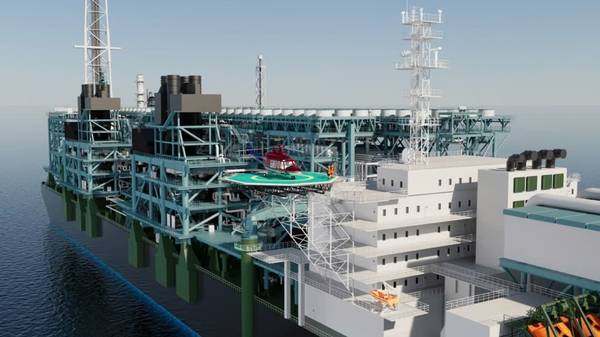
Wärtsilä to supply dual-fuel engines and thrusters for Delfin Midstream's FLNG vessel
Finnish technology group lands propulsion order for first floating LNG vessel built for US Gulf export project. |
|
|
|
||

|
Uni-Fuels advertises for senior bunker trader in Dubai
Nasdaq-listed firm recruiting for its trading team as it aims to drive growth. |
|
|
|
||
|
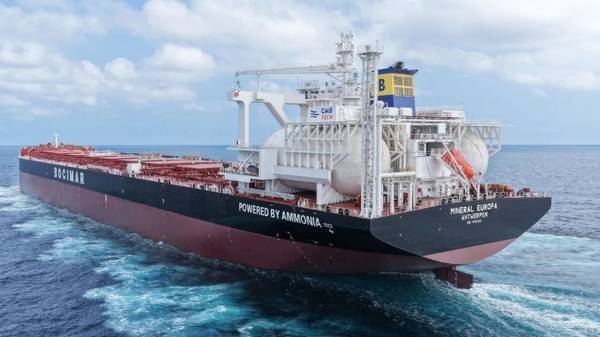
Green ammonia bunkered to ammonia-powered bulk carrier in Australian first
Pilbara Ports, Fortescue and CMB.Tech complete a ship-to-ship ammonia transfer at Port Hedland, supporting plans for a clean fuel bunkering hub in the region. |
|
|
|
||
|
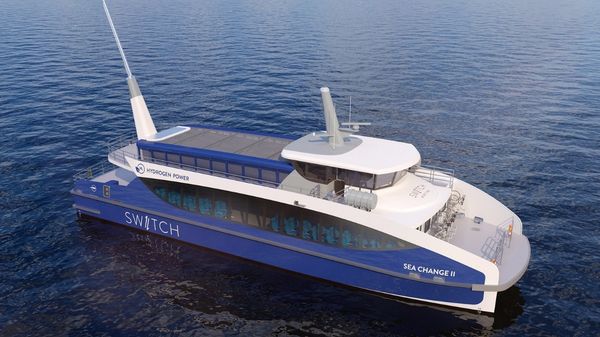
US Coast Guard agrees design framework for hydrogen-fuelled New York ferry
Switch Maritime and Incat Crowther reach regulatory agreement for a 150-passenger hydrogen fuel cell-electric fast ferry intended for New York's waterways. |
|
|
|
||
|
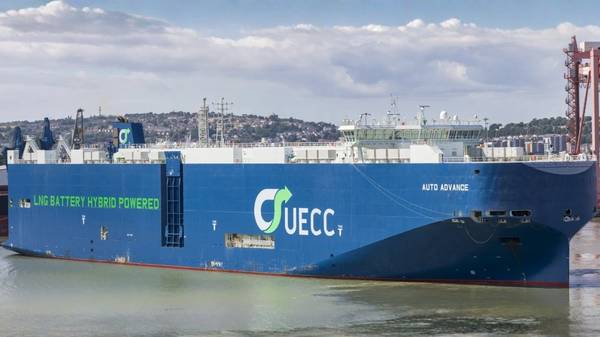
UECC fits WE Tech hybrid power systems on newbuild ro-ro vessels
Norwegian short-sea operator says battery and shaft generator technology from WE Tech Solutions has cut fuel use and auxiliary engine reliance on three newbuilds. |
|
|
|
||
|
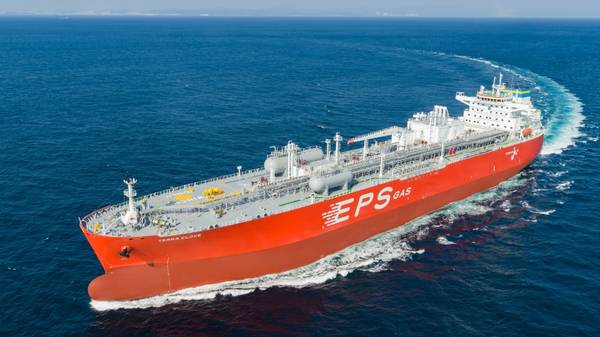
Envision's green ammonia used to bunker world's first VLAC
Chinese energy group supplies vessel owned by Eastern Pacific Shipping as it links production and marine fuel supply chains. |
|
|
|
||
| MOL names world's first ammonia-fuelled Capesize bulk carriers [News & Insights] |
| MOL takes delivery of Wind Challenger-equipped LNG dual-fuel coal carrier [News & Insights] |
| VPS to host Athens seminar on fuel efficiency and carbon reduction [News & Insights] |
| Singapore and China Classification Society deepen maritime ties with renewed decarbonisation pact [News & Insights] |
| Singapore launches series of measures at SIBCON 2026 [News & Insights] |
