
 |
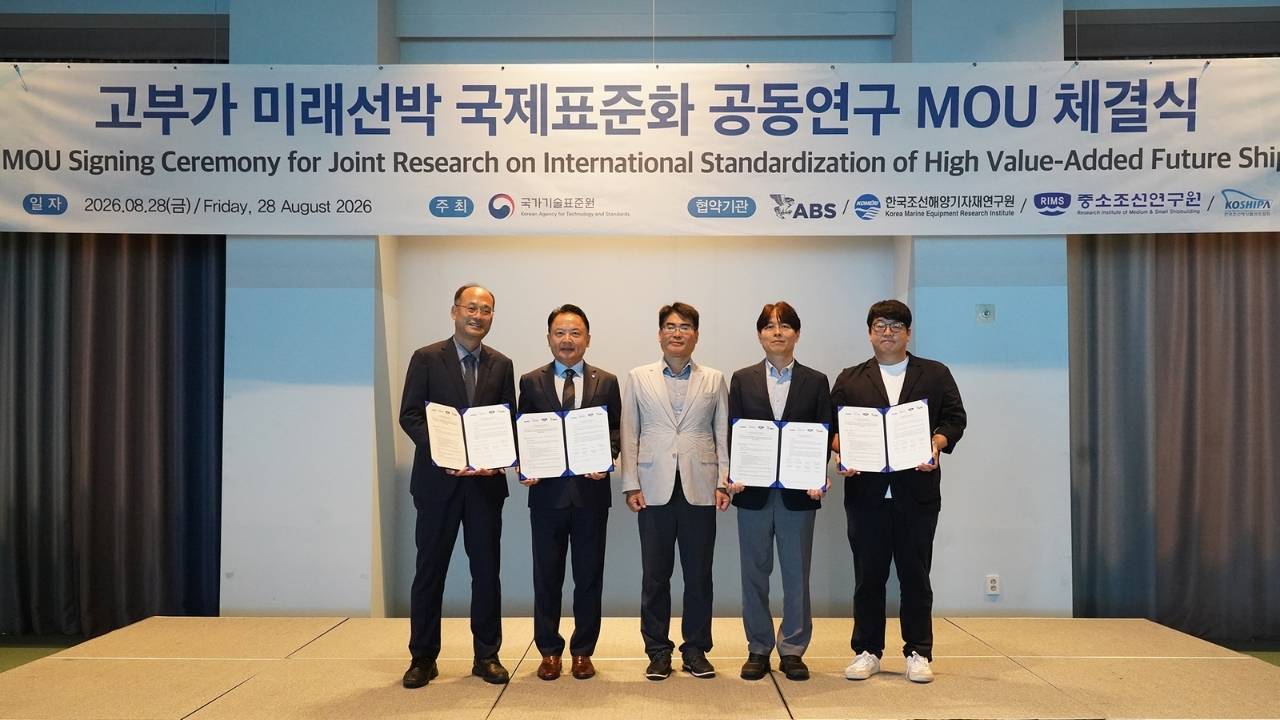
ABS has signed a memorandum of understanding (MoU) with three Korean maritime organisations to advance the development of international standards for the next-generation of hydrogen-fuelled vessels, smart ships and shipyards.
The Korea Marine Equipment Research Institute (KOMERI), the Korean Offshore & Shipbuilding Association (KOSHIPA) and the Research Institute of Medium & Small Shipbuilding (RIMS) have entered into a five-year framework with ABS aimed at developing global benchmarks for vessels and shipyards incorporating digital technology, smart manufacturing and advanced maritime systems.
Under a related agreement, ABS is already supporting the development of preliminary standards in two specific areas: digital production and traceability requirements for additively manufactured shipboard components, and a vent mast design for hydrogen-fuelled ships.
Patrick Ryan, ABS Senior Vice President and Chief Technology Officer, said: "Next-generation shipbuilding is advancing rapidly, and the international standards that govern smart ships, smart shipyards and advanced manufacturing are still taking shape. ABS has deep, long-running relationships with Korea's shipbuilding sector, and this agreement puts that experience to work in developing the standards the industry needs. It is a further reflection of why Korean yards look to ABS to help advance these technologies safely."
The MoU builds on an earlier agreement between ABS and the Korean Agency for Technology and Standards (KATS) to advance international standardisation of smart ship and shipyard technologies, which forms part of Korea's national strategy to lead in high-value-added vessel development.
Joo-Hyoung Choi, Managing Director of KOMERI, commented: "International standards are more than technical criteria — they are the gateway to market entry and a core element of global competitiveness. Working with ABS allows us to combine Korea's standardisation capabilities with ABS' classification experience, and we expect this to produce practical results that lower the barriers for Korean equipment manufacturers entering overseas markets."
|
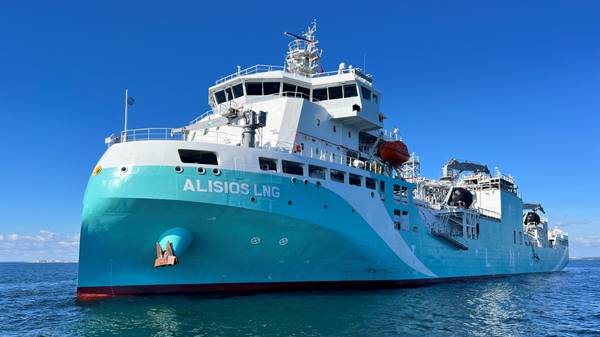
Axpo completes first LNG bunkering in Valencia, with over half bio-LNG
Ship-to-ship transfer to a container vessel makes Valencia the company's fourth Spanish port for LNG bunkering. |
|
|
|
||
|
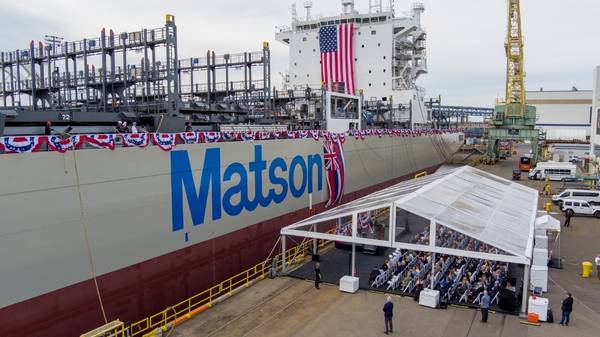
Matson christens Makua, first of three LNG-ready Aloha Class container ships
Dual-fuel vessel, due for delivery in early 2027, is the first of three ships worth around $1bn. |
|
|
|
||
|
CMB.Tech seeks Singapore-based ammonia operations manager for Asia Pacific
New hire will oversee ammonia chartering and bunkering and liaise with Far East partners. |
|
|
|
||
|
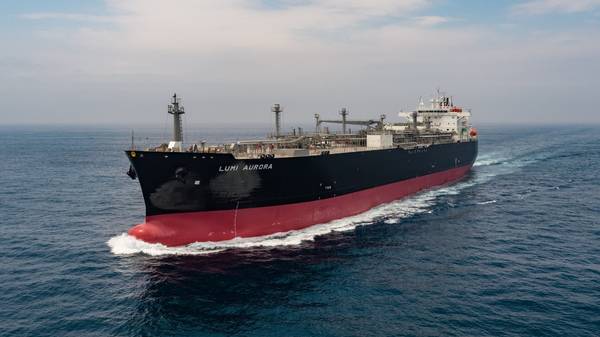
IINO Lines deploys first Ice Class IB VLGC on long-term charter to Borouge International
LPG-fuelled Lumi Aurora will carry North American gas to Borouge International's Porvoo plant in Finland. |
|
|
|
||
|
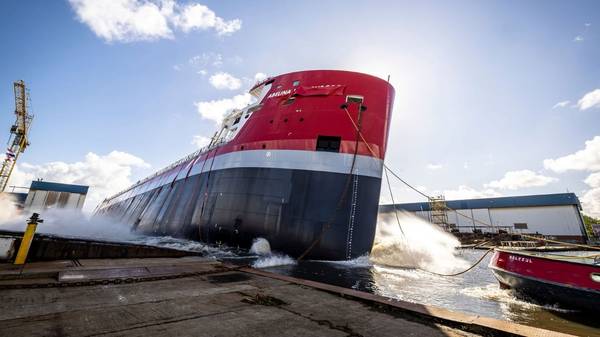
Wagenborg launches first EasyMax 2.0 vessel, prepared for methanol, ammonia and LNG
Abelina Wagenborg, built at Niestern Sander, is the first of a new generation designed for multiple alternative fuels. |
|
|
|
||
|
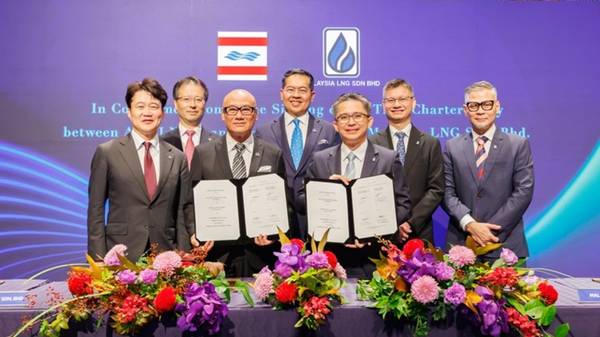
NYK–MISC joint venture signs charter for 18,700-cbm LNG carrier with Malaysia LNG
Asia LNG Transport will operate the dual-fuel diesel-electric newbuild, due from Hudong-Zhonghua in 2028, on routes to Japan. |
|
|
|
||

|
Study finds methanol dual-fuel retrofit of Kamsarmax bulk carrier would take about 75 days
Report by Mærsk Mc-Kinney Møller Center, involving Tsuneishi, puts conversion costs at 25–30% of the cost of a conventionally fuelled newbuilding. |
|
|
|
||
|
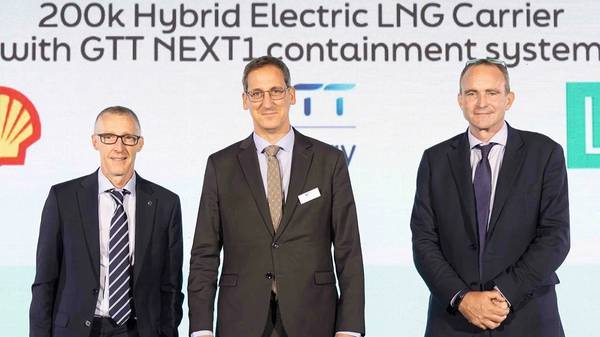
Lloyd's Register, Shell and GTT launch joint project on hybrid-electric 200,000-cbm LNG carrier
Partners to develop a concept combining hybrid-electric propulsion with GTT NEXT1 cargo containment technology for larger LNG carriers. |
|
|
|
||
|
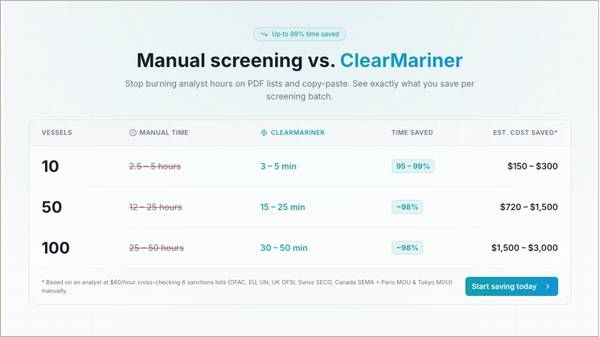
ClearMariner expands maritime sanctions screening with ESG, emissions and API support
Online service now combines sanctions checks with voyage CO₂, CII, EU ETS and FuelEU Maritime estimates. |
|
|
|
||

|
Flex Commodities adds Long Jing Xin to Singapore marine fuels team
Company appoints associate for marine fuels as part of plan for regional expansion. |
|
|
|
||
| Lloyd's Register, Shell and GTT launch joint project on hybrid-electric 200,000-cbm LNG carrier [News & Insights] |
| ClearMariner expands maritime sanctions screening with ESG, emissions and API support [News & Insights] |
| Changhong International launches fifth 115,000-tonne product tanker for Navios [News & Insights] |
| ABS and US Department of Energy sign MoU on maritime nuclear applications [News & Insights] |
| KEPCO E&C and Korean Register of Shipping to collaborate on marine SMR development [News & Insights] |
