
 |
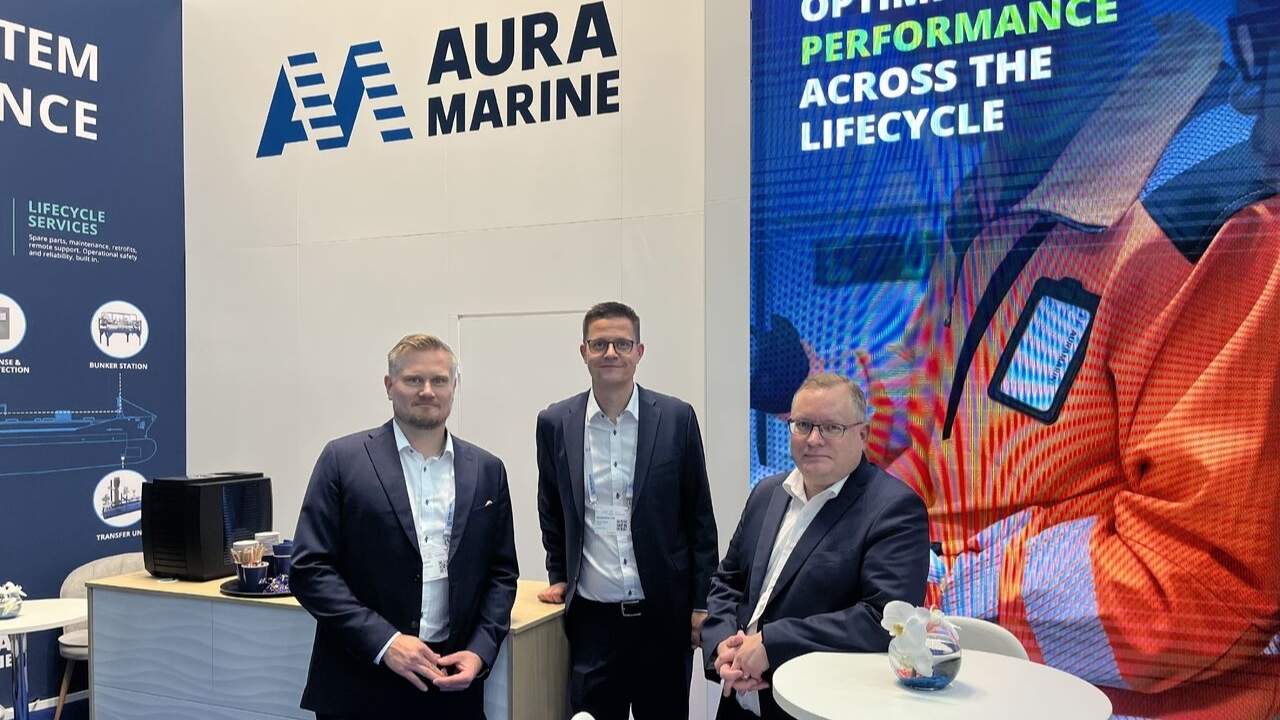
Auramarine, a Finnish fuel supply and auxiliary systems company, has argued that shipping’s energy transition has reached a point where flexibility in fuel supply infrastructure matters more than the specific fuel an operator chooses to back.
Speaking from Turku, Finland, Auramarine chief executive John Bergman said the industry has been asking the wrong question. “The industry has spent years asking which fuel will win,” he said. “That may be the wrong question. No operator today can predict with confidence what will be available, compliant or commercially viable in five years. The operators who adapt best will be the ones who built flexibility into their fuel strategy to respond as conditions change.”
The company’s position reflects what it describes as a convergence of pressures — fuel price volatility, inconsistent availability of alternative fuels, and environmental regulations tightening at different rates across different regions — that, according to Auramarine, make infrastructure strategy as consequential as fuel selection itself.
Retrofit technology already in service
Auramarine points to its own fuel split technology as a practical application of this thinking. First delivered in 2019 and now installed on around 20 vessels, the retrofit system adds a fuel booster module on board, enabling a vessel to run different fuels through the same engine without the extended changeover procedures associated with conventional dual-fuel systems.
The system is said to allow operators to switch between fuels such as marine gas oil (MGO) or biofuel — for example, to meet an emissions control area (ECA) requirement, support maintenance schedules, or respond to shifting fuel prices — without taking the vessel out of service. Auramarine notes that the equipment is delivered in sections through existing doors and hatches, making it suitable for retrofitting to vessels already in operation.
Cruise and ferry sectors identified as early pressure points
Bergman identified cruise and ferry operators as among those feeling the effects of regulatory and operational pressure most acutely. “These vessels constantly move between regulatory zones and environmentally sensitive waters, so the ability to switch fuel supply without disrupting a schedule is an operational necessity,” he explained. “What’s notable is how many operators in this space still don’t know infrastructure like this exists, despite how directly it addresses what they’re already dealing with.”
Auramarine argues that delivering reliable flexibility requires a tailored approach rather than simply adding equipment. “The best results come from scoping flexibility to an owner’s actual fuel strategy, not adding complexity for its own sake,” Bergman noted. The company says its automated fuel changeover systems are designed to keep multi-fuel operations manageable for crews, while what it describes as a structured maintenance approach covers inspection, testing and servicing throughout the vessel’s lifecycle.
Auramarine frames its lifecycle services offering — covering ongoing servicing, spare parts and technical support — as central to keeping flexible fuel systems operational over the long term.
A call for optionality over certainty
Bergman concluded with a broader challenge to the industry’s prevailing approach to fuel strategy. “Over the next few years, operators who succeed will be the ones who stopped waiting for certainty and started building optionality instead,” he said. “In a transition this uncertain, adaptability matters more than any single fuel bet. That’s the conversation we want the industry to have.”
Auramarine is headquartered in Turku, Finland, and operates offices in Finland and China, with service hubs in Singapore and the United States, and representatives in more than 25 countries.
|
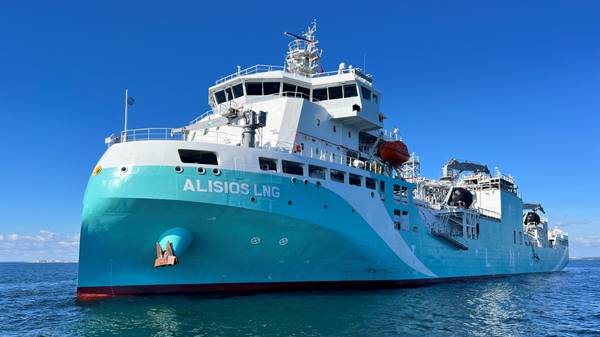
Axpo completes first LNG bunkering in Valencia, with over half bio-LNG
Ship-to-ship transfer to a container vessel makes Valencia the company's fourth Spanish port for LNG bunkering. |
|
|
|
||
|
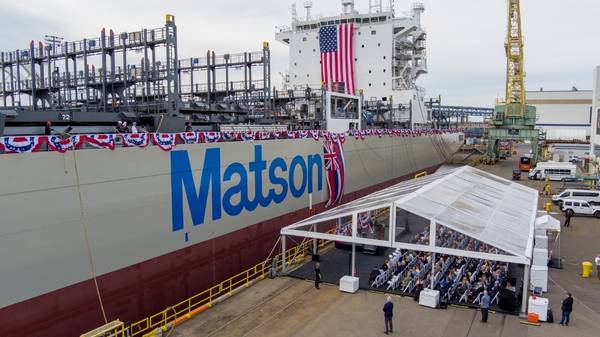
Matson christens Makua, first of three LNG-ready Aloha Class container ships
Dual-fuel vessel, due for delivery in early 2027, is the first of three ships worth around $1bn. |
|
|
|
||
|
CMB.Tech seeks Singapore-based ammonia operations manager for Asia Pacific
New hire will oversee ammonia chartering and bunkering and liaise with Far East partners. |
|
|
|
||
|
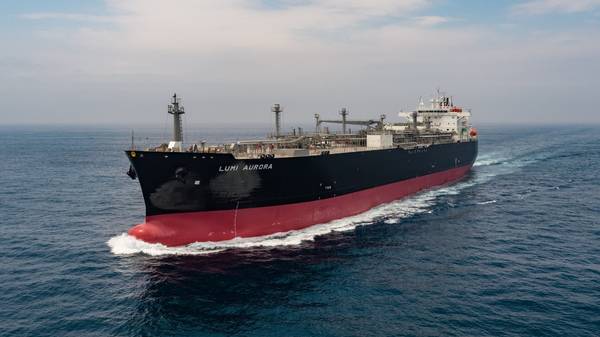
IINO Lines deploys first Ice Class IB VLGC on long-term charter to Borouge International
LPG-fuelled Lumi Aurora will carry North American gas to Borouge International's Porvoo plant in Finland. |
|
|
|
||
|
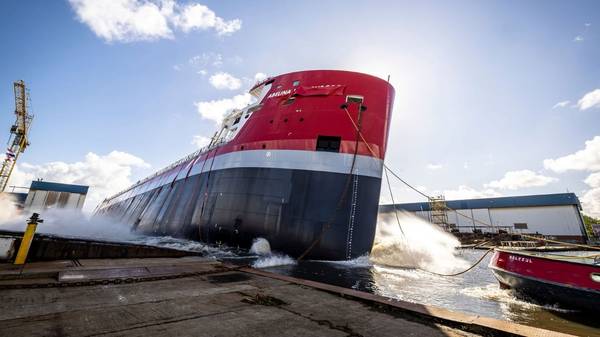
Wagenborg launches first EasyMax 2.0 vessel, prepared for methanol, ammonia and LNG
Abelina Wagenborg, built at Niestern Sander, is the first of a new generation designed for multiple alternative fuels. |
|
|
|
||
|
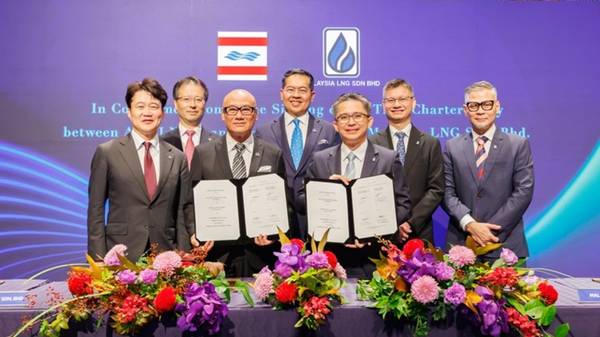
NYK–MISC joint venture signs charter for 18,700-cbm LNG carrier with Malaysia LNG
Asia LNG Transport will operate the dual-fuel diesel-electric newbuild, due from Hudong-Zhonghua in 2028, on routes to Japan. |
|
|
|
||

|
Study finds methanol dual-fuel retrofit of Kamsarmax bulk carrier would take about 75 days
Report by Mærsk Mc-Kinney Møller Center, involving Tsuneishi, puts conversion costs at 25–30% of the cost of a conventionally fuelled newbuilding. |
|
|
|
||
|
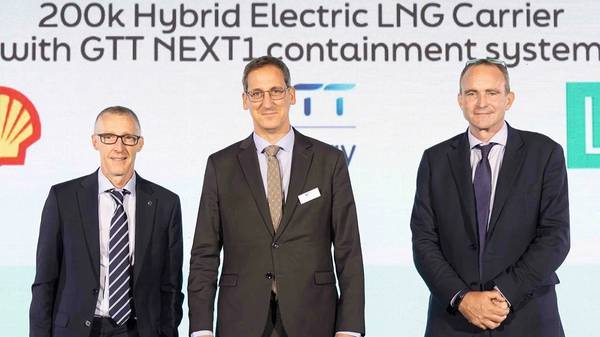
Lloyd's Register, Shell and GTT launch joint project on hybrid-electric 200,000-cbm LNG carrier
Partners to develop a concept combining hybrid-electric propulsion with GTT NEXT1 cargo containment technology for larger LNG carriers. |
|
|
|
||
|
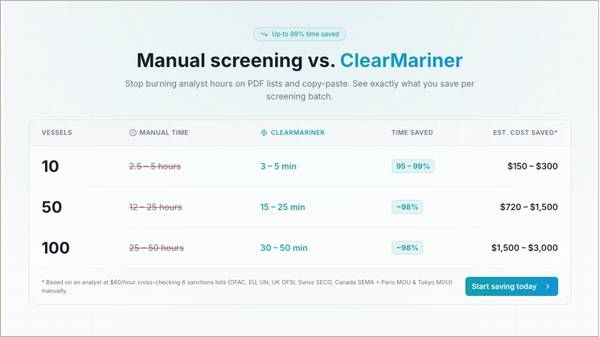
ClearMariner expands maritime sanctions screening with ESG, emissions and API support
Online service now combines sanctions checks with voyage CO₂, CII, EU ETS and FuelEU Maritime estimates. |
|
|
|
||

|
Flex Commodities adds Long Jing Xin to Singapore marine fuels team
Company appoints associate for marine fuels as part of plan for regional expansion. |
|
|
|
||
| WinGD signs global service agreement for TMS Cardiff Gas LNG carrier newbuilds [News & Insights] |
| Wärtsilä to supply dual-fuel engines for 12 CMA CGM container ships [News & Insights] |
| Keel-laying ceremony held for LNG-powered Disney Believe at Meyer Werft [News & Insights] |
| Why batteries still cannot power ships across oceans [News & Insights] |
| HD Hyundai completes type approval test for new LNG dual-fuel engine [News & Insights] |
