
 |
Ethanol is gaining ground as an alternative marine fuel, with backing from dry bulk charterer Shandong Shipping and container line Maersk providing early evidence of commercial interest, according to Andrea Lazzaro, head of business development at Swiss engine manufacturer WinGD.
Writing in a company blog post published on 19 August, Lazzaro noted that Shandong Shipping had placed an order in May for what are said to be the world’s first ethanol-fuelled two-stroke engines, underpinned by a long-term charter to mining company Vale. The vessels — Newcastlemax bulk carriers — will be used to transport iron ore from Brazil to China.
WinGD, which makes dual-fuel engines used across the merchant fleet, says it first tested ethanol as a marine fuel in 2014, predating its commercialisation of the methanol-capable X-DF-M engine. Lazzaro explained that the two alcohol fuels share combustion and fuel-handling characteristics, making adaptation of existing methanol engine technology for ethanol use straightforward.
IMO recognition
A development that preceded the Shandong Shipping order by one month, Lazzaro noted, was the IMO’s Marine Environment Protection Committee approving the inclusion of greenhouse gas (GHG) emission factors for Brazilian second-generation corn ethanol in its life-cycle analysis guidelines for marine fuels — the first biofuel to be included in those guidelines. The fuel carries an emissions factor of 20.8 gCO2e/MJ, which WinGD notes is more than four times lower than very-low-sulphur fuel oil (VLSFO).
Lazzaro also noted that ethanol is already widely available in Brazil, the United States and other markets, and that large-scale production — combined with slower-than-expected uptake in the automotive sector — has kept prices close to those of conventional marine fuels. The company claims price competitiveness would improve further under carbon-pricing regimes.
Regulatory complexity
However, ethanol faces an unresolved regulatory challenge in Europe. Under FuelEU Maritime, biofuels made from food crops or their by-products — a category that includes most forms of ethanol — do not currently receive credit for emissions reductions. This contrasts with the EU Emissions Trading System, under which such fuels do qualify. Crop-biofuel producer groups have mounted a legal challenge to FuelEU Maritime’s treatment of crop-based fuels, arguing that modern production techniques do not compromise food security.
Lazzaro noted that around 20% of the global merchant fleet is exposed to European emissions legislation, meaning the FuelEU Maritime classification would not affect all operators. Those whose vessels call at ports in the European Economic Area (EEA) would, for now, receive emissions credit under the EU ETS but not under FuelEU Maritime.
Blending strategy
WinGD also points to a potential role for ethanol as part of a blended-fuel strategy alongside green methanol. The company notes that its engines can run on a blend of alcohol fuels, allowing operators to use ethanol — described as already price-competitive under carbon pricing — while gradually increasing the proportion of green methanol as availability improves and costs fall.
Green methanol, produced from renewable electricity and captured carbon, can qualify as a zero or near-zero emissions fuel under the IMO’s draft net-zero framework, which sets a GHG intensity threshold of 14 gCO2e/MJ. However, Lazzaro acknowledged that green methanol remains expensive and is not yet widely available.
The 9,000-TEU container vessel Terma Maersk, the latest Maersk ship to be fitted with a WinGD X-DF-M methanol engine, is cited by Lazzaro as an example of a vessel that, while configured for methanol, is also compatible with ethanol use. He added that previously installed methanol engines can be prepared for ethanol use with “a very simple modification.”
|
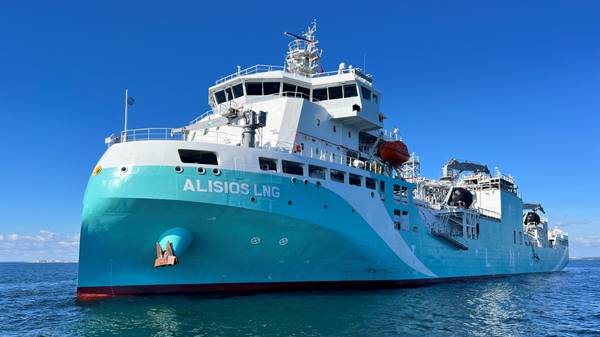
Axpo completes first LNG bunkering in Valencia, with over half bio-LNG
Ship-to-ship transfer to a container vessel makes Valencia the company's fourth Spanish port for LNG bunkering. |
|
|
|
||
|
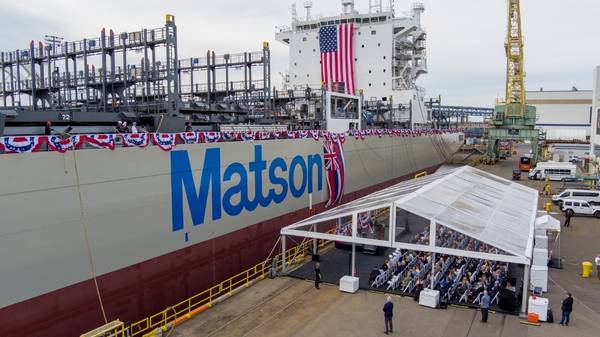
Matson christens Makua, first of three LNG-ready Aloha Class container ships
Dual-fuel vessel, due for delivery in early 2027, is the first of three ships worth around $1bn. |
|
|
|
||
|
CMB.Tech seeks Singapore-based ammonia operations manager for Asia Pacific
New hire will oversee ammonia chartering and bunkering and liaise with Far East partners. |
|
|
|
||
|
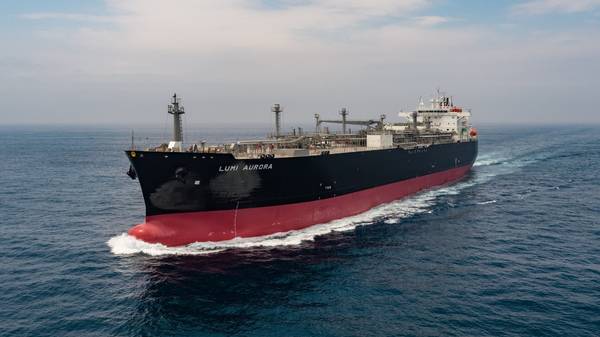
IINO Lines deploys first Ice Class IB VLGC on long-term charter to Borouge International
LPG-fuelled Lumi Aurora will carry North American gas to Borouge International's Porvoo plant in Finland. |
|
|
|
||
|
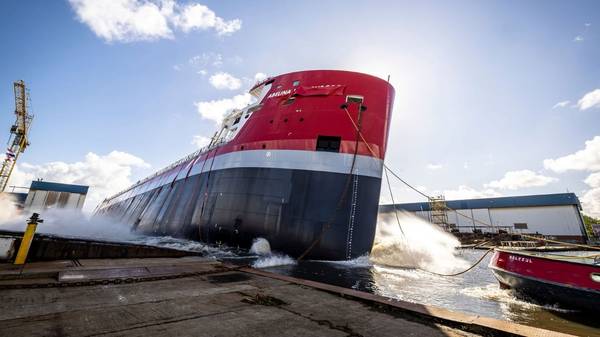
Wagenborg launches first EasyMax 2.0 vessel, prepared for methanol, ammonia and LNG
Abelina Wagenborg, built at Niestern Sander, is the first of a new generation designed for multiple alternative fuels. |
|
|
|
||
|
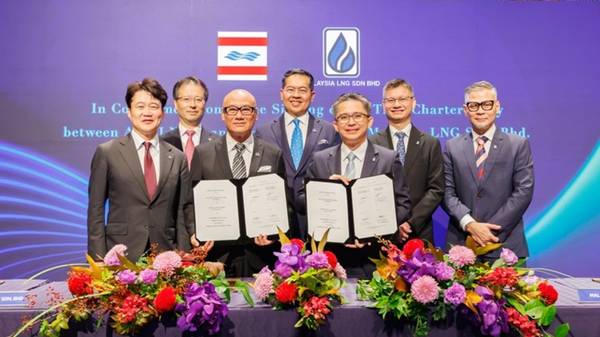
NYK–MISC joint venture signs charter for 18,700-cbm LNG carrier with Malaysia LNG
Asia LNG Transport will operate the dual-fuel diesel-electric newbuild, due from Hudong-Zhonghua in 2028, on routes to Japan. |
|
|
|
||

|
Study finds methanol dual-fuel retrofit of Kamsarmax bulk carrier would take about 75 days
Report by Mærsk Mc-Kinney Møller Center, involving Tsuneishi, puts conversion costs at 25–30% of the cost of a conventionally fuelled newbuilding. |
|
|
|
||
|
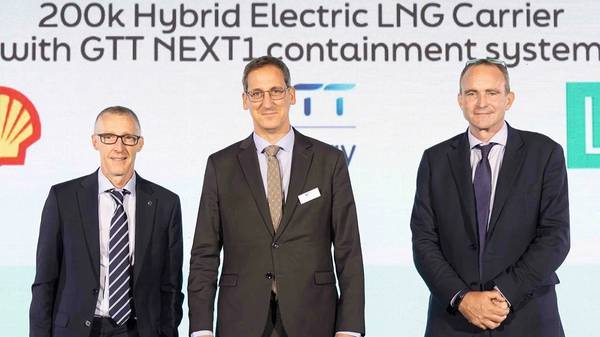
Lloyd's Register, Shell and GTT launch joint project on hybrid-electric 200,000-cbm LNG carrier
Partners to develop a concept combining hybrid-electric propulsion with GTT NEXT1 cargo containment technology for larger LNG carriers. |
|
|
|
||
|
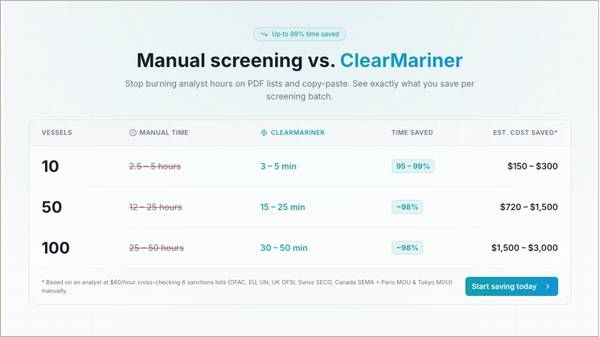
ClearMariner expands maritime sanctions screening with ESG, emissions and API support
Online service now combines sanctions checks with voyage CO₂, CII, EU ETS and FuelEU Maritime estimates. |
|
|
|
||

|
Flex Commodities adds Long Jing Xin to Singapore marine fuels team
Company appoints associate for marine fuels as part of plan for regional expansion. |
|
|
|
||
| WinGD signs global service agreement for TMS Cardiff Gas LNG carrier newbuilds [News & Insights] |
| Wärtsilä to supply dual-fuel engines for 12 CMA CGM container ships [News & Insights] |
| NYK names dual-fuel LNG carrier for Cameron LNG project [News & Insights] |
| HD Hyundai completes type approval test for new LNG dual-fuel engine [News & Insights] |
| Nord Gas Solutions to supply cargo and fuel systems for eight BW LPG VLGCs [News & Insights] |
