
 |
Australia’s Orica has reached a final investment decision (FID) for the Hunter Valley Hydrogen Hub (HVHH), a project that will partially convert its existing natural gas-based ammonia production to renewable ammonia, according to a monthly update published by the Green Energy and Nitrogen Alliance (GENA).
The decision, announced on 1 July, covers a facility on Kooragang Island, Australia, where the project will produce 4.7 kilotonnes per year of renewable hydrogen to replace a portion of the natural gas-based hydrogen currently used at Orica’s existing ammonia plant. According to GENA, this volume of hydrogen will be sufficient to produce approximately 26.6 kilotonnes per year of ammonia — around 7% of the facility’s conventional ammonia capacity. Shortly after reaching FID, Orica awarded the engineering and procurement contract and ordered 50 MW of proton-exchange membrane (PEM) electrolysers.
Despite this development, GENA noted that the decision has only a limited effect on the overall structure of the project pipeline by status, with approximately 5% of renewable ammonia projects having reached FID or operational status, and a further 12% in the engineering stage.
US cancellation weighs on pipeline
The update was accompanied by a contraction in the global low-carbon ammonia project pipeline, driven primarily by the cancellation of Air Products’ Louisiana Clean Energy Complex (LCEC) — a 2.8 megatonnes per year greenfield project in Louisiana, United States. The pipeline shrank by 2.6 megatonnes, or million metric tonnes (MMT) month-on-month after Yara decided not to proceed with acquiring the ammonia portion of the project. In a statement cited by GENA, Yara said: “The project’s expected financial returns do not meet Yara’s investment criteria.”
As of July 2026, GENA’s Project Navigator Ammonia tracks 332 projects and operational facilities, representing a total capacity of 85 MMT by 2030 and 140 MMT by 2034. The pipeline comprises 297 renewable ammonia projects and 35 low-carbon ammonia projects, with total capacity of 108 MMT and 32 MMT by 2034, respectively.
Three new projects were added to the tracker over the past month — two renewable ammonia projects and one low-carbon ammonia project — while four frozen projects were excluded, including three renewable and one low-carbon project.
Capacity outlook tempered
Despite the scale of the tracked pipeline, GENA’s estimates point to a considerably smaller volume of capacity actually coming online. The organisation estimates that renewable ammonia capacity is likely to reach 5–8 MMT by 2030, while low-carbon ammonia capacity could grow to 6–8 MMT over the same period — a fraction of the pipeline totals currently logged.
The global renewable ammonia project pipeline stands at 63 MMT by 2030 and 108 MMT by 2034, while the global low-carbon ammonia pipeline totals 22 MMT by 2030 and 32 MMT by 2034, according to GENA’s data.
The share of post-FID low-carbon ammonia projects has increased to 19%, though GENA attributed this in part to the contraction of the overall project pipeline rather than an acceleration in project development.
|
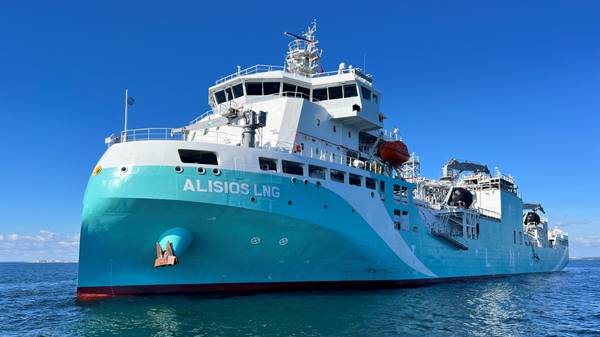
Axpo completes first LNG bunkering in Valencia, with over half bio-LNG
Ship-to-ship transfer to a container vessel makes Valencia the company's fourth Spanish port for LNG bunkering. |
|
|
|
||
|
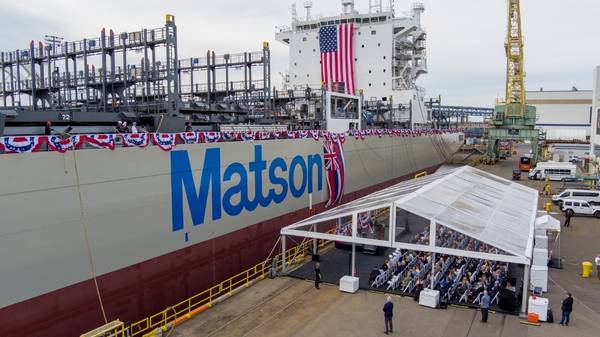
Matson christens Makua, first of three LNG-ready Aloha Class container ships
Dual-fuel vessel, due for delivery in early 2027, is the first of three ships worth around $1bn. |
|
|
|
||
|
CMB.Tech seeks Singapore-based ammonia operations manager for Asia Pacific
New hire will oversee ammonia chartering and bunkering and liaise with Far East partners. |
|
|
|
||
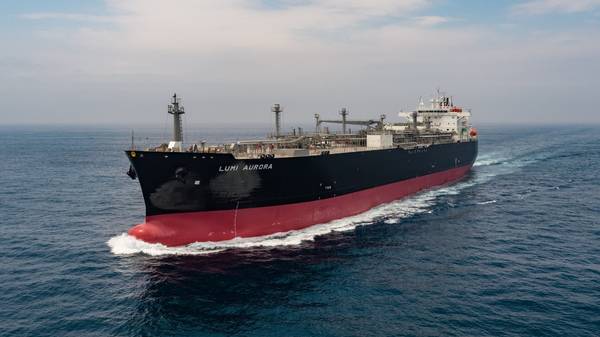
|
IINO Lines deploys first Ice Class IB VLGC on long-term charter to Borouge International
LPG-fuelled Lumi Aurora will carry North American gas to Borouge International's Porvoo plant in Finland. |
|
|
|
||
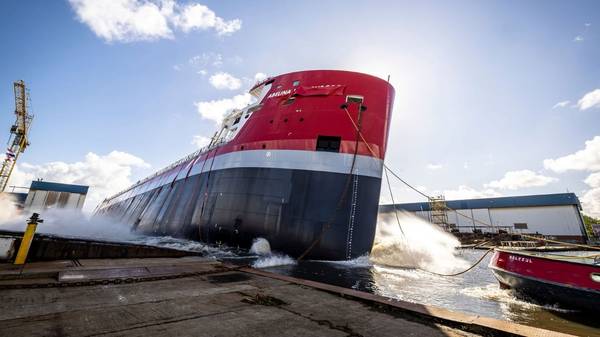
|
Wagenborg launches first EasyMax 2.0 vessel, prepared for methanol, ammonia and LNG
Abelina Wagenborg, built at Niestern Sander, is the first of a new generation designed for multiple alternative fuels. |
|
|
|
||
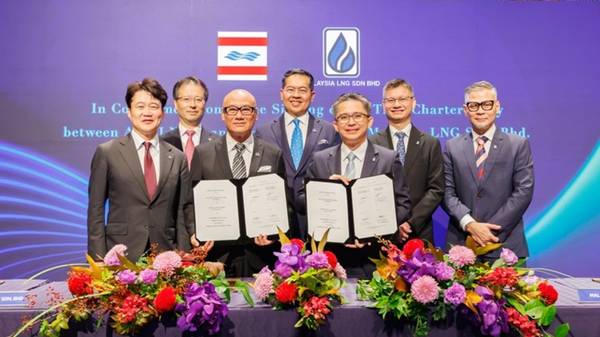
|
NYK–MISC joint venture signs charter for 18,700-cbm LNG carrier with Malaysia LNG
Asia LNG Transport will operate the dual-fuel diesel-electric newbuild, due from Hudong-Zhonghua in 2028, on routes to Japan. |
|
|
|
||

|
Study finds methanol dual-fuel retrofit of Kamsarmax bulk carrier would take about 75 days
Report by Mærsk Mc-Kinney Møller Center, involving Tsuneishi, puts conversion costs at 25–30% of the cost of a conventionally fuelled newbuilding. |
|
|
|
||
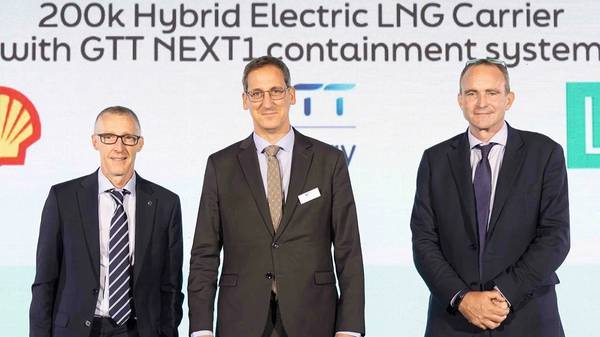
|
Lloyd's Register, Shell and GTT launch joint project on hybrid-electric 200,000-cbm LNG carrier
Partners to develop a concept combining hybrid-electric propulsion with GTT NEXT1 cargo containment technology for larger LNG carriers. |
|
|
|
||
|
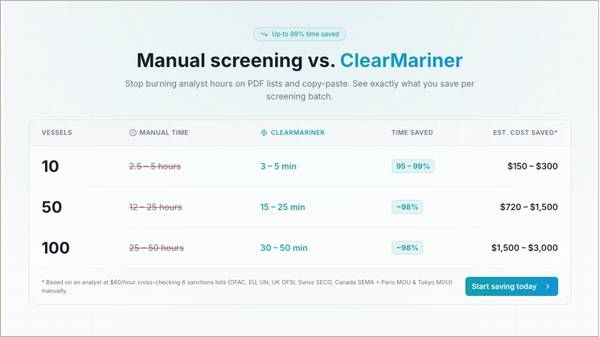
ClearMariner expands maritime sanctions screening with ESG, emissions and API support
Online service now combines sanctions checks with voyage CO₂, CII, EU ETS and FuelEU Maritime estimates. |
|
|
|
||

|
Flex Commodities adds Long Jing Xin to Singapore marine fuels team
Company appoints associate for marine fuels as part of plan for regional expansion. |
|
|
|
||
| CMB.Tech seeks Singapore-based ammonia operations manager for Asia Pacific [News & Insights] |
| Wagenborg launches first EasyMax 2.0 vessel, prepared for methanol, ammonia and LNG [News & Insights] |
| CMB.Tech's Mineral Europa starts maiden voyage as first ammonia-powered dry bulk vessel [News & Insights] |
| India and EU sign letter of intent for green shipping corridor coalition [News & Insights] |
| Höegh Autoliners vessel connects to shore power for the first time in Europe [News & Insights] |
