
 |
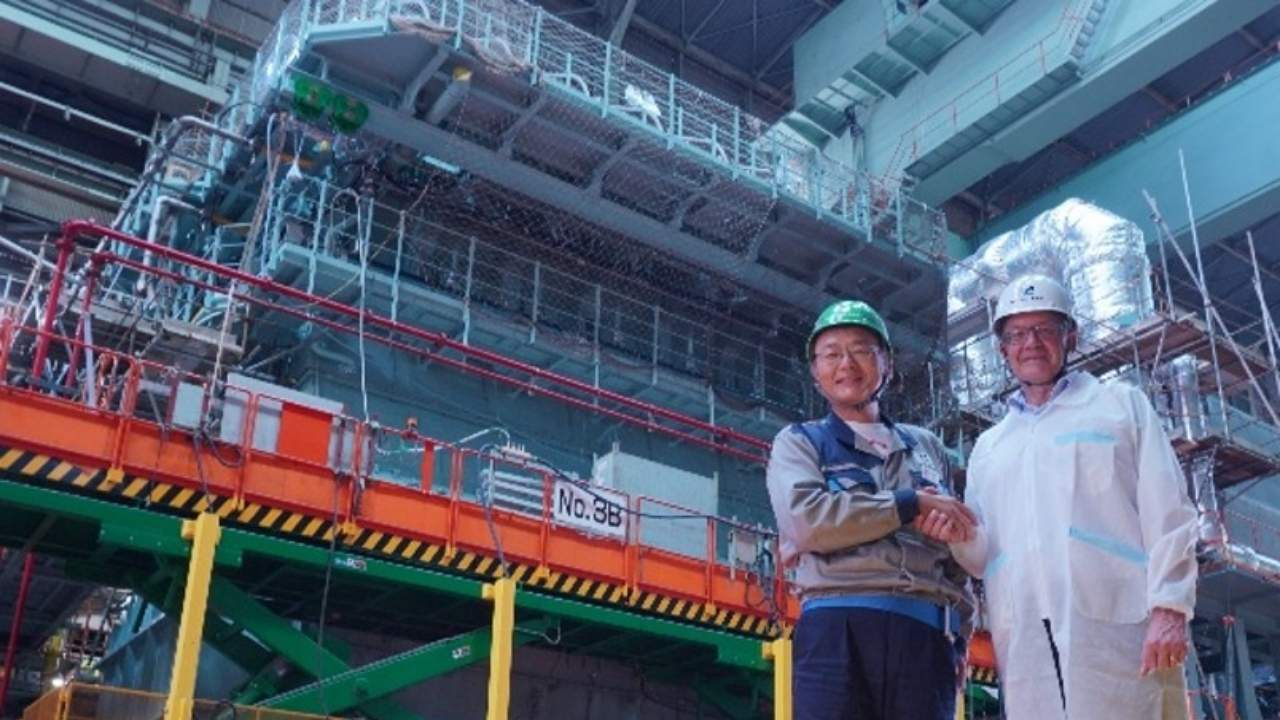
Mitsui E&S Group has completed the factory acceptance test (FAT) of Japan’s first WinGD methanol dual-fuel large marine engine, the company announced on 3 August.
The engine, designated the DU-WinGD 6X82DF-M-1.0 LP-SCR, was manufactured by Mitsui E&S DU Co., Ltd., a group company of Mitsui E&S Co., Ltd., at the Tamano Works facility — also marking the first WinGD large marine engine to be produced at the site. It is scheduled to be installed on the lead vessel in a series of four ships being built for a domestic shipowner.
Mitsui E&S explained that production of the engine at Tamano Works was made possible through the group’s relationship with licensors Everllence and WinGD, combined with Tamano Works’ next-generation fuel supply facilities and large marine engine production capacity.
Mitsui E&S added that the development forms part of broader efforts to enhance production efficiency for large marine engines through integrated operations between Mitsui E&S Tamano Works and Mitsui E&S DU Aioi, with those efforts aimed at meeting anticipated growth in marine engine demand in line with the Japanese government’s Shipbuilding Industry Revitalization Roadmap.
The 6X82DF-M-1.0 LP-SCR engine uses a low-pressure selective catalytic reduction (LP-SCR) system to reduce nitrogen oxide (NOx) emissions and is designed to run on both conventional fuel oil and methanol, offering operators flexibility as the industry transitions toward lower-emission fuels.
|
IBIA to host ethanol marine fuel workshop in New York
Limited-capacity session will examine ethanol’s commercial, technical and regulatory prospects as a shipping fuel. |
|
|
|
||

|
Corvus Energy’s Blue Whale NxtGen battery system gains DNV type approval
DNV approval confirms the safety and performance of Corvus Energy’s large-scale battery system for ferries, cruise ships and offshore vessels. |
|
|
|
||
|
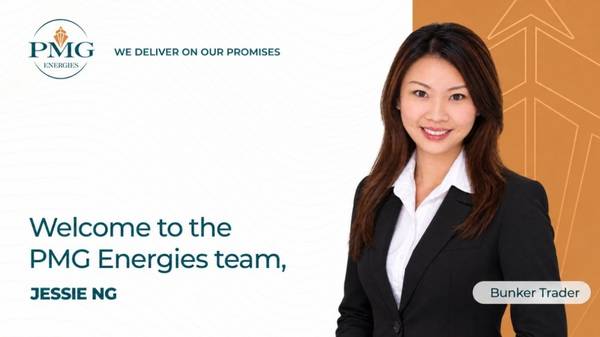
PMG Energies appoints Jessie Ng as bunker trader in Singapore
Bunker firm adds experienced trader to Singapore team. |
|
|
|
||
|
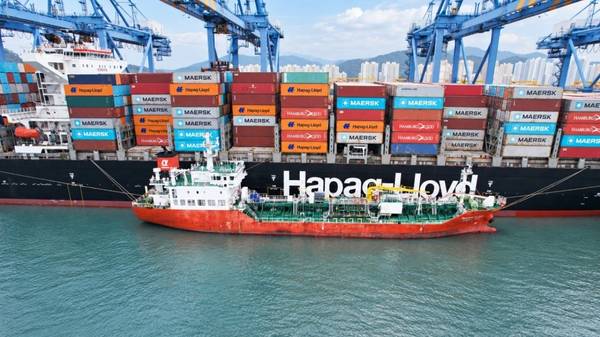
Hapag-Lloyd completes simultaneous-operations biomethanol bunkering in Busan
Container line bunkers ISCC EU-certified biomethanol from Goldwind during SIMOPS, advancing its 2024 supply agreement. |
|
|
|
||
|
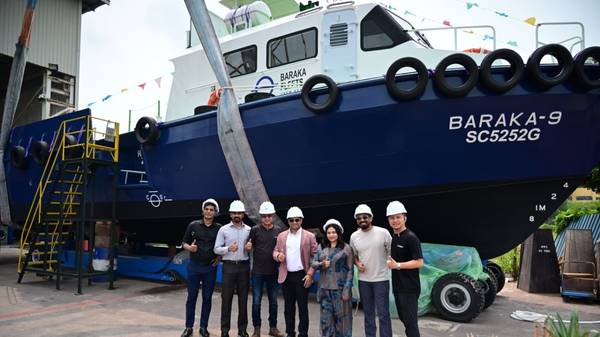
Pinnacle Marine launches B100-compatible harbour craft Baraka-9 for Trans Wave
Singapore shipbuilder adds another biodiesel-ready vessel to a fleet renewal programme aimed at harbour craft decarbonisation. |
|
|
|
||

|
Glander International Bunkering creates European commercial director role, appoints Rune Kongstein
Marine fuels firm is aligning its European operations under a single commercial leadership structure. |
|
|
|
||

|
VPS to run marine fuel management course in the Netherlands this November
Two-day training programme covers fuel quality, handling and decarbonisation regulations. |
|
|
|
||
|
Wind-assisted propulsion 'no longer just a concept', ICS panel says
Shipowners weigh wind power as a practical, low-risk route towards decarbonisation targets. |
|
|
|
||
|
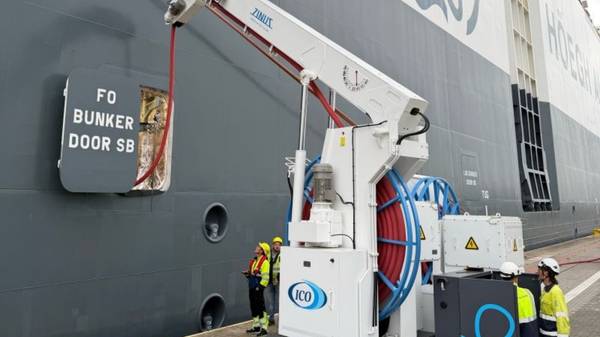
Höegh Autoliners vessel connects to shore power for the first time in Europe
Höegh Starlight used 11 kV shore power in Zeebrugge, allowing it to switch off its auxiliary engines while alongside. |
|
|
|
||
|
Chinese shipbuilder ROC signs deal for up to eight methanol-ready CSOVs
Contract signed with European shipowner for vessels designed for offshore wind farm maintenance work. |
|
|
|
||
| Maersk completes first US ethanol bunkering of a deep-sea container ship [News & Insights] |
| HD Hyundai completes type approval test for new LNG dual-fuel engine [News & Insights] |
| HD Hyundai completes type approval test for new LNG dual-fuel engine [News & Insights] |
| Nord Gas Solutions to supply cargo and fuel systems for eight BW LPG VLGCs [News & Insights] |
| ABS grants technology qualification approval for FPSO fuel cell system [News & Insights] |
