
 |
Burando Energies says it supplied approximately 30% of all biofuel-blended marine fuel and B100 volumes bunkered at the Port of Rotterdam in the first half of 2026, citing data from the Rotterdam Port Authority. The figures exclude alternative fuels such as methanol, ethanol and LNG.
The Dutch bunker supplier attributes its market position in part to the Netherlands’ regulatory environment, noting that the Netherlands is currently the only major bunkering hub in the ARA region where the European Union’s Renewable Energy Directive III (RED III) has been transposed for marine use, creating an energy replacement equivalent (ERE)-based discount mechanism. The company claims this makes biofuel blends bunkered in Rotterdam cheaper than equivalent products available in ports outside the Netherlands.
For shipowners seeking to manage costs related to EU Emissions Trading System (EU ETS) and FuelEU Maritime compliance obligations, Burando Energies says Rotterdam’s biofuel economics are the most cost-effective option available.
The company adds that its market position has been supported by infrastructure investment, including a dedicated, company-owned biofuel blending terminal at AFT Amsterdam, as well as a wholly owned fleet of biofuel barges for delivery and an in-house sustainability team handling compliance documentation.
Burando Energies supplies biofuel blends across Dutch and Belgian ports, including Zeebrugge. Its product portfolio includes blends based on high-sulphur fuel oil (HSFO), very-low-sulphur fuel oil (VLSFO) and marine gasoil (MGO)/diesel, alongside B100 FAME, B100 HVO and B100 FAME residue products.
Nick de Haan, Head of Decarbonisation Strategies at Burando Energies, commented: "We are extremely proud to see the trust of our new and repeat customers supporting the growth of our operation and enabling us to continuously improve both our physical products and associated compliance documents."
Looking ahead, Burando Energies says it expects biofuel uptake in Rotterdam to continue growing as FuelEU Maritime obligations increase and the EU ETS cost of conventional fuel rises. The company also says it is investing in shore- and water-based logistics capacity for low-carbon methanol as part of plans to diversify its market position.
|
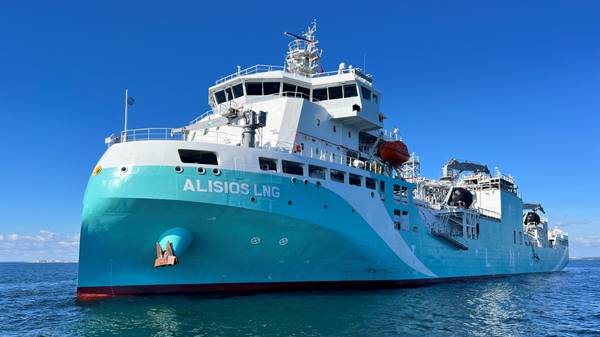
Axpo completes first LNG bunkering in Valencia, with over half bio-LNG
Ship-to-ship transfer to a container vessel makes Valencia the company's fourth Spanish port for LNG bunkering. |
|
|
|
||
|
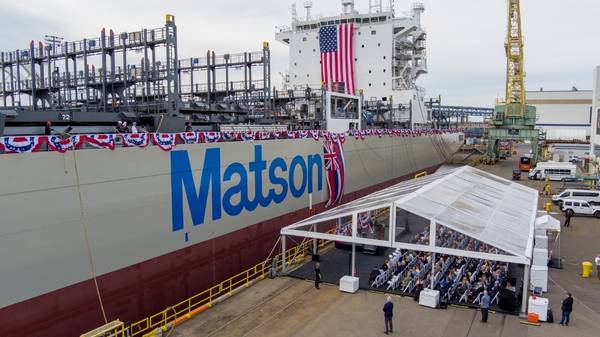
Matson christens Makua, first of three LNG-ready Aloha Class container ships
Dual-fuel vessel, due for delivery in early 2027, is the first of three ships worth around $1bn. |
|
|
|
||
|
CMB.Tech seeks Singapore-based ammonia operations manager for Asia Pacific
New hire will oversee ammonia chartering and bunkering and liaise with Far East partners. |
|
|
|
||
|
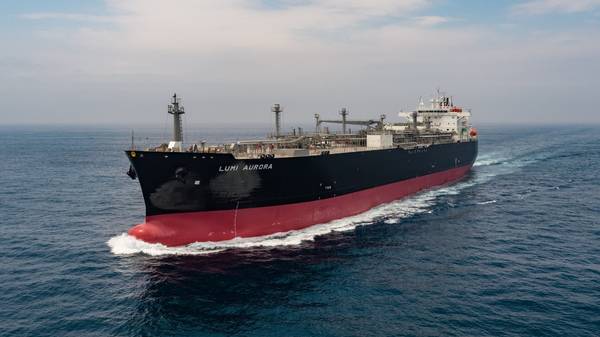
IINO Lines deploys first Ice Class IB VLGC on long-term charter to Borouge International
LPG-fuelled Lumi Aurora will carry North American gas to Borouge International's Porvoo plant in Finland. |
|
|
|
||
|
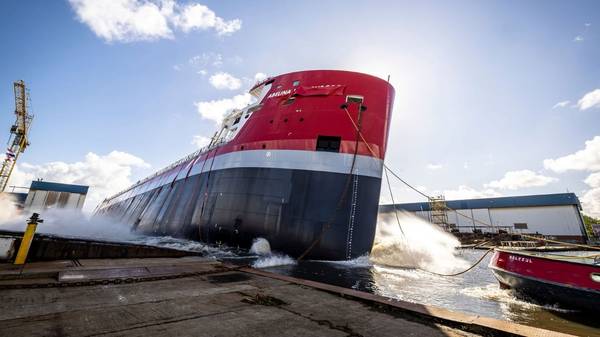
Wagenborg launches first EasyMax 2.0 vessel, prepared for methanol, ammonia and LNG
Abelina Wagenborg, built at Niestern Sander, is the first of a new generation designed for multiple alternative fuels. |
|
|
|
||
|
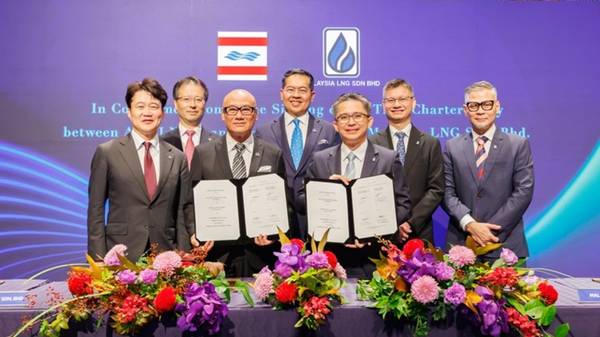
NYK–MISC joint venture signs charter for 18,700-cbm LNG carrier with Malaysia LNG
Asia LNG Transport will operate the dual-fuel diesel-electric newbuild, due from Hudong-Zhonghua in 2028, on routes to Japan. |
|
|
|
||

|
Study finds methanol dual-fuel retrofit of Kamsarmax bulk carrier would take about 75 days
Report by Mærsk Mc-Kinney Møller Center, involving Tsuneishi, puts conversion costs at 25–30% of the cost of a conventionally fuelled newbuilding. |
|
|
|
||
|
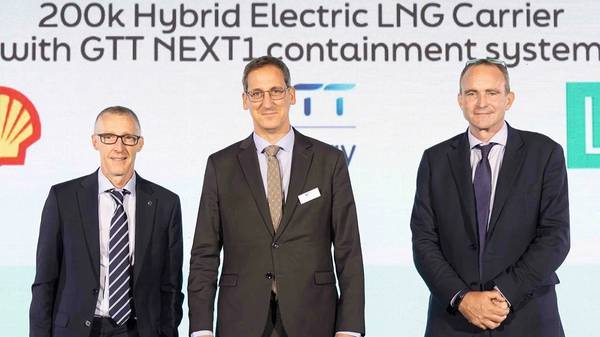
Lloyd's Register, Shell and GTT launch joint project on hybrid-electric 200,000-cbm LNG carrier
Partners to develop a concept combining hybrid-electric propulsion with GTT NEXT1 cargo containment technology for larger LNG carriers. |
|
|
|
||
|
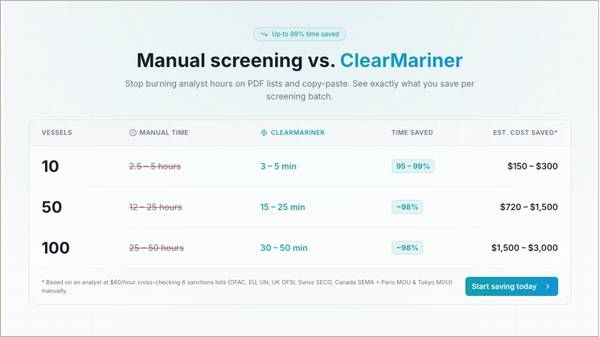
ClearMariner expands maritime sanctions screening with ESG, emissions and API support
Online service now combines sanctions checks with voyage CO₂, CII, EU ETS and FuelEU Maritime estimates. |
|
|
|
||

|
Flex Commodities adds Long Jing Xin to Singapore marine fuels team
Company appoints associate for marine fuels as part of plan for regional expansion. |
|
|
|
||
| Axpo completes first LNG bunkering in Valencia, with over half bio-LNG [News & Insights] |
| ClearMariner expands maritime sanctions screening with ESG, emissions and API support [News & Insights] |
| Vitol to start LNG bunkering in Asia from late 2026 after vessel sea trials [News & Insights] |
| LNG bunkering vessel Kaguya completes 200th ship-to-ship operation in Japan [News & Insights] |
| Peninsula completes first LNG bunkering operation at Sagunto [News & Insights] |
