
 |
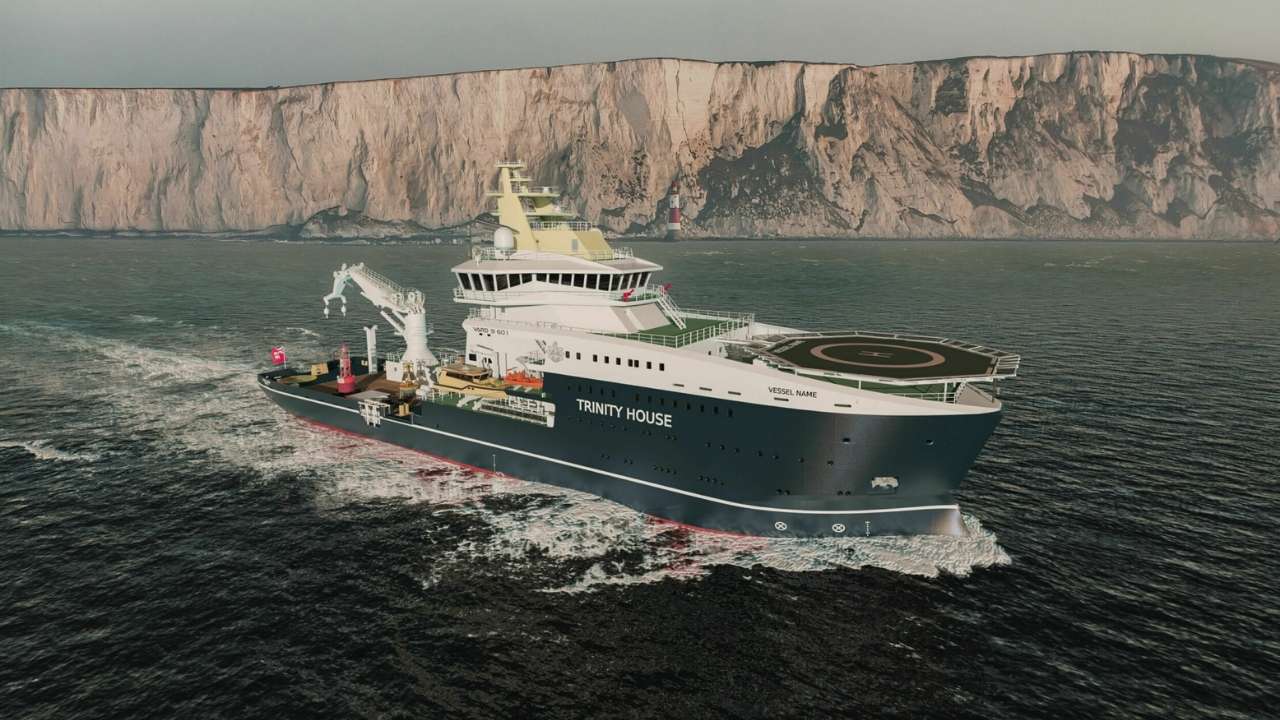
Vard, a subsidiary of the Fincantieri Group, has been awarded a contract worth more than €220m by British maritime safety organisation Trinity House to design and build two multifunction buoy and lighthouse maintenance vessels, the company announced on 22 July.
The two new vessels, of VARD 9 601 design, will replace the ageing THV Patricia and THV Galatea and form part of Trinity House’s three-vessel fleet renewal programme, known as Futures Afloat. According to Vard, these are the first vessels of their kind that the company has contracted to build.
Trinity House serves as the general lighthouse authority for England, Wales, the Channel Islands and Gibraltar, operating marine aids to navigation. Separately, it functions as a self-funding maritime charity providing education, support and welfare to the seafaring community.
The vessels were designed by Vard Marine in Canada in collaboration with Vard Design in Norway. Delivery is scheduled from one of Vard’s yards in Norway, with the first vessel due in Q2 2029 and the second in Q4 2029. Construction will draw on Vard’s global integrated value chain, which includes shipbuilding facilities in Norway, Romania, Brazil and Vietnam.
Hybrid propulsion and methanol-ready design
The VARD 9 601 design combines navigation buoy tending with hydrographic survey and emergency response capabilities. The vessels feature a hybrid propulsion system and are capable of operating fully on battery power while alongside, at anchor and for limited periods during dynamic positioning and transit. The battery system provides peak shaving and spinning reserve support to the main generators, which Vard claims will minimise fuel consumption and emissions.
The vessels have been designed with the capability for future conversion to methanol fuel, providing a pathway towards further reductions in greenhouse gas emissions over their operational lifetime. Propulsion equipment includes stern azimuth propulsors, a tunnel thruster and a pump jet, combined with an optimised, shallow-draft hull design.
Vard Electro will supply a SeaQ package covering power, control, bridge and communication systems, acting as single system integrator for the project. At the core of the vessels’ energy setup, SeaQ DC switchboards are combined with a SeaQ energy storage system exceeding 3,600 kWh in capacity. A multi-connection SeaQ shore connection, working together with the energy storage system, is said to enable zero-emission operations at quay.
The vessels will also be equipped with SeaQ Green Pilot — a cloud-based energy management solution that collects and analyses real-time vessel data to provide insight into fuel consumption, emissions and vessel performance.
Operational capabilities
The vessels are built for advanced dynamic positioning and crane operations. The main deck is configured for buoy handling and stowage and features a 30-tonne twin-hoist tension-control crane and two smaller stores cranes. Each vessel will also carry two workboats, a towing winch and a helideck.
Cybersecurity has been engineered into the vessel design as an integrated and layered capability, according to Vard, with secure system-to-system integration, segregation between operational technology and information technology, and protected ship-to-shore data flows.
The platform offers 360-degree bridge visibility over the working deck aft and helideck forward. Crew accommodation is designed to comply with the Maritime Labour Convention (MLC) 2006, and the vessel is designed to meet Lloyd’s Register’s CAC(1) and ABN(Q) class notations for onboard noise and vibration. Vard Interiors will deliver a turnkey interior solution incorporating green HVAC-R technology.
Contract terms and partnerships
The contract was awarded following a public tender and includes a UK-content commitment, securing extended use of British suppliers throughout the build. It also incorporates a student exchange programme through which Vard, Trinity House and Vard Marine in Canada will engage in a training partnership for apprentices.
Damien Oliver, Trinity House’s Senior Responsible Owner for the Futures Afloat ship replacement programme, stated: “We are delighted to be partnering with Vard to deliver the next generation of multifunctional buoy handling tenders for Trinity House. These new ships will ensure we can continue to fulfil our statutory responsibilities efficiently and effectively for decades to come.”
Iain Lower, Deputy Master and Chief Executive Officer of Trinity House, remarked: “Following a highly competitive tender process led by the Futures Afloat programme team, I am pleased that we have awarded the contract to Vard, a world-class shipbuilder with an outstanding reputation for quality and innovation, to deliver these vital new vessels.”
Cathrine Kristiseter Marti, CEO of Vard Group, said: “After a long and thorough process, we are thrilled to have been awarded the contract to renew Trinity House’s capabilities to maintain and modernise crucial marine infrastructure in UK waters.”
|
Axpo completes first LNG bunkering in Valencia, with over half bio-LNG
Ship-to-ship transfer to a container vessel makes Valencia the company's fourth Spanish port for LNG bunkering. |
|
|
|
||
|
Matson christens Makua, first of three LNG-ready Aloha Class container ships
Dual-fuel vessel, due for delivery in early 2027, is the first of three ships worth around $1bn. |
|
|
|
||
|
CMB.Tech seeks Singapore-based ammonia operations manager for Asia Pacific
New hire will oversee ammonia chartering and bunkering and liaise with Far East partners. |
|
|
|
||
|
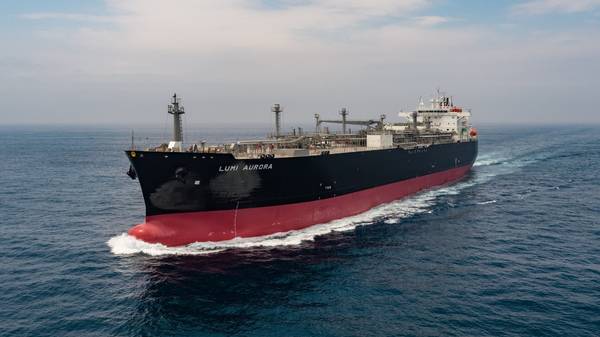
IINO Lines deploys first Ice Class IB VLGC on long-term charter to Borouge International
LPG-fuelled Lumi Aurora will carry North American gas to Borouge International's Porvoo plant in Finland. |
|
|
|
||
|
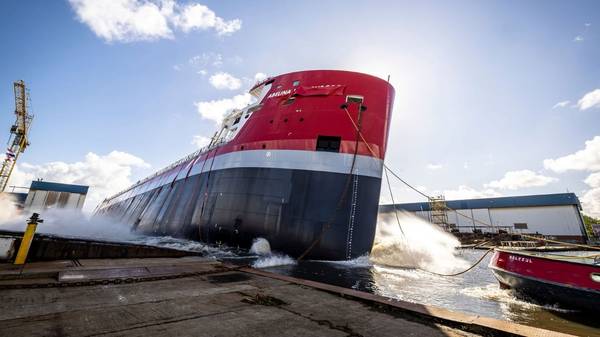
Wagenborg launches first EasyMax 2.0 vessel, prepared for methanol, ammonia and LNG
Abelina Wagenborg, built at Niestern Sander, is the first of a new generation designed for multiple alternative fuels. |
|
|
|
||
|
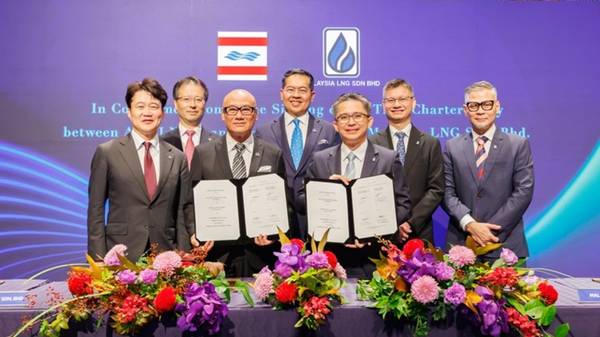
NYK–MISC joint venture signs charter for 18,700-cbm LNG carrier with Malaysia LNG
Asia LNG Transport will operate the dual-fuel diesel-electric newbuild, due from Hudong-Zhonghua in 2028, on routes to Japan. |
|
|
|
||
|
Study finds methanol dual-fuel retrofit of Kamsarmax bulk carrier would take about 75 days
Report by Mærsk Mc-Kinney Møller Center, involving Tsuneishi, puts conversion costs at 25–30% of the cost of a conventionally fuelled newbuilding. |
|
|
|
||
|
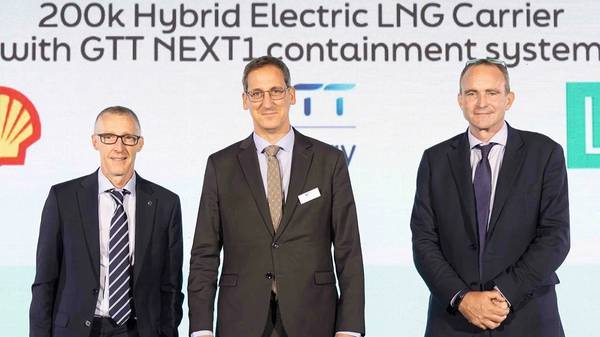
Lloyd's Register, Shell and GTT launch joint project on hybrid-electric 200,000-cbm LNG carrier
Partners to develop a concept combining hybrid-electric propulsion with GTT NEXT1 cargo containment technology for larger LNG carriers. |
|
|
|
||
|
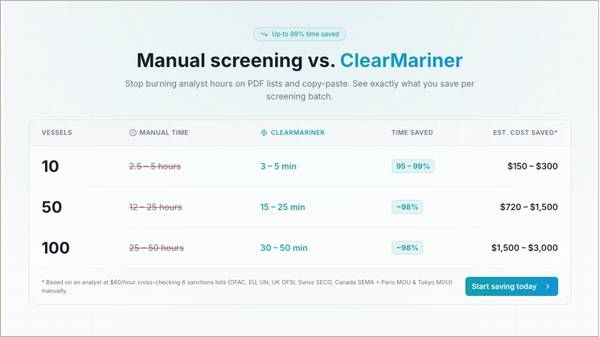
ClearMariner expands maritime sanctions screening with ESG, emissions and API support
Online service now combines sanctions checks with voyage CO₂, CII, EU ETS and FuelEU Maritime estimates. |
|
|
|
||

|
Flex Commodities adds Long Jing Xin to Singapore marine fuels team
Company appoints associate for marine fuels as part of plan for regional expansion. |
|
|
|
||
| Matson christens Makua, first of three LNG-ready Aloha Class container ships [News & Insights] |
| IINO Lines deploys first Ice Class IB VLGC on long-term charter to Borouge International [News & Insights] |
| Wagenborg launches first EasyMax 2.0 vessel, prepared for methanol, ammonia and LNG [News & Insights] |
| NYK–MISC joint venture signs charter for 18,700-cbm LNG carrier with Malaysia LNG [News & Insights] |
| CMB.Tech's Mineral Europa starts maiden voyage as first ammonia-powered dry bulk vessel [News & Insights] |
