
 |
FuelEU Maritime's compliance market has taken shape faster than many anticipated, but a sharp fall in surplus prices after the main pooling window has raised questions about whether the regulation can deliver its core objective of driving fuel transition, according to EmissionLink.
As the first FuelEU reporting year closed at the end of June, the company said shipowners had moved quickly to engage with pooling arrangements, biofuel use and surplus trading rather than accepting penalties — a sign, it argues, that the regulation has created a functioning market.
However, EmissionLink has warned that rapidly falling surplus prices could make compliance too cheap, potentially reducing the incentive for operators to burn lower-carbon fuels or develop longer-term fuel strategies.
According to the company's market observations, surplus prices discussed at around €175 to €185 per unit during the busy pre-deadline period fell to approximately €120 to €130 after the main pooling window closed. EmissionLink said this suggests more surplus may have been available than many had expected, supported by long positions, banked surplus and stronger-than-anticipated generation of compliance units.
Philippos Ioulianou, managing director of EmissionLink, commented: "FuelEU has worked in the sense that it has created a market. Shipowners have engaged with pooling, biofuels and surplus trading. That is positive. But if buying compliance becomes easier and cheaper than using lower-carbon fuels, then the regulation risks becoming an accounting exercise rather than a driver of decarbonisation."
For shipowners, lower prices reduce immediate compliance costs. But EmissionLink contends that cheap surplus could discourage some operators from investing in lower-carbon fuel strategies.
"That is the danger," said Mr Ioulianou. "FuelEU was designed to stimulate demand for renewable and low-carbon fuels. If surplus is abundant and cheap, some operators may simply buy compliance units instead. That meets the rules on paper, but it does not necessarily move the industry closer to fuel transition."
EmissionLink is urging regulators to review whether the current framework strikes the right balance between flexibility and genuine fuel uptake, arguing that FuelEU should now be treated as a live commercial market in which prices, surplus availability, fuel spreads, geopolitical events and trader positions can all affect the cost of compliance.
"Cheap compliance may be welcome for shipowners in the short term, but it should not become a substitute for real progress," said Mr Ioulianou. "Regulators should study the market sooner rather than later, and shipowners should also learn from this first year. Those with accurate data, clear contracts and early compliance strategies will be best placed to manage FuelEU as the market develops."
|
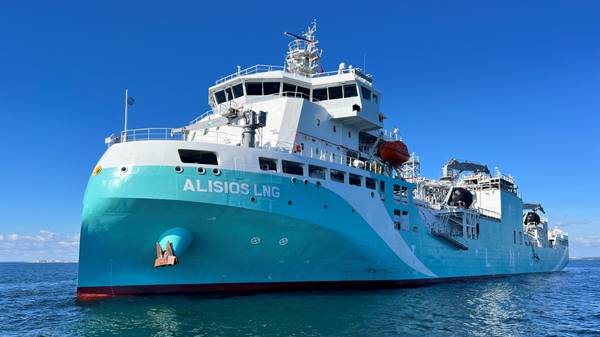
Axpo completes first LNG bunkering in Valencia, with over half bio-LNG
Ship-to-ship transfer to a container vessel makes Valencia the company's fourth Spanish port for LNG bunkering. |
|
|
|
||
|
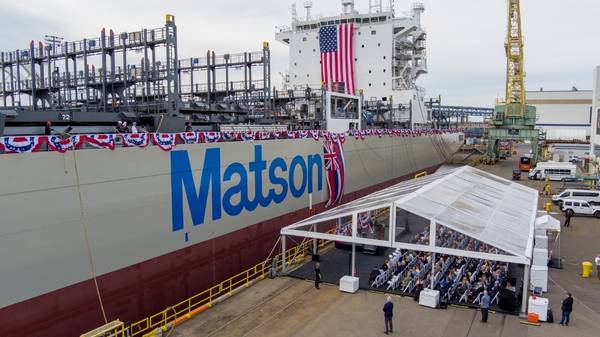
Matson christens Makua, first of three LNG-ready Aloha Class container ships
Dual-fuel vessel, due for delivery in early 2027, is the first of three ships worth around $1bn. |
|
|
|
||

|
CMB.Tech seeks Singapore-based ammonia operations manager for Asia Pacific
New hire will oversee ammonia chartering and bunkering and liaise with Far East partners. |
|
|
|
||
|
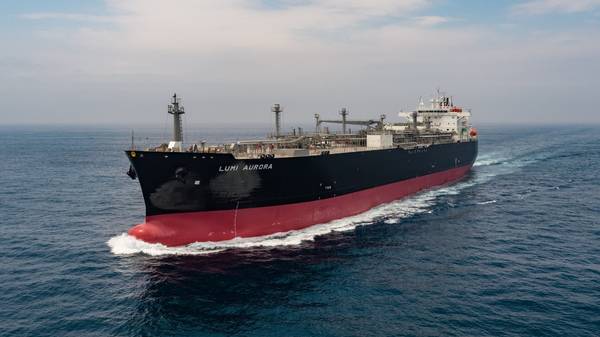
IINO Lines deploys first Ice Class IB VLGC on long-term charter to Borouge International
LPG-fuelled Lumi Aurora will carry North American gas to Borouge International's Porvoo plant in Finland. |
|
|
|
||
|
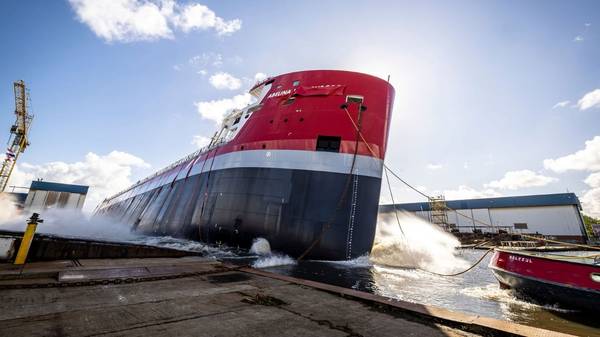
Wagenborg launches first EasyMax 2.0 vessel, prepared for methanol, ammonia and LNG
Abelina Wagenborg, built at Niestern Sander, is the first of a new generation designed for multiple alternative fuels. |
|
|
|
||
|
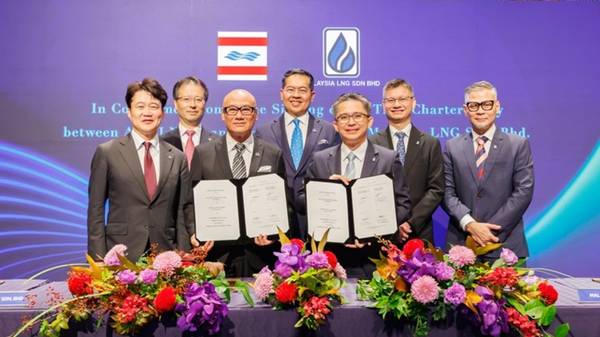
NYK–MISC joint venture signs charter for 18,700-cbm LNG carrier with Malaysia LNG
Asia LNG Transport will operate the dual-fuel diesel-electric newbuild, due from Hudong-Zhonghua in 2028, on routes to Japan. |
|
|
|
||

|
Study finds methanol dual-fuel retrofit of Kamsarmax bulk carrier would take about 75 days
Report by Mærsk Mc-Kinney Møller Center, involving Tsuneishi, puts conversion costs at 25–30% of the cost of a conventionally fuelled newbuilding. |
|
|
|
||
|
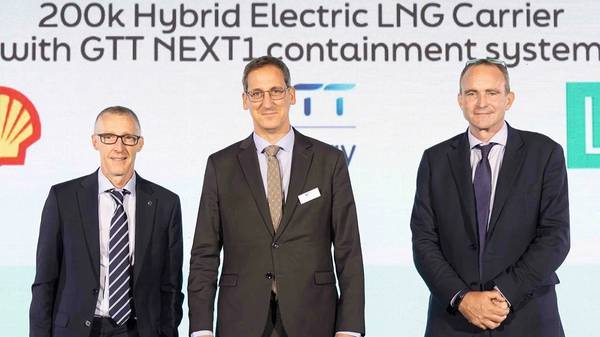
Lloyd's Register, Shell and GTT launch joint project on hybrid-electric 200,000-cbm LNG carrier
Partners to develop a concept combining hybrid-electric propulsion with GTT NEXT1 cargo containment technology for larger LNG carriers. |
|
|
|
||
|
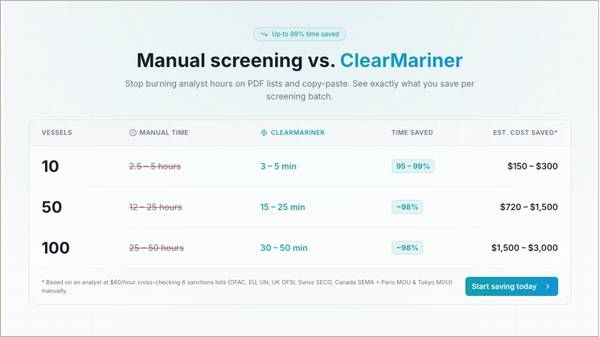
ClearMariner expands maritime sanctions screening with ESG, emissions and API support
Online service now combines sanctions checks with voyage CO₂, CII, EU ETS and FuelEU Maritime estimates. |
|
|
|
||

|
Flex Commodities adds Long Jing Xin to Singapore marine fuels team
Company appoints associate for marine fuels as part of plan for regional expansion. |
|
|
|
||
| ClearMariner expands maritime sanctions screening with ESG, emissions and API support [News & Insights] |
| India and EU sign letter of intent for green shipping corridor coalition [News & Insights] |
| Four firms partner to trial continuous emissions monitoring on LNG carrier [News & Insights] |
| Wind propulsion offers 'no fundamental barriers' for LNG carriers, study finds [News & Insights] |
| Shipowners risk financial exposure by delaying EU allowance transfers, EmissionLink warns [News & Insights] |
