
 |
The European Commission published its revised EU Emissions Trading System (ETS) proposal on 17 July, with the European Community Shipowners’ Associations (ECSA) broadly welcoming moves to earmark revenues and support sustainable fuels, while raising concerns over the narrow scope of eligible clean technologies and the absence of a firm commitment to withdraw the EU measure once a global agreement is reached at the International Maritime Organization (IMO).
Under the proposal, 110 million allowances are earmarked for the shipping sector, amounting to approximately €10 billion. At the national level, 50% of member states’ ETS revenues are earmarked, with shipping decarbonisation listed among the priority purposes. ECSA also acknowledged the simplification of reporting requirements between the EU ETS and FuelEU Maritime as a positive step.
Sotiris Raptis, Secretary General of ECSA, stated: “Today, the Commission has taken a first step to earmark ETS revenues at EU and national level. Support for sustainable fuels is welcome and necessary to make them available at European and global level. In this regard, support for the availability of fuels in third countries is encouraging.”
The association noted that sustainable fuels are, on average, four times more expensive than conventional fuels and said meaningful support for their uptake is needed to create a business case for investment. Fuels produced in Europe and in certain third countries are eligible for support under the proposal.
However, ECSA expressed concern that the proposal provides what it described as a narrow list of eligible clean technologies. Raptis said: “The proposal fails to deliver on the uptake of clean technologies, limiting support to wind and electricity alone. Technologies that can quickly improve energy efficiency and deliver immediate emissions savings are left without support.”
ECSA argued that the eligible technology list should cover the full range of energy efficiency projects capable of delivering emissions savings across the existing fleet, as well as new technologies required for the deployment of clean fuels.
The association also raised concerns about derogations for small islands, ice-class vessels and outermost regions, which are extended only to 2035 under the current proposal rather than for the full operational period of the system. ECSA said these should be made automatic, permanent and fit for purpose to safeguard the connectivity of Europe’s most vulnerable regions.
On the question of EU port competitiveness, ECSA warned that any measures introduced must maintain the level playing field across all segments of shipping and preserve the integrity of the system.
Regarding the IMO process, ECSA acknowledged progress in the form of a commitment to avoid double payments should an international agreement be reached, but said the proposal stops short of what is required. Raptis noted: “A clear signal to the international community that the ETS will be withdrawn once a global agreement is reached is still missing.”
The association pointed out that the 110 million allowances earmarked amount to approximately €10 billion out of the roughly €90 billion the sector is expected to pay into the system between 2030 and 2040, and called for a greater share of revenues to be directed back to the sector’s energy transition.
|
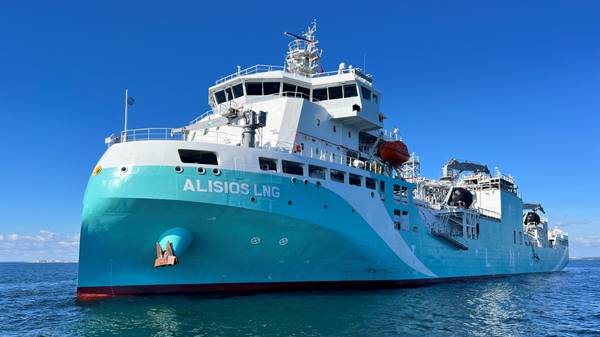
Axpo completes first LNG bunkering in Valencia, with over half bio-LNG
Ship-to-ship transfer to a container vessel makes Valencia the company's fourth Spanish port for LNG bunkering. |
|
|
|
||
|
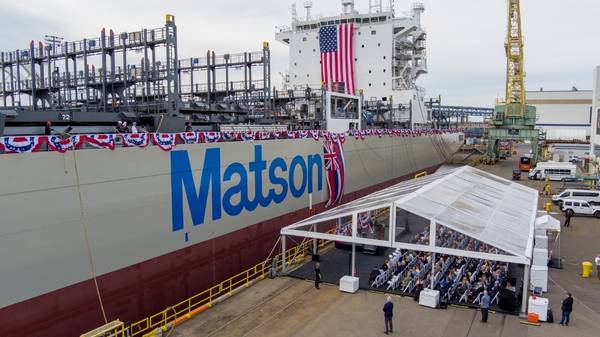
Matson christens Makua, first of three LNG-ready Aloha Class container ships
Dual-fuel vessel, due for delivery in early 2027, is the first of three ships worth around $1bn. |
|
|
|
||
|
CMB.Tech seeks Singapore-based ammonia operations manager for Asia Pacific
New hire will oversee ammonia chartering and bunkering and liaise with Far East partners. |
|
|
|
||
|
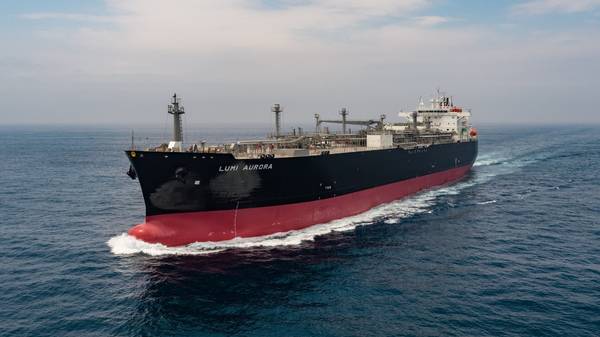
IINO Lines deploys first Ice Class IB VLGC on long-term charter to Borouge International
LPG-fuelled Lumi Aurora will carry North American gas to Borouge International's Porvoo plant in Finland. |
|
|
|
||
|
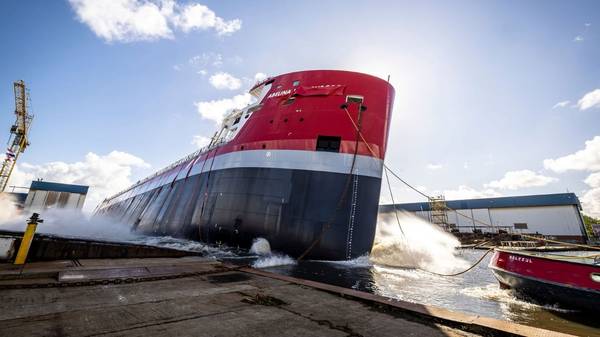
Wagenborg launches first EasyMax 2.0 vessel, prepared for methanol, ammonia and LNG
Abelina Wagenborg, built at Niestern Sander, is the first of a new generation designed for multiple alternative fuels. |
|
|
|
||
|
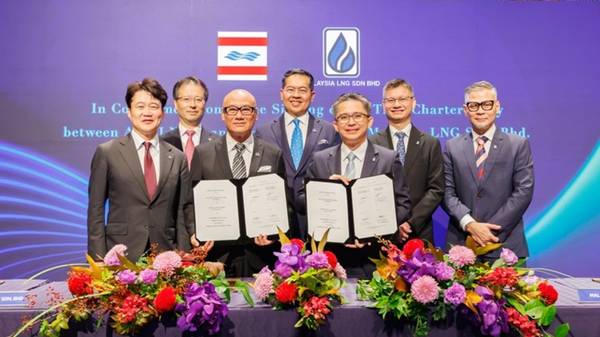
NYK–MISC joint venture signs charter for 18,700-cbm LNG carrier with Malaysia LNG
Asia LNG Transport will operate the dual-fuel diesel-electric newbuild, due from Hudong-Zhonghua in 2028, on routes to Japan. |
|
|
|
||

|
Study finds methanol dual-fuel retrofit of Kamsarmax bulk carrier would take about 75 days
Report by Mærsk Mc-Kinney Møller Center, involving Tsuneishi, puts conversion costs at 25–30% of the cost of a conventionally fuelled newbuilding. |
|
|
|
||
|
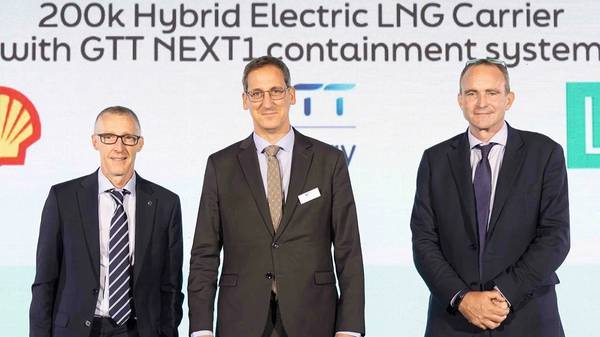
Lloyd's Register, Shell and GTT launch joint project on hybrid-electric 200,000-cbm LNG carrier
Partners to develop a concept combining hybrid-electric propulsion with GTT NEXT1 cargo containment technology for larger LNG carriers. |
|
|
|
||
|
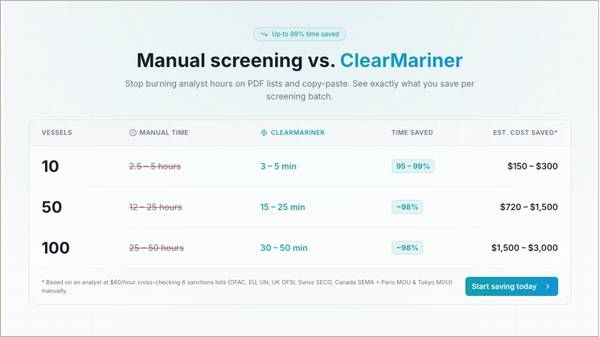
ClearMariner expands maritime sanctions screening with ESG, emissions and API support
Online service now combines sanctions checks with voyage CO₂, CII, EU ETS and FuelEU Maritime estimates. |
|
|
|
||

|
Flex Commodities adds Long Jing Xin to Singapore marine fuels team
Company appoints associate for marine fuels as part of plan for regional expansion. |
|
|
|
||
| ClearMariner expands maritime sanctions screening with ESG, emissions and API support [News & Insights] |
| India and EU sign letter of intent for green shipping corridor coalition [News & Insights] |
| Lloyd's Register confirms suitability of Daphne Technology's emissions monitoring system [News & Insights] |
| Four firms partner to trial continuous emissions monitoring on LNG carrier [News & Insights] |
| Shipowners risk financial exposure by delaying EU allowance transfers, EmissionLink warns [News & Insights] |
