
 |
The World Shipping Council (WSC) has welcomed European Commission proposals to channel EU emissions trading system (ETS) revenues back into maritime decarbonisation, while raising concerns that a planned expansion of transshipment port rules could target competition rather than emissions.
In a statement, the WSC — which represents the global container shipping and vehicle carrier industry — said it supports the Commission's proposed fuel mechanism for the maritime sector, which follows a policy approach already applied in aviation. The mechanism is designed to help close the price gap between conventional and alternative marine fuels, with the aim of encouraging fuel uptake and supporting investment in production.
Alternative maritime fuels can currently cost between 100% and 400% more than conventional marine fuels, according to the WSC, making the price gap one of the main barriers to wider adoption.
Simon Bergulf, vice president, environment and climate at the WSC, commented: "Liner shipping has already invested over €160 billion in ships that can operate on renewable fuels, but these cleaner ships need cleaner fuels. Closing the price gap is one of the most practical ways to get those fuels into ships' tanks."
The WSC also said it believes ETS revenues could be used to strengthen European port infrastructure, including alternative fuel bunkering facilities and electrification, to the benefit of all vessels calling at EU ports that contribute to the ETS.
The organisation also acknowledged what it described as the Commission's recognition that the current ETS design can make European ports more expensive and less competitive for cargo transshipped between two non-EU markets via European hubs.
However, the WSC expressed concern over a Commission proposal to expand the list of neighbouring non-EU ports subject to transshipment rules based on infrastructure characteristics alone. Under the proposal, ports located within 150 nautical miles of the EU could face penalties simply because they possess deep-water facilities, long berths and ship-to-shore cranes — irrespective of whether transshipment activity is actually taking place.
Bergulf stated: "The ETS should be focused on cutting emissions, not making neighbouring non-EU ports less competitive."
The WSC also called for a firmer commitment in the final ETS revisions to prevent double payments once a global measure is adopted at the International Maritime Organization (IMO). Bergulf remarked: "That certainty would strengthen Europe's position in global negotiations and support progress at the IMO."
EU trade carried by liner shipping is said to be worth €2.5 trillion annually, according to the WSC, with 90% of goods by volume entering and leaving the EU by sea. Liner shipping makes more than 65,000 port calls to around 130 EU ports each year, connecting Europe to over 900 ports worldwide.
|
IBIA to host ethanol marine fuel workshop in New York
Limited-capacity session will examine ethanol’s commercial, technical and regulatory prospects as a shipping fuel. |
|
|
|
||

|
Corvus Energy’s Blue Whale NxtGen battery system gains DNV type approval
DNV approval confirms the safety and performance of Corvus Energy’s large-scale battery system for ferries, cruise ships and offshore vessels. |
|
|
|
||
|
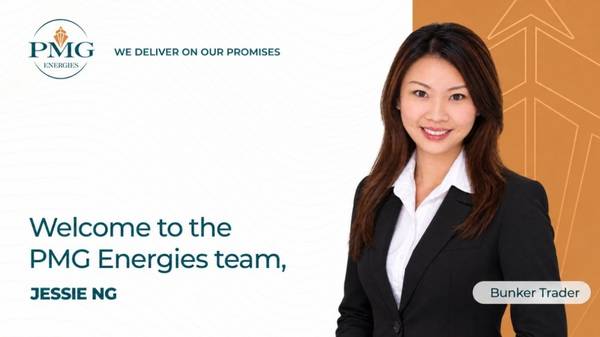
PMG Energies appoints Jessie Ng as bunker trader in Singapore
Bunker firm adds experienced trader to Singapore team. |
|
|
|
||
|
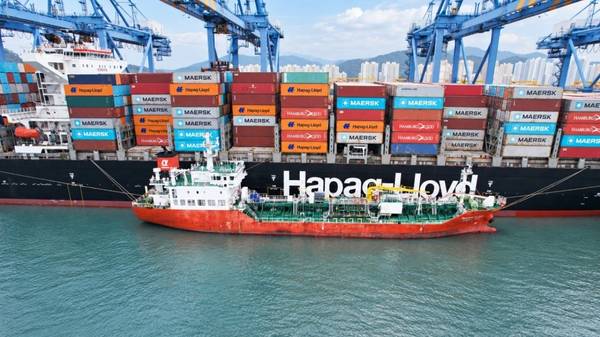
Hapag-Lloyd completes simultaneous-operations biomethanol bunkering in Busan
Container line bunkers ISCC EU-certified biomethanol from Goldwind during SIMOPS, advancing its 2024 supply agreement. |
|
|
|
||
|
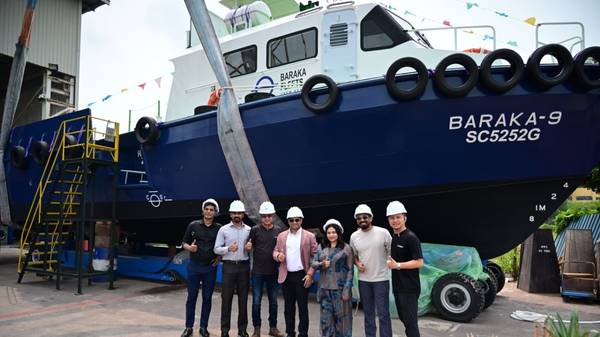
Pinnacle Marine launches B100-compatible harbour craft Baraka-9 for Trans Wave
Singapore shipbuilder adds another biodiesel-ready vessel to a fleet renewal programme aimed at harbour craft decarbonisation. |
|
|
|
||
|
Glander International Bunkering creates European commercial director role, appoints Rune Kongstein
Marine fuels firm is aligning its European operations under a single commercial leadership structure. |
|
|
|
||
|
VPS to run marine fuel management course in the Netherlands this November
Two-day training programme covers fuel quality, handling and decarbonisation regulations. |
|
|
|
||
|
Wind-assisted propulsion 'no longer just a concept', ICS panel says
Shipowners weigh wind power as a practical, low-risk route towards decarbonisation targets. |
|
|
|
||
|
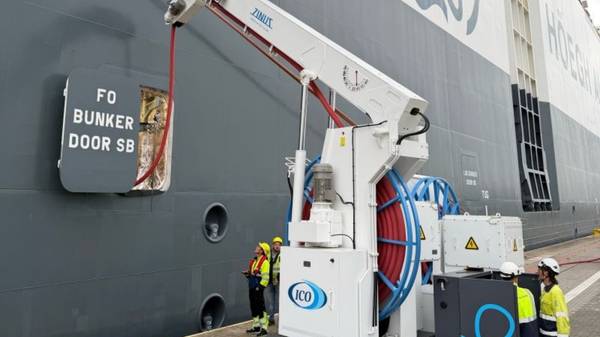
Höegh Autoliners vessel connects to shore power for the first time in Europe
Höegh Starlight used 11 kV shore power in Zeebrugge, allowing it to switch off its auxiliary engines while alongside. |
|
|
|
||
|
Chinese shipbuilder ROC signs deal for up to eight methanol-ready CSOVs
Contract signed with European shipowner for vessels designed for offshore wind farm maintenance work. |
|
|
|
||
| Lloyd's Register confirms suitability of Daphne Technology's emissions monitoring system [News & Insights] |
| Four firms partner to trial continuous emissions monitoring on LNG carrier [News & Insights] |
| Shipowners risk financial exposure by delaying EU allowance transfers, EmissionLink warns [News & Insights] |
| SEA-LNG urges EU to protect mass-balance pathway for liquefied biomethane [News & Insights] |
| SEA-LNG urges EU to protect mass-balance pathway for liquefied biomethane [News & Insights] |
